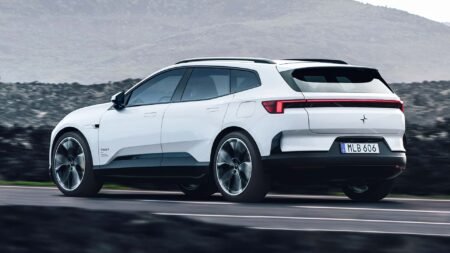




Starting in 2027, Polestar will be banned from selling new cars in the US because of its ties to China. The automaker doesn’t plan to appeal the decision, but that doesn’t mean it’s happy about it. Polestar still wants to know why it was denied permission to sell cars here when Volvo, which has the same Chinese parent company, got the green light.
According to documents obtained by the Wall Street Journal, Polestar actually expected to receive approval to continue selling vehicles in the US. The company says it was caught off guard by the decision after spending more than a year working with the US Department of Commerce.
Polestar first submitted an application to the Commerce Department’s Bureau of Industry and Security in May 2025, seeking permission to continue selling connected vehicles in the US. The application was reviewed for more than a year, during which Polestar answered detailed questions from federal officials.
Photo by: Polestar
The automaker also offered several measures to address the government’s security concerns, including cybersecurity reviews, audits, and changes designed to prevent China-linked entities from managing vehicle data.
According to Polestar, officials told the company’s outside counsel in January 2026 that they had received enough information and were preparing to recommend approval. Then, in April, a Commerce Department official reportedly told Polestar that approval would be reasonable to expect if Volvo received authorization under the same ownership structure and with similar hardware and software.
Volvo received its approval in May, while Polestar’s application was denied the following month. Polestar says the different outcomes could amount to “disparate treatment.”


Photo by: Polestar
It’s Not Just About Where the Cars Are Built
The dispute centers around the US government’s Connected Vehicle Rule, which restricts the sale of certain connected vehicles and components linked to China and Russia over national-security concerns.
The rules are designed to prevent foreign adversaries from potentially accessing sensitive information collected by connected vehicles or remotely influencing vehicle systems through software and communications hardware.
That means building a car in America doesn’t necessarily get an automaker off the hook. Even though the Polestar 3 is built in South Carolina, its Chinese ownership and technology ties still put it under the government’s scrutiny. Volvo has many of the same connections, yet it was allowed to continue selling vehicles in the US.
Polestar Is Still Leaving the US Market
For American buyers, however, the immediate situation hasn’t changed. Polestar will stop selling new vehicles in the US after the 2026 model year, although dealers can continue selling remaining inventory.
The company says it will continue supporting existing owners, including warranty coverage, service, repairs, parts, and software updates.
Polestar has already decided not to appeal the Commerce Department’s ruling, saying its discussions with US officials led it to believe an appeal was unlikely to succeed. Instead, the automaker plans to focus its investments on other markets, particularly Europe.
So while Polestar may be done fighting to stay in the US, the automaker still wants answers.
Motor1’s Take: It’s easy to see why Polestar is frustrated. Polestar and Volvo aren’t identical companies, and there may be differences in how the two handle software; the Commerce Department has not publicly explained those differences.
Read the full article here