



- The Car2Car project measured a 51% recycling rate of end-of-life material.
- Under standard recycling, just 6% of scrapped-car material qualified as high-quality feedstock.
- Car2Car tested 433 vehicles across 60 models.
BMW just put a hard number on how much of a dead car can come back as a new one, and it is easier to misread than to cheer. The company’s Car2Car research project reports a 51 percent “recycling rate” from end-of-life vehicles, based on upgraded sorting and smelting applied to hundreds of scrapped BMWs.
That 51 percent figure is already being shared as “half the car gets recycled,” which is not what BMW’s engineers actually measured. The project tracked which recovered materials are clean and consistent enough to go straight back into automotive production, and where today’s recycling system still leaves money and carbon savings on the table.
What 51% Really Means
BMW’s Car2Car work used material from 433 end-of-life vehicles covering 60 different models, then pushed beyond standard shredding and bulk metal recovery. Engineers followed each output stream to see which share could become new BMW-grade parts rather than generic scrap that disappears into other industries or lower-value uses.
The 51 percent rate describes material that re-enters new automotive applications at comparable quality, not how much of the whole vehicle is recycled in any form. Under conventional recycling, BMW found that only 6 percent of a scrapped car’s material came back as high-quality automotive feedstock, highlighting how much headroom there is in how cars are currently torn down.
BMW points to steel, aluminum, and copper as the main drivers of that jump. In the project, the usable share of steel rose from 1 percent to 81 percent, aluminum from 23 percent to 52 percent, and copper from 48 percent to 68 percent once recyclers applied more selective separation and tighter process control, without demanding far more manual dismantling than the disassembly already required before shredding.
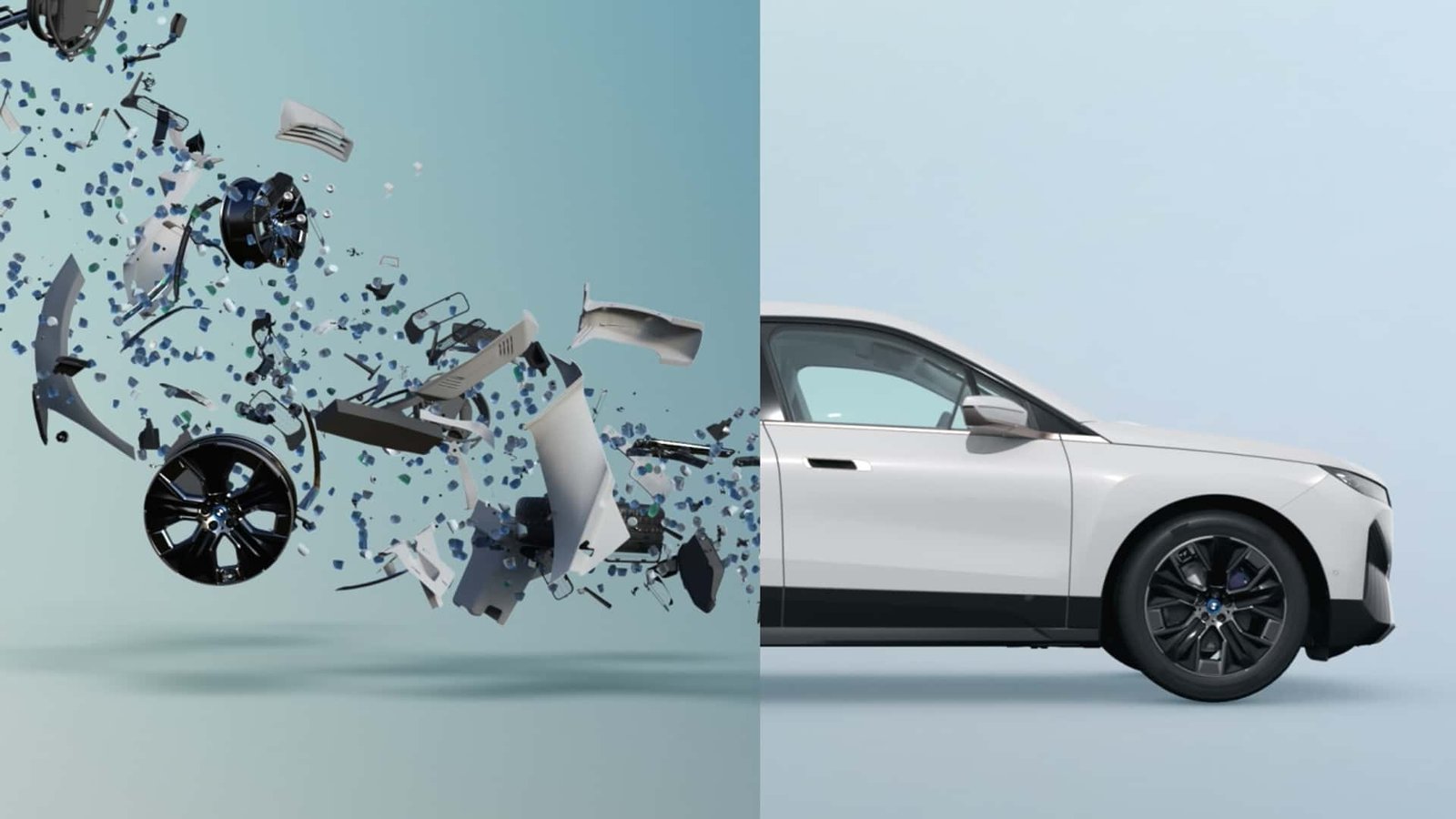
Recycling material for reuse in the BMW iX
What Comes Next
The big metals matter because they are already central to BMW’s product planning and climate targets. The company wants half its global sales to be electric vehicles later this decade, and those EVs still carry large amounts of steel and aluminum in their bodies and chassis. Looping those metals straight from end-of-life cars into new stampings or castings takes pressure off primary mines and smelters.
Car2Car is not just a lab exercise. BMW reports making more than 100,000 series-production components using recovered steel from the trial vehicles, showing that scrap-based material can meet its existing specs. The company has also filed a patent linked to the project, signaling commercial value in the way it selects, melts, and qualifies these recycled streams for future models and platforms.
If you are wondering why the rate is not higher, the answer lies in the rest of the vehicle. BMW’s own summary notes that plastics and glass still struggle to meet the consistency, strength, and durability requirements for reuse in new cars once they have been through normal shredding. The 51 percent result shows how far metals can go today while underlining how much work remains on the mixed plastics and glass that fill out a modern interior.
Motor1’s Take: BMW has mapped out where real circularity can be built into carmaking by proving that high-quality metal streams can feed new parts and cut reliance on virgin supply, but scaling the selective separation and qualification steps and finding real answers for mixed plastics and glass will decide how much of that potential actually shows up in production cars.
Read the full article here