



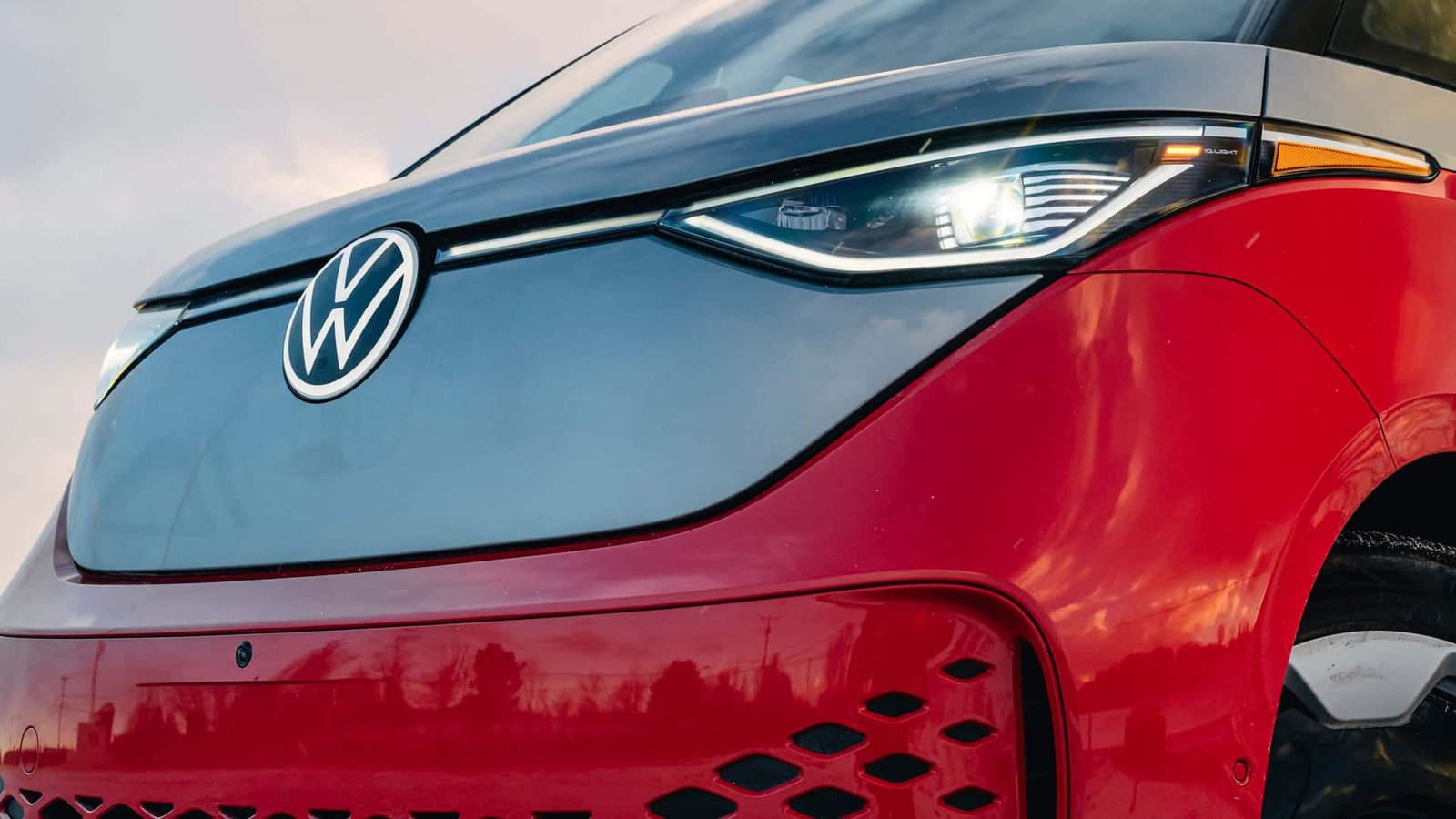
- VW Commercial Vehicles cites packaging constraints as the reason it can’t fit a combustion engine in the ID. Buzz.
- The minivan’s short front overhang leaves no room for a gas engine.
- As a result, the company says it’s unlikely to build a range-extending ID. Buzz.
With 60,700 units delivered globally in 2025, the ID. Buzz was the eighth best-selling EV in the Volkswagen Group. Demand for the retro-flavored electric minivan and its cargo twin doubled compared to the previous year. However, while the electric people mover is doing well in Europe, it has struggled in the United States. Only 6,140 units were sold there, prompting an unexpected decision to cancel the 2026 model year and clear out 2025MY inventory before bringing back the ID. Buzz for 2027.
The modest 234-mile range of the rear-wheel-drive model, combined with a steep $61,545 starting price, certainly didn’t help its cause. When VW announced the ID. Buzz would skip the 2026MY, it didn’t cite range or pricing as reasons for the minivan’s one-year hiatus. Instead, it blamed generally weak EV adoption in the U.S., calling it a “strategic decision” based on a “careful assessment of current EV market conditions.”
We’re now learning that VW did consider a way to make the ID. Buzz more appealing by addressing range anxiety with a gas engine serving as a generator. In an interview with an Australian magazine, the head of Volkswagen Commercial Vehicles revealed that a range-extending version was considered at one point.
Photo by: DW Burnett / Motor1
Stefan Mecha told GoAuto that while the idea of an EREV powertrain was explored, engineers ultimately ran into packaging constraints. The ID. Buzz’s short front overhang leaves no room for a combustion engine because the MEB platform was developed exclusively for battery-electric vehicles. More than 20 models ride on the dedicated architecture, ranging from the ID.3 to the ID.7 Tourer. Not all of them are Volkswagen Group products, either, as the Ford Explorer and Capri also use the rear-wheel-drive-based modular platform.
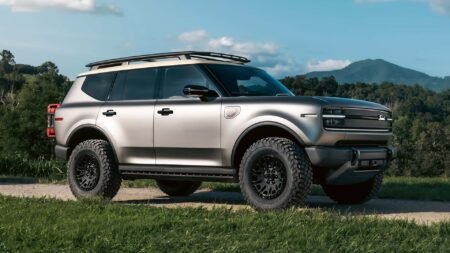
While a range-extending ID. Buzz isn’t happening, the VW Group recently launched its first EREV in China, where the ID. Era 9X is a large six-seat SUV co-developed with SAIC. It uses a 1.5-liter gasoline engine as a generator to charge the battery, reducing charging stops. The company’s new Scout brand will also offer range-extending versions of the Traveler and Terra in the United States when the SUV and pickup truck enter production in 2027.
Late last year, Bloomberg reported that the wider Volkswagen Group is considering range extenders for Europe and the United States. That would make sense, given the long-awaited SSP platform is being developed to accommodate combustion engines that function solely as generators. SSP is expected to eventually replace all of the group’s current electric platforms after potentially debuting in a production Audi in 2028, with Porsche and Skoda models to follow.


53
Motor1’s Take: A range-extending variant might have moved the needle for the ID. Buzz in the United States. While an EREV version doesn’t appear to be happening, VW isn’t giving up on the minivan. The 2027 ID. Buzz brings new colors and wheel designs, along with conventional buttons on the steering wheel. It also gains a Tourer version bundling a fold-out mattress and platform, window blinds, front window ventilation panels, plus an exterior table and chairs.
With hopefully more sensible pricing, the ID. Buzz might still have a chance to win over more U.S. buyers. However, VW will continue shipping the electric minivan with a North American Charging System (NACS) adapter instead of a native port, and that could be a turnoff for some potential customers.
Read the full article here