

• Audi goes behind the scenes of the Nuvolari supercar’s development.
  • Limited to 499 units, the R8’s indirect successor was developed in record time.
  • The Nuvolari is Audi’s first production car with the fresh design language.

We were all taken aback in early June when, seemingly out of nowhere, Audi dropped a bombshell. Some two years after the final R8 rolled off the assembly line, there was a new supercar bearing the Four Rings. Much like the old R8 was heavily related to the Lamborghini Huracan and the Gallardo before it, the Nuvolari has its roots in Sant’Agata Bolognese.

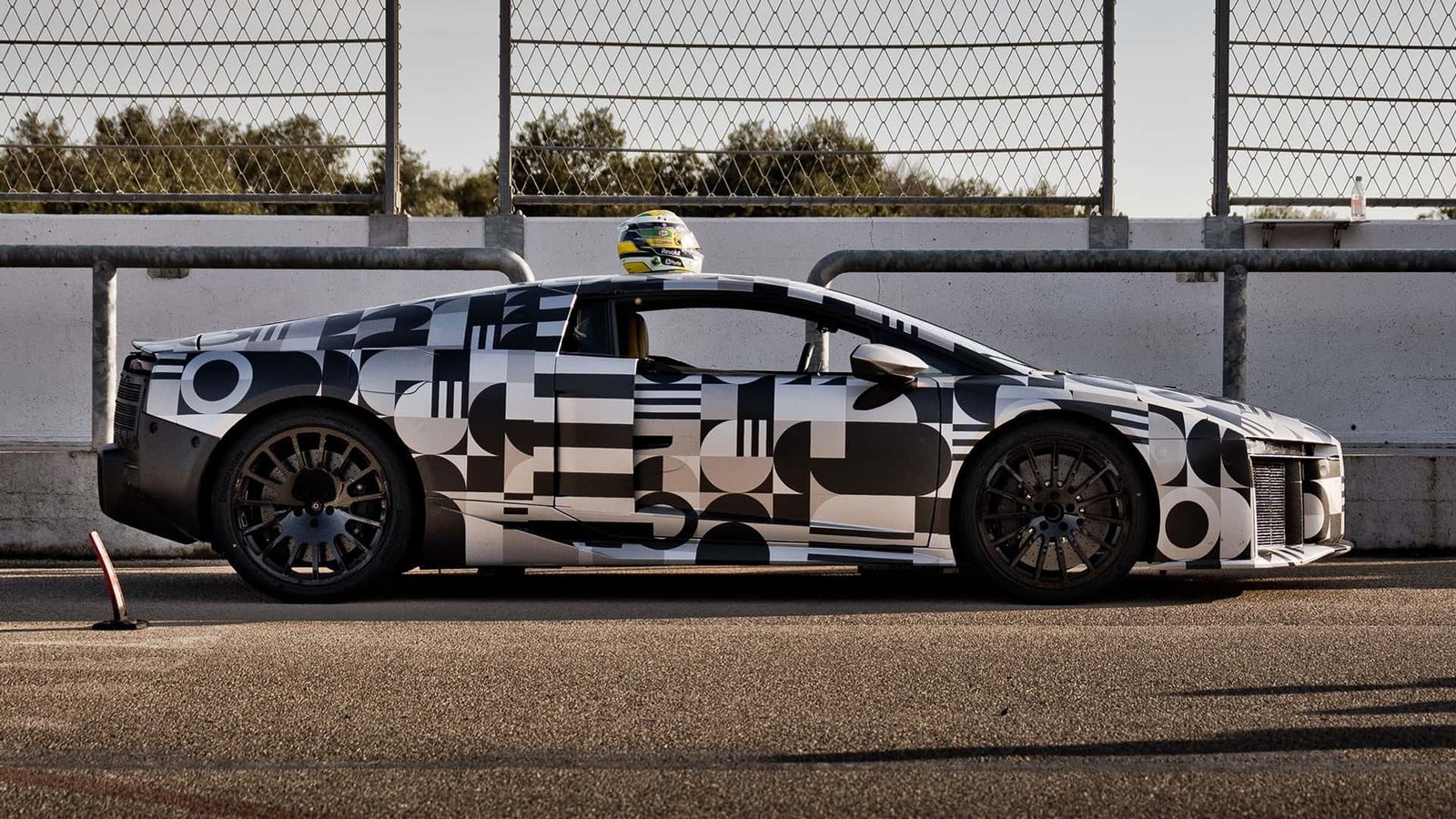
A new video goes behind the scenes of the supercar’s development. As with every car, it all started with a sketch, but Audi needed just 405 days to have a drivable prototype ready for testing. If you somehow had any doubts about its Italian ties, the test mule featured in the video has the Temerario’s body and the raging bull logo stitched onto the headrests.

Even though Audi was able to speed up development by using the “entry-level” Lamborghini as the basis, this 20-minute video gives us an idea of just how much it takes to engineer such a special vehicle. While it was still on the drawing board, the company’s design boss was adamant about what the Nuvolari shouldn’t have: a large rear wing.


2027 Audi Nuvolari Prototype

Photo by: Audi

‘I don’t know if you can record this, but I said: ‘Over my dead body.”

Chief Creative Officer Massimo Frascella insisted the hybrid supercar shouldn’t have a big wing sticking out the back because it would mess up the smooth lines. Audi believed it would be intrusive and wouldn’t look good on what is supposed to be a “gentleman racer,” according to Head of Concept Development Jürgen Meurle. That’s not to say the Nuvolari skips a rear wing altogether.

The Audi Nuvolari Has An Adaptive Rear Spoiler

It has an active spoiler that can stay closed and flush with the body to minimize drag and improve fuel economy. Audi has also engineered a low-downforce mode for the straights, allowing for higher speeds and better stability. When the driver is braking or going through corners, the Nuvolari’s spoiler switches to a high-downforce mode to keep the car glued to the road.

There’s also a button mounted on the steering wheel to activate an F1-like drag reduction system (DRS) manually. It’s intended to help the car reach higher speeds, with Audi saying the Nuvolari can exceed 217 mph (350 km/h), making it the company’s fastest production car in history.

Too Hot To Handle

Even though the Temerario provided a healthy basis, the development process wasn’t exactly smooth sailing. You can see from the early sketches that the Nuvolari’s carbon-fiber body originally had a closed rear section with little in the way of heat dissipation. Audi eventually improved cooling with more vent slats so the twin-turbo 4.0-liter V8 could breathe better and keep temperatures in check.

When deliveries of the 499 cars start in the first half of 2027, the Nuvolari will become Audi’s first production vehicle with this striking new design language. The road-going Concept C electric sports car with a retractable targa roof will also arrive next year, but it, too, will be a niche model. It won’t be until 2028, when the A4 returns as an electric sedan, that we’ll see how the fresh styling direction applies to a volume car.


Motor1’s Take: Videos like this are always captivating, as automakers rarely peek behind the curtains to show what they’re working on. Calling the Nuvolari a rebodied Temerario would be an oversimplification, but the donor car will probably haunt Audi’s supercar everywhere.

Okay, so it’s not a true R8 replacement like we’ve been hoping for, but it’s still a great way to signal a new era of design at Audi.

Read the full article here

Leave A Reply

Exit mobile version