



- Ferrari Luce “Chassis 0” hammered for $40,000,000 at RM Sotheby’s Monterey, setting multiple auction records.
- All proceeds go to The Ferrari Foundation to fund education.
- Series-production Luce is expected near €550,000 (about $640,000), so regular buyers face six-figure, not eight-figure, pricing.
The Ferrari Luce was expected to be a big moment for Maranello’s electric future. Nobody expected it to become a $40 million lightning strike. At RM Sotheby’s Monterey sale, the first-ever Luce “Chassis 0”, Ferrari’s first series-production EV, blew past its estimate of a little over $1.1 million in a bidding war that stunned even hardened auction regulars.
That hammer price did more than set records. It instantly turned Ferrari’s first EV into a halo charity piece, not a normal price signal for future customers. If you’re wondering what this means for Luce production cars, you need to separate the one-off, no-reserve charity spectacle from the reality of upcoming showroom models.
33
Source: RM Sotheby’s
Chassis 0 Becomes A $40 Million EV Halo
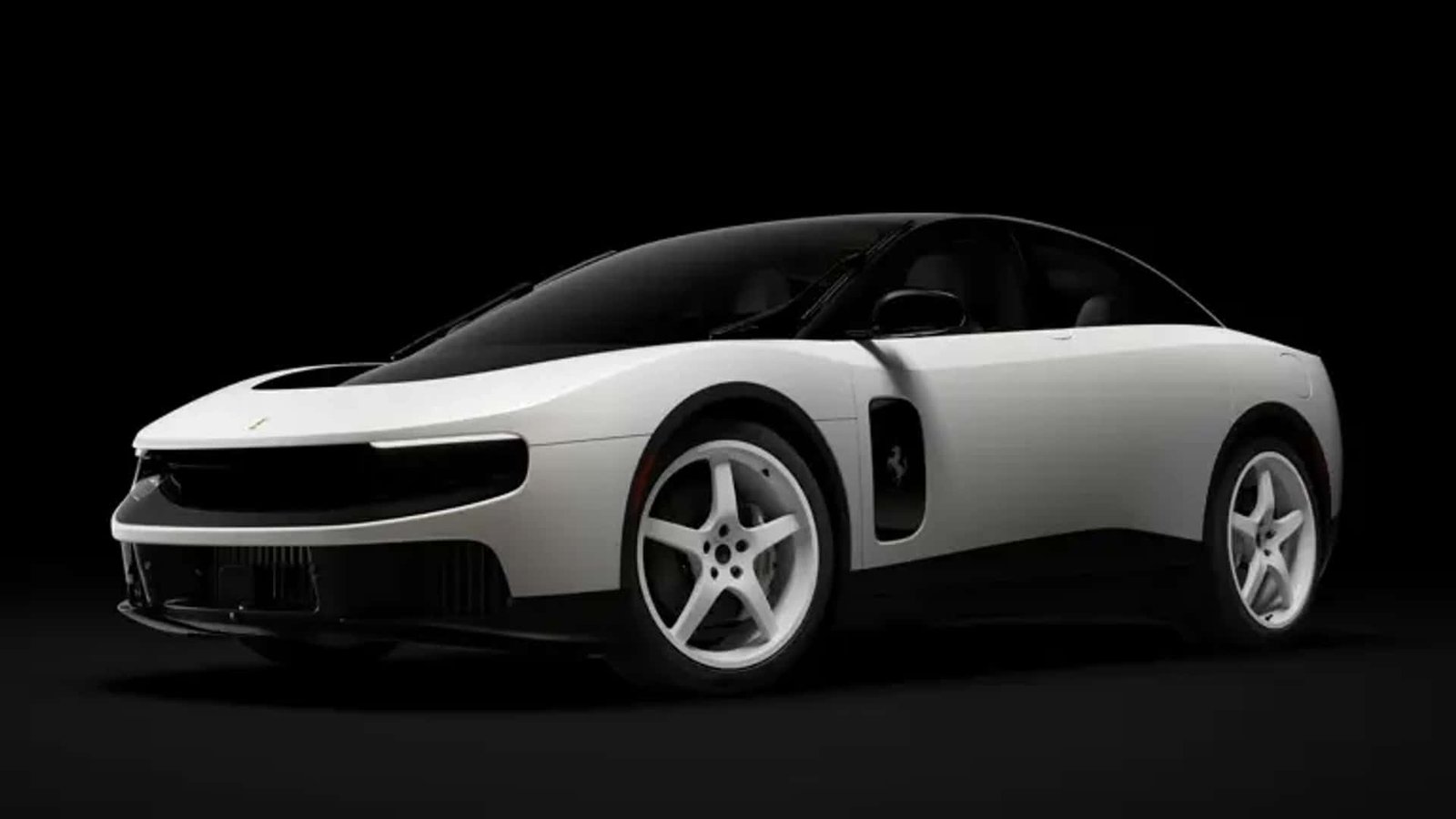
The car that crossed the block in Monterey was no ordinary build slot. RM Sotheby’s cataloged it as the first Luce to roll off the assembly line, wearing a Madreperla Semi-Gloss exterior with matching wheels and brake calipers and a bespoke cabin trimmed in Le Mans metallic leather in Perla with Grigio Corvara accents. It is a fully configured five-seat EV, not just a sketch and a promise.
Under that paint, the Luce packs four electric motors, one at each axle, with the front pair delivering 141 horsepower each and the rears 476 horsepower apiece for a combined 1,050 horsepower. Ferrari quotes 0–62 miles per hour in 2.5 seconds, putting performance deep into modern supercar territory.
The charity angle turned that technical showcase into something else entirely. RM Sotheby’s confirmed the Luce “Tailor Made” charity lot hammered at $40,000,000, topping the previous McLaren F1 GTR auction result by $5.4 million and setting marks as the most expensive electric car, the most expensive new car, and the priciest charity car ever sold at auction. Every dollar goes through The Ferrari Foundation to fund future educational initiatives rather than into Ferrari’s balance sheet or dealer order books.


Ferrari Luce auctioned by RM Sotheby’s
Photo by: RM Sotheby’s
Why This $40 Million EV Won’t Set Luce Sticker Prices
So how did bidding jump from a seven-figure estimate to a $40 million reality? Part of the answer is timing, since Ferrari revealed the Luce only a few months ago with reports pegging standard production pricing at about 550,000 euros, roughly $640,000 at current exchange rates, an elevated but still realistic number compared with the Monterey result for “Chassis 0.”
The other part is that this was a pure charity flex, run without reserve for The Ferrari Foundation and aimed squarely at deep-pocketed Ferrari collectors who wanted the first all-electric Ferrari off the line, a Tailor Made specification, the headline lot at Monterey Car Week, and the chance to outbid rivals while supporting education, a cocktail that pushed the Luce to 36 times its pre-sale estimate rather than hinting at some hidden base price for future buyers.
For regular Luce customers, this sale sits apart from the real market, since Ferrari Luce specs and pricing have already been announced and early coverage has framed the EV in line with Ferrari’s usual front-engine flagships, while availability looks tight enough that one outlet has described Ferrari Luce EV production as effectively sold out and another pointed to strong early demand in key markets such as China, where Luce orders reportedly spiked immediately after the reveal.
Motor1’s Take: The Monterey sale turned “Chassis 0” into a charity halo that boosts Ferrari’s electric credibility without resetting showroom price expectations, since collectors were buying prestige and philanthropy rather than setting a new normal, and the smarter move for prospective Luce owners is to watch how Ferrari uses future Tailor Made charity cars and how quickly those early allocations translate into real deliveries instead of treating this one-off hammer price as a guide to everyday EV sticker math.
Read the full article here