



The return of the Chevrolet Camaro may take a bit longer than expected. A new report suggests the beloved muscle car won’t be back for a few more years—and when it does arrive, it could look very different than before.
According to GM Authority, the seventh-generation Camaro is now expected to debut as a 2029 model, roughly a year later than previous reports suggested. Production is still reportedly slated for GM’s Lansing Grand River Assembly plant in Michigan.
The delay isn’t the only interesting development, though. GM Authority also reports that Chevrolet is planning to reinvent the Camaro as a four-door performance sedan rather than the traditional two-door coupe. Think of it as a spiritual successor to the Chevy SS.
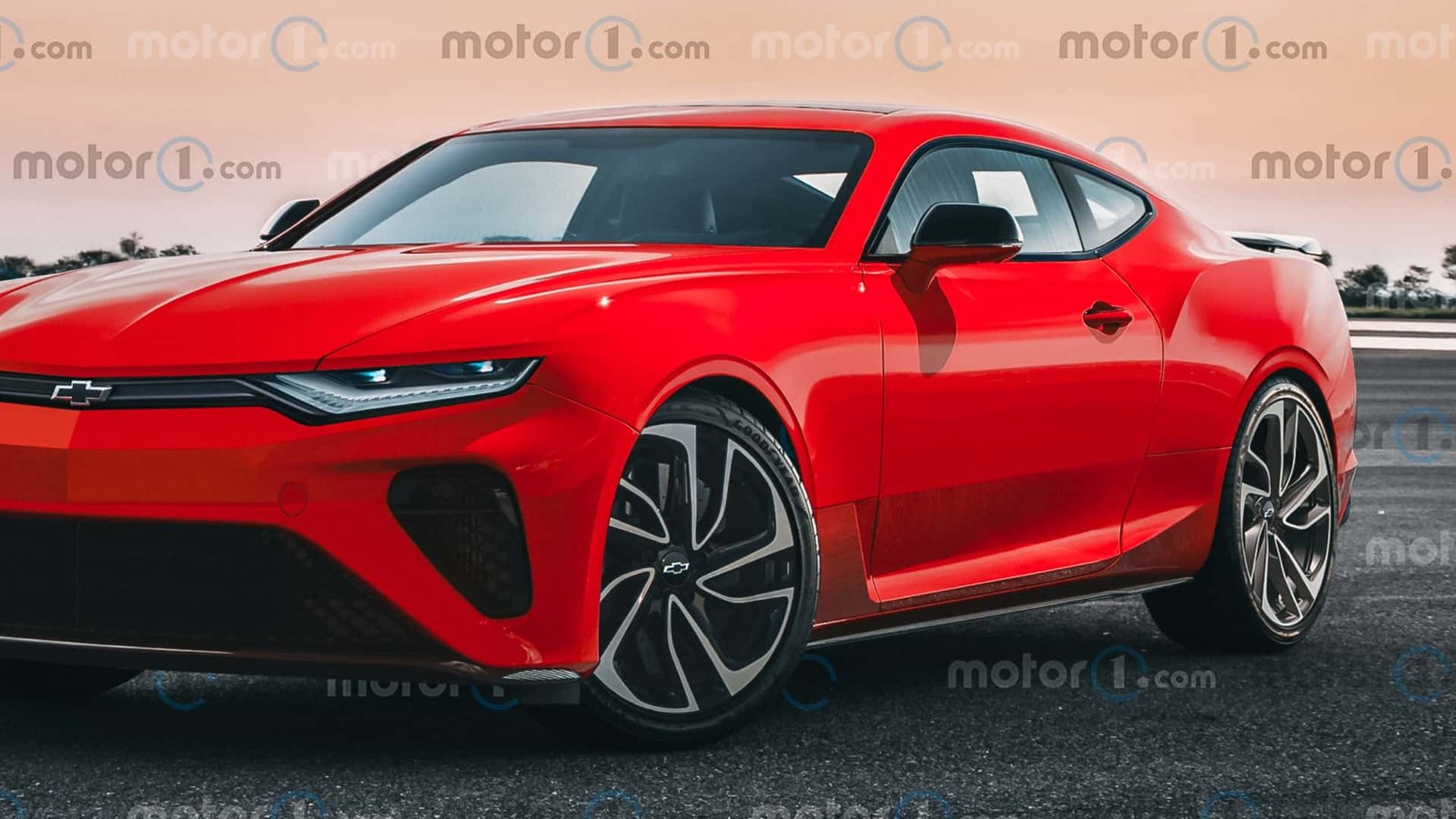
2028 Chevrolet Camaro Coupe Rendering By Motor1
Photo by: Theophilus Chin | Motor1
The Reborn Camaro… Sedan?
GM has yet to officially confirm the Camaro’s return, but rumors of its revival have been building since April. Reports have pointed to an all-new rear-wheel-drive performance car based on an updated version of GM’s Alpha platform, which is also expected to underpin the next Cadillac CT5 and a new Buick sedan.
Previous reports suggest the Camaro will remain true to its performance roots by sticking with internal-combustion power instead of going electric. A manual transmission is reportedly part of the plan, while higher-performance variants could eventually adopt GM’s new naturally aspirated 6.7-liter LS6 V-8.
If the sedan rumors prove true, however, the body style—not the powertrain—will be the Camaro’s biggest departure. Swapping the coupe’s long doors for a more practical four-door layout would mark one of the most significant changes in the model’s nearly 60-year history.
Until Chevrolet makes anything official, though, every detail surrounding the next-generation Camaro should be treated as speculation.


6
Source: Theophilus Chin | Motor1
Motor1’s Take: The slight delay isn’t necessarily bad news. The sixth-generation Camaro ended production after the 2024 model year, and Chevrolet has repeatedly hinted at the nameplate’s return. If the extra development time means a better-engineered sports car, we’re all for it.
Read the full article here