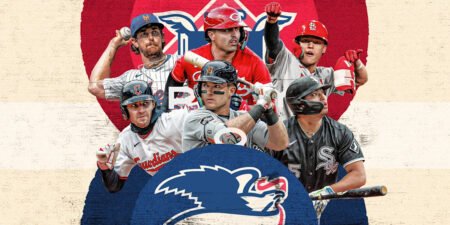



One of the early trends of the 2026 MLB season has been a flurry of activity by teams locking up young talent via extensions. It’s a trend that dates back to early last season when the Red Sox signed Garrett Crochet and Kristian Campbell in the early going before the Padres locked up 2024’s Rookie of the Year runner up, Jackson Merrill through 2034. That trend has only accelerated in 2026 with a flurry of contract extensions for rookie players and some guys who have yet to make their big league debut according to MLB.com:
In 2025, three players — the Orioles’ Samuel Basallo and Red Sox teammates Roman Anthony and Kristian Campbell — inked long-term contract extensions soon after making their MLB debuts. And now in 2026, four more players have signed early extensions, two of them before even debuting in the big leagues:
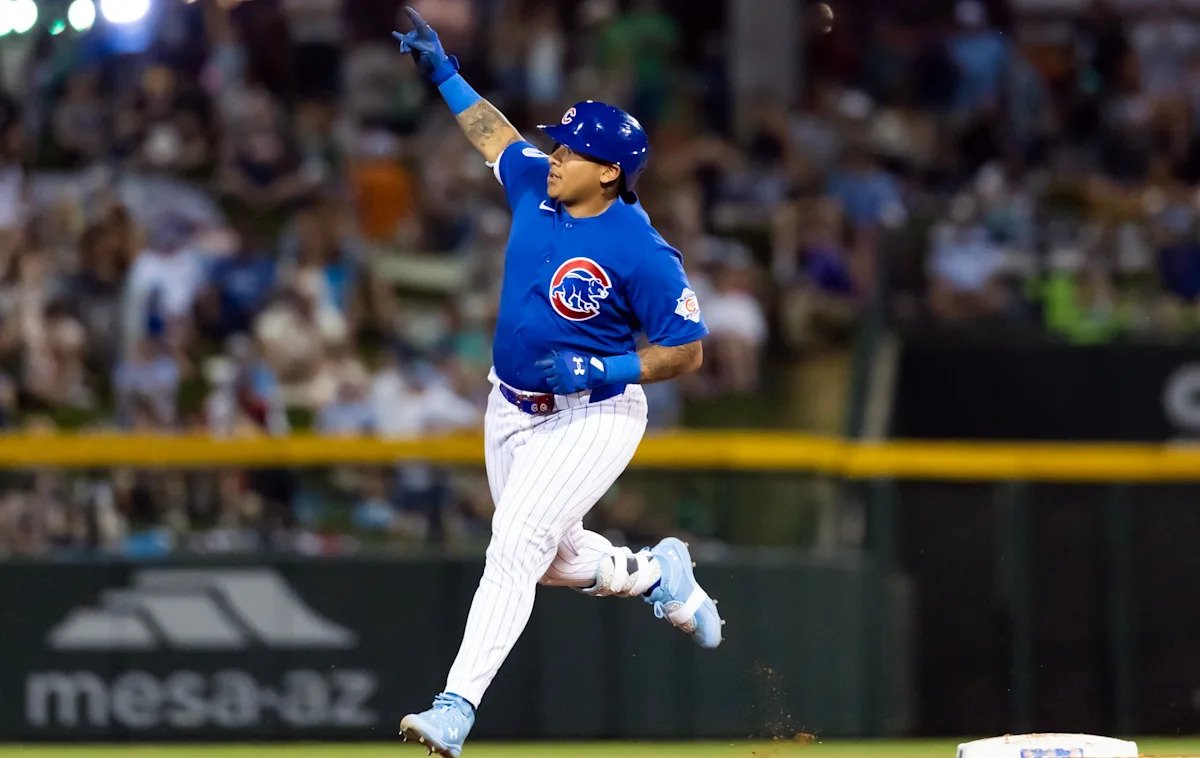
The Cubs have joined the frenzy of extensions this season, signing long-term deals with Pete Crow-Armstrong and Nico Hoerner. They should really go all in and join the youth movement, extending rookie hitting prodigy Moisés Ballesteros.
Advertisement
There’s been a lot of speculation as to the causes of early extension-palooza, but it seems pretty clear this is a knock on effect of next year’s looming Collective Bargaining Agreement negotiations. As Ken Rosenthal wrote earlier this month for The Athletic (emphasis mine):
Teams only award extensions to players they project will outperform the contracts, producing surplus value. Owners crave cost certainty, especially near the end of a collective-bargaining agreement. And the expiration of the current CBA on Dec. 1 provides even more incentive for MLB franchises to lock up young talent.
Among many possibilities, the owners might try to tempt the players into accepting a salary cap by offering free agency earlier than the current six-year mark. The Seattle Mariners, in the eight-year, $95 million deal they awarded infielder Colt Emerson on Tuesday, bought out a minimum of two free-agent years, and as many as three if they exercise a club option. The additional control will be even more valuable if players in the next CBA can hit the open market sooner.
Even if the CBA remains unchanged, the Mariners will come out ahead if Emerson’s extension proves a bargain, as these deals often do. For every Scott Kingery or Evan White who underperforms his contract — both those players signed six-year, $24 million extensions with three club options in the late 2010s — there are numerous others whose below-market deals save their teams countless millions.
Rosenthal goes on to conclude that MLB will see more prospects extended in the coming months, which brings us to Ballesteros.
The only question really remaining about the 22-year-old Venezuelan hitter is will he find a position someday? The bat looks real and it’s spectacular. Yes, it’s early. Yes, he’s young. And, take a look at his 15-game rolling wOBA through his young career:
I can hear the objections now: baseball is hard, he’s only 22 years old, where will he play long-term? I definitely am sympathetic to all of that. And while I’ll concede that 108 MLB plate appearances is a minuscule sample size, this looks like a special bat.
Advertisement
Ballesteros is slashing .316/.389/.495 with 10 home runs through his first 35 games in the league. Oh, and, those numbers are being drawn down by a slow start to his career in 2025 and that blip of a downturn at the start of the 2026 season.
To be clear, there have been a lot of hot starts to MLB careers that turned out to be flashes in the proverbial pan. Who could forget the damage Aristides Aquino did to Cubs pitching once upon a nightmare? Or the hot start Jorge Soler got off to in 2014? Ballesteros is a category difference and the Cubs should extend him for three reasons:
First, the 22-year-old has quickly mastered every level of professional ball he’s played at thus far. He’s also done so while being relatively young age for his age level. Take a look at this table I put together last year comparing Ballesteros age-to-level with Royals catcher Salvador Perez:
|
Player/Year |
Level |
Age |
PA |
AVG |
OBP |
SLG |
wOBA |
wRC+ |
|---|---|---|---|---|---|---|---|---|
|
Perez 2007 |
R |
17 |
99 |
.244 |
.320 |
.279 |
.301 |
71 |
|
Ballesteros 2021 |
DSL |
17 |
187 |
.266 |
.396 |
.390 |
.396 |
131 |
|
Perez 2008 |
R |
18 |
95 |
.361 |
.409 |
.482 |
.397 |
136 |
|
Ballesteros 2022 |
CPX/A |
18 |
239 |
.257 |
.351 |
.461 |
.374 |
126 |
|
Perez 2009 |
R/A |
19 |
396 |
.267 |
.313 |
.356 |
.308 |
80 |
|
Ballesteros 2023 |
A/A+/AA |
19 |
494 |
.285 |
.374 |
.449 |
.381 |
133 |
|
Perez 2010 |
A+ |
20 |
396 |
.290 |
.322 |
.411 |
.328 |
107 |
|
Ballesteros 2024 |
AA/AAA |
20 |
508 |
.289 |
.354 |
.471 |
.371 |
123 |
|
Perez 2011 |
AA/AAA |
21 |
358 |
.290 |
.331 |
.437 |
.341 |
96 |
|
Ballesteros 2025 |
AAA |
21 |
150 |
.368 |
.420 |
.522 |
.424 |
150 |
|
Perez 2011 |
MLB |
21 |
158 |
.331 |
.361 |
.473 |
.363 |
126 |
Perez came up before the minor leagues were reorganized so the levels don’t neatly match, but for our purposes today this provides the neatest comparison possible. If anything, Ballesteros has come up through a more difficult minor league system structurally than Perez, which makes it particularly striking that he’s a better player offensively by basically every metric. As I wrote at the time:
There’s a lot to love in those numbers, especially when you consider that Salvador Perez has has put together a 14-season career as a bat-first catcher and franchise player for the Kansas City Royals. Perez has hit .266/.302/.455 with 275 home runs over that time and established himself as one of the best hitting catchers in MLB. There are some key differences, however.
First, Ballesteros has been better at getting on base than Salvy during his minor league career to date. A lot better. It shows in both the OBP comparison and the wOBA comparison. As a reminder, wOBA is a fancy on-base percentage that gives hitters more credit for extra base hits than singles or walks.
Second, I expected Perez to have demonstrated more power during his minor league career. I was wrong. Perez had 20 home runs between his age-17 season and his callup at 21. Ballesteros has 50. Yes, you read that right, Ballesteros has more than twice the number of home runs Salvador Perez had at this point in his career. Some of that is surely the number of plate appearances, Ballesteros has more in the minors than Perez does. However, he doesn’t have double the number of plate appearances. Perez had 1,344 plate appearances prior to his call up. Ballesteros has 1,578 prior to his call up. It remains to be seen if Ballesteros’ power will translate to MLB, but it’s a favorable minor league comparison nonetheless.
The point is, this isn’t a hot start in the majors, this is a track record of elite hitting at every level that is currently being matched at the highest level of baseball that exists.
Advertisement
Second, it’s true that Ballesteros doesn’t have a good defensive fit right now, but the wRC+ numbers he’s posted throughout his career would make sense to lock up even if he winds up a designated hitter throughout his career. So far in his young career Ballesteros has a 147 wRC+ along with a .383 wOBA. Obviously the exercise I’m about to embark in is way too early speculation, however, allow me to throw out the names of some guys who were primarily DH’s throughout their career with similar wRC+ and wOBA numbers: Edgar Martinez (147, .405), David Ortiz (140, .392), Giancarlo Stanton (136, .369). Admittedly, those are probably 90th percentile outcomes and Ballesteros hasn’t demonstrated anywhere near the power ceiling any of those hitters had over their careers, but the ceiling is enticing all the same.
That said, what if he’s “only” Kyle Schwarber (127, .360) or J.D. Martinez (130, .365)? Both strike me as the type of hitter who is elite enough that their bat will remain in the lineup as a primary designated hitter. Both also strike me as the type of hitter a team should try to sign before the cost of the contract skyrockets.
Finally, while it’s so early to dream on what could be with Ballesteros, he’s already demonstrated a pretty remarkable ability to adapt to the league. Brett Taylor of Bleacher Nation wrote this on April 6:
As I watched Moises Ballesteros swing through a fastball way above the strike zone in the 9th inning of the game two loss yesterday, I thought to myself: Has he been doing that more than he did last year? Is this one of the league’s offseason adjustments?
It was never a question of whether the league would find new and different ways to attack Ballesteros this year. It was just a question of how quickly Ballesteros could figure them out and adjust. We knew this coming into the season, given that clubs had an entire offseason to run the data, and given that Ballesteros was now wearing the mantel of expected-run-producer in the Cubs’ lineup, rather than simply being a late-season call-up/fill-in guy. This league is tough on young hitters.
There were valid reasons for concern as of April 6. However, take a look at Ballesteros’ stats through April 5 compared with April 6 through yesterday:
|
Date |
PA |
H |
HR |
K% |
BB% |
AVG |
OBP |
SLG |
wOBA |
wRC+ |
|---|---|---|---|---|---|---|---|---|---|---|
|
Before 4/5 |
22 |
3 |
0 |
9.1% |
36.4% |
.150 |
.227 |
.150 |
.269 |
15 |
|
Since 4/5 |
20 |
10 |
2 |
5.0% |
5.0% |
.556 |
.550 |
.944 |
.452 |
304 |
Those aren’t sustainable numbers and the real Ballesteros lives somewhere between these two poles, but that is a demonstrable adjustment to the league adjusting to him. It’s intriguing to say the least and impressive given his track record in the minors.
Advertisement
There are no guarantees in baseball. Perhaps Ballesteros is a J.D. Martinez DH in the making, perhaps he’s a flash in the pan like Aristedes Aquino. But the ceiling of a David Ortiz, the track record in the minors and the prowess he’s shown in his brief MLB career lead me to believe this is a player the Cubs should invest in now. His lack of a current home defensively should make it cheaper to buy out his early years than any of the contracts cited by MLB.com above. That’s a potential steal for the Cubs and a deal Jed Hoyer and Carter Hawkins should consider making now, before Ballesteros has grown into his power and while the CBA constraints give Ballesteros the incentives to say yes.
Read the full article here