

- New 2.0-liter turbo with 48-volt mild-hybrid delivers 255 hp and 295 lb-ft; ISG adds 23 hp, 151 lb-ft.
- C 400 e 4MATIC pairs a 100-kW motor with a 19.53-kWh battery, giving up to 62 miles electric range (Europe).
- MBUX runs on a stronger OS with a 12.3-inch cluster, 11.9-inch center display, eight cameras and five radars for MB.DRIVE.
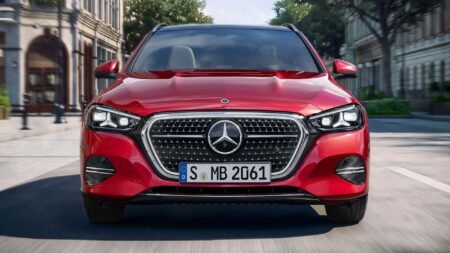
The facelifted Mercedes-Benz C-Class does not just glow more at night. Behind that new illuminated grille and star-shaped light signatures sits a heavily reworked combustion lineup, more electric assistance, and a cabin packed with bigger screens and an AI assistant. It is still very much a gas-powered C-Class, just wired for a more digital future.
For buyers who are not ready to move to the already revealed all-electric C-Class sedan, this update matters. The C-Class adds stronger mild-hybrid hardware, a serious plug-in hybrid, and new driver-assistance tech, while keeping the silhouette and driving character that made it a segment benchmark.
37
Source: Mercedes-Benz
Engines, Mild-Hybrid Tech, And Plug-In Range
Under the hood, the headline change is a new turbocharged 2.0-liter four-cylinder with a 48-volt mild-hybrid system, rated at 255 horsepower and 295 pound-feet of torque. An electric auxiliary compressor helps the turbo build boost faster at low rpm, while an integrated starter-generator can briefly add up to 23 horsepower and 151 pound-feet to smooth launches and fill in the torque curve.
Globally, the facelift broadens the electrified combustion range with updated 2.0-liter petrol and diesel engines, all paired with second-generation 48-volt hardware and an integrated starter-generator that can add short bursts of electric shove and enable engine-off coasting. Diesel units remain part of the mix in many markets and are now compatible with higher biofuel blends, which helps the car meet upcoming Euro 7 emissions rules without dropping combustion altogether.
The plug-in hybrid C 400 e 4MATIC combines its combustion engine with a 100-kilowatt electric motor and a 19.53-kilowatt-hour battery. Mercedes quotes up to 62 miles of electric range on the European test cycle, enough to cover typical daily commutes on battery power alone if you plug in regularly.
Design, Tech, And When It Arrives
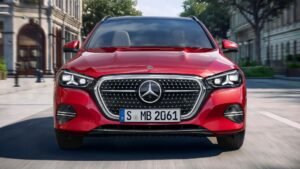
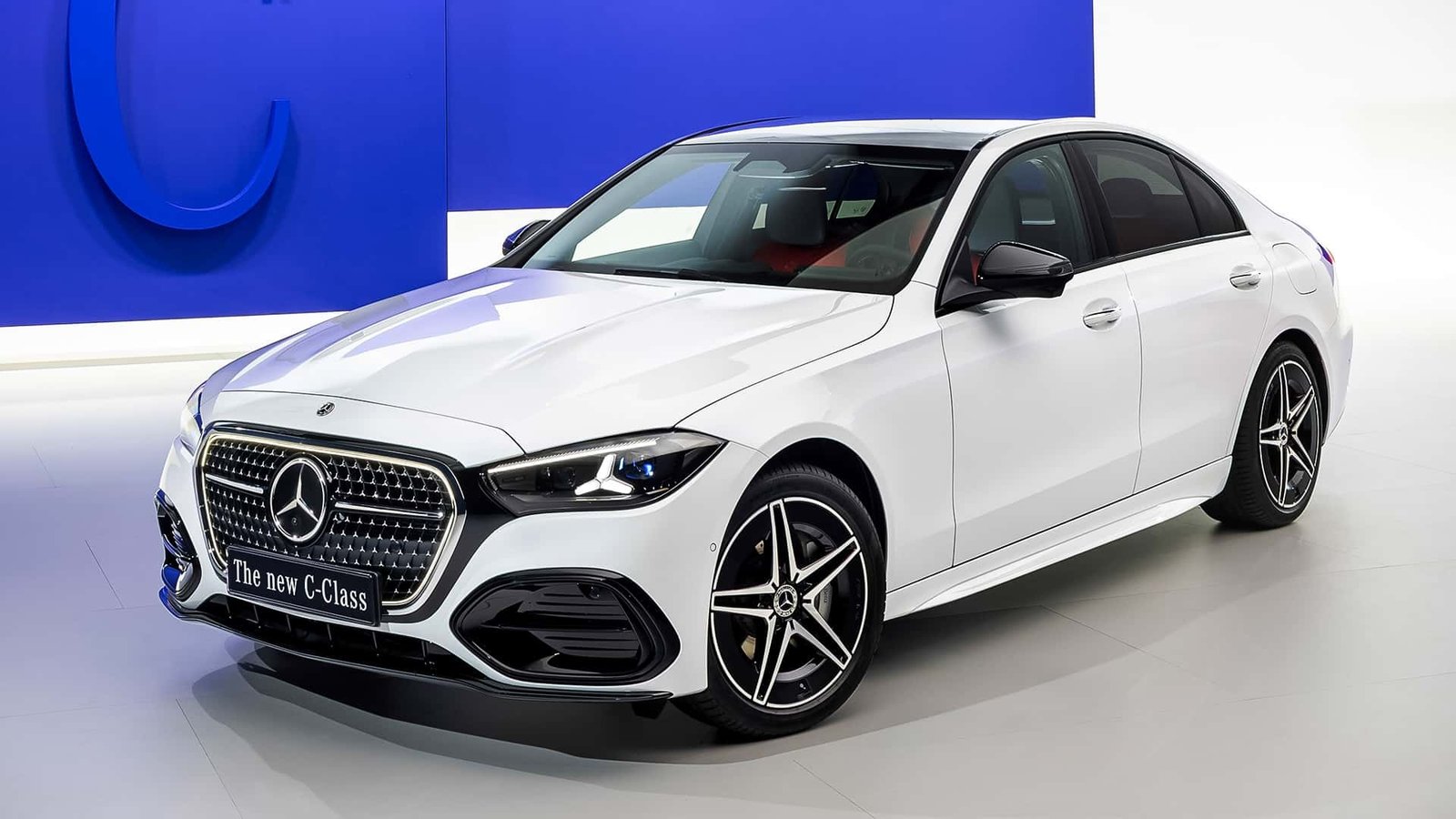
Visually, the facelift leans on a new illuminated grille framed by a light strip and an optional glowing three-pointed star, paired with headlamps that integrate star-shaped running lights. New bumpers and tail lamps echo that motif, and fresh paint shades like Miami Silver Metallic and Moody Sky Grey Metallic join the palette so the car looks as new as its hardware.
Inside, the C-Class now runs a more powerful Mercedes-Benz Operating System with a 12.3-inch digital gauge cluster and an 11.9-inch center display, plus the MBUX Virtual Assistant that can handle multi-turn conversations and answer general questions. The car surrounds that software with serious hardware too, including eight cameras, five radar sensors, and 12 ultrasonic sensors feeding the MB.DRIVE assistance suite for lane keeping, adaptive cruise, and parking help.
Rear-axle steering can turn the back wheels by up to 2.5 degrees, trimming the turning circle to 34.9 feet, which drivers will appreciate in tight garages or old city centers. Energy-efficient Digital Light headlamps with micro-LED tech are optional and use up to 50 percent less energy while throwing a wider, cleaner beam. The combustion C-Class reaches European customers first, with the US launch slated for the first half of 2027, alongside the C 400 4MATIC electric that Mercedes already unveiled with up to 474 miles of WLTP range from a 94.0-kilowatt-hour battery and an 800-volt architecture.
Motor1’s Take: This facelift keeps the C-Class relevant for buyers who are not ready to go full electric by modernizing the combustion range with real hybrid assistance and a plug-in that can handle daily commutes on battery power, while ownership appeal will hinge on real-world economy, pricing of the new tech, and long-term costs tied to the extra sensors and software.
Read the full article here