



”
], { type: “text/html” }
);
const iframe = document.createElement(“iframe”);
iframe.src = URL.createObjectURL(blob);
iframe.style.cssText = “width:100%;height:100%;border:0;”;
container.appendChild(iframe);
attachIframeMessageListener(iframe);
}
const observer = new IntersectionObserver((entries, obs) => {
const entry = entries[0];
if (entry.isIntersecting) {
obs.unobserve(entry.target);
requestIdleCallback(() => {
initWidget(entry.target);
}, {
timeout: 200
});
}
}, {
root: null,
rootMargin: “300px 0px”,
threshold: 0.01
});
requestIdleCallback(() => {
$all(“.nl-inline-form-container”).forEach((c) => {
observer.observe(c);
});
});
})();
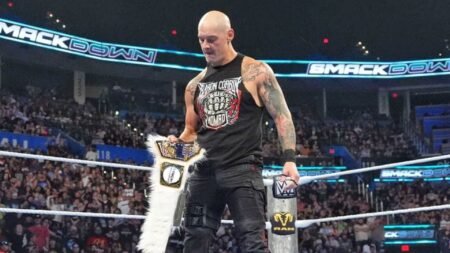
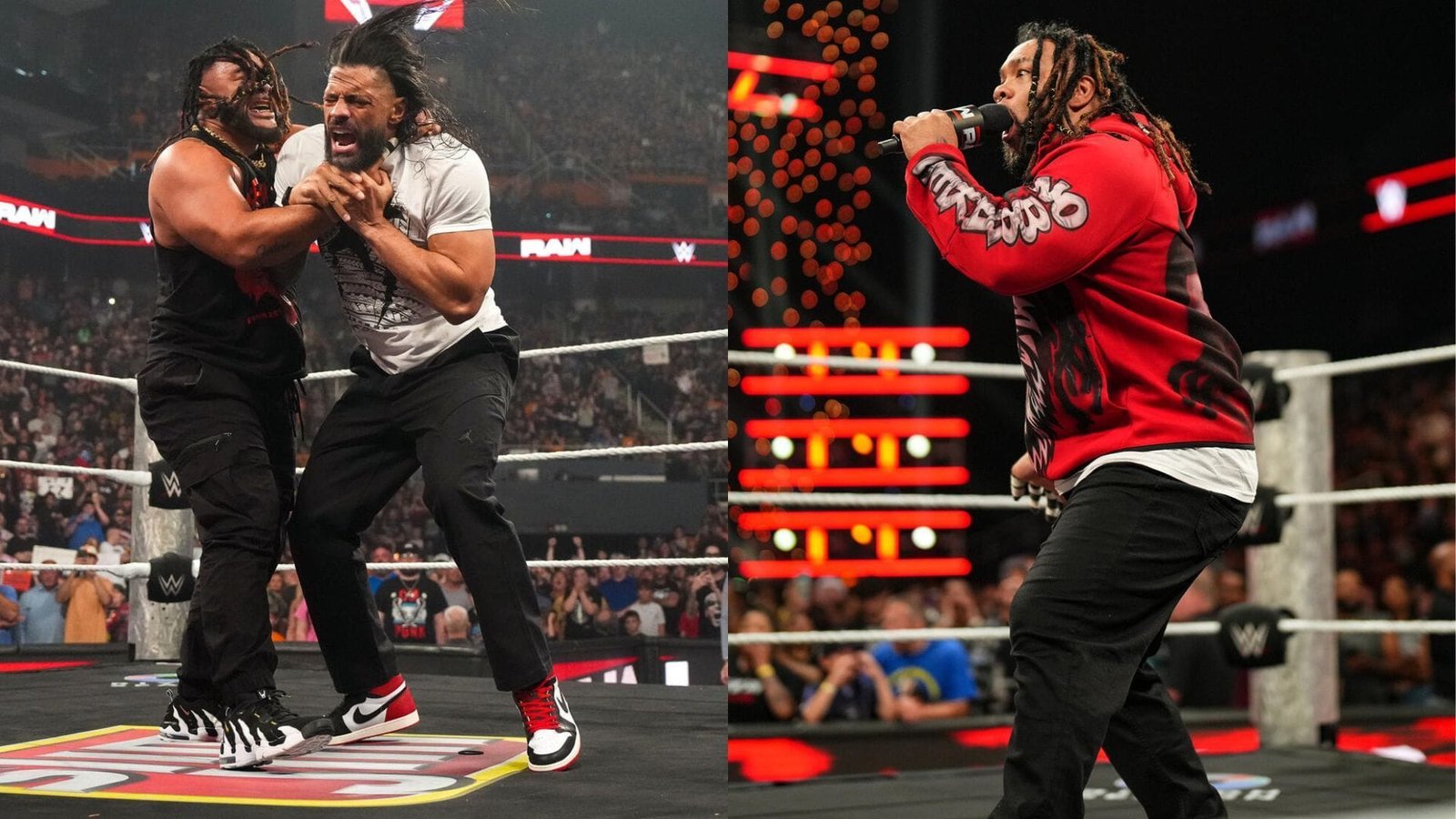
On tonight’s edition of RAW, The Samoan Werewolf called out Reigns, but Jey and Jimmy Uso came instead. The confrontation turned into a physical brawl, and Fatu got the upper hand on both men. However, the champ joined the ring, and the OG Bloodline outnumbered Fatu.
Following the beatdown, RAW General Manager Adam Pearce came out looking to fire Fatu for breaking the contract terms, but the latter grabbed a microphone and challenged Reigns to Tribal Combat. The OTC accepted the challenge immediately.
Michael Cole confirmed on commentary that the match will take place at Clash in Italy on May 31 at the Inalpi Arena in Turin.
In this article, we will look at three reasons that explain why Fatu is challenging WWE World Heavyweight Champion Roman Reigns in a Tribal Combat Match.
#3. Refusing to acknowledge the Tribal Chief
One of the biggest reasons behind Jacob Fatu’s challenge is his refusal to acknowledge Roman Reigns as the Tribal Chief.
Acknowledgment is the foundation of everything Roman Reigns has built since 2020. Every Bloodline member – The Usos, Sami Zayn, and Solo Sikoa – was eventually required to bow to Reigns as the Tribal Chief. At Backlash, Reigns made it a formal contract stipulation that Fatu had to acknowledge him if he lost the title match. Fatu lost and publicly refused to acknowledge.
That refusal is not just defiance for television. Fatu’s argument is that he owes the OTC nothing. He has openly stated that Solo Sikoa was the one who brought him to WWE, not Reigns, and that Reigns spent years at the top while Fatu was grinding on the independent circuit and dealing with personal consequences outside of wrestling.
Challenging Reigns to Tribal Combat is Fatu’s direct response to the acknowledgment demand. He is not going to say the words. He is going to make Reigns earn the acknowledgment by beating him in a match where anything goes – a format that removes every structural advantage Reigns holds as champion and as Tribal Chief.
#2. He wants to beat Roman Reigns at his own game
Another major reason behind the challenge is Jacob Fatu’s desire to defeat Roman Reigns in the type of match that has defined Reigns’ dominance for years.
Tribal Combat has only ever taken place twice in WWE history, and Roman Reigns won both matches. First against Jey Uso at SummerSlam 2023 and second against Solo Sikoa at the RAW Netflix premiere in January 2025. Reigns is undefeated in the stipulation. He owns it. And that is exactly why Fatu has chosen it.
Tribal Combat rules are straightforward. There is no disqualification or count-out, and the only way to win is by pinfall or submission. The loser must acknowledge the winner as the Tribal Chief of the family.
Fatu’s in-ring record on WWE TV since his debut supports the argument that he can win under these conditions. The Samoan Werewolf has been booked as a highly dominant force. He defeated Drew McIntyre in an Unsanctioned Match at WrestleMania 42 Night One. Fatu’s entire arsenal, including the Tongan D*ath Grip, the running hip attack, and the physicality at the Backlash PLE, confirmed that Reigns could not handle him cleanly without interference.
Fatu chose this stipulation despite Reigns’ record in it because he believes he is the first physically built opponent to break that record. Defeating Roman Reigns at his own game would completely change the power structure within The Bloodline.
#1. Jacob Fatu wants to become the next Tribal Chief and holder of the Ula Fala
The championship is only part of what The Samoan Werewolf is after. The Ula Fala is awarded to the Tribal Combat winner and carries the recognition of Tribal Chief, the undisputed leader of the Anoa’i family. The outcome carries weight far beyond the championship itself.
Fatu has been direct about his motivation throughout this entire feud. He wants the money the championship provides. He wants better schools for his children and a better life for his family. The story between Reigns and Fatu is built entirely around acknowledgment within the Samoan family dynasty. Reigns has consistently said that without family respect, no one outside their Bloodline will respect Fatu either.
Fat wants control. Challenging the World Heavyweight Champ in Tribal Combat gives him the opportunity to prove that he deserves to lead the family moving forward. If he defeats Roman Reigns and claims the Ula Fala, the entire Anoa’i family will acknowledge him, and it would instantly elevate Fatu to another level in WWE.
More from Sportskeeda
${getStoryActionHTML(story, storyTitle, permalink)}
`;
if (index == 3 && isOpera) {
storyHTML += `
`;
}
recommendedArticlesContainer.innerHTML += storyHTML;
});
}
}
function getStoryActionHTML(story, storyTitle, permalink) {
if (shouldHidePostActions) return “”;
return `
`;
}
function recommendedArticles() {
var baseUrl = “https://cf-gotham.sportskeeda.com/recommendations/post/3-reasons-jacob-fatu-challenging-wwe-world-heavyweight-champion-roman-reigns-tribal-combat-match?lang=en&category=wwe”;
pureJSAjaxGet(baseUrl, function(data) {
renderRecommendedArticles(data);
if (isOpera) {
renderOperaFeedAd();
}
}, function() {}, false);
}
var options = {
root: null,
rootMargin: “0px 0px 70% 0px”,
threshold: 0.1
};
var observer = new IntersectionObserver(function (entries) {
entries.forEach(function (entry) {
if (entry.isIntersecting) {
recommendedArticles();
observer.unobserve(entry.target);
}
});
}, options);
var targetElement;
if (showAlsoReadSection && !showAlsoReadSectionV2) {
targetElement = document.querySelector(‘.also-read-articles-container’);
} else {
targetElement = document.querySelector(‘.recommended-posts’);
}
if (targetElement) {
observer.observe(targetElement);
}
function renderOperaFeedAd() {
var operaFeedArticleAd = $(“.opera-article-feed-ad”);
if (!operaFeedArticleAd) {
return;
}
var firstScript= document.createElement(‘script’);
firstScript.setAttribute(“type”, “text/javascript”);
firstScript.setAttribute(“src”, “https://pagead2.googlesyndication.com/pagead/js/adsbygoogle.js?client=ca-pub-1883810847636355”);
firstScript.setAttribute(“async”, true);
firstScript.setAttribute(“crossorigin”, “anonymous”);
operaFeedArticleAd.appendChild(firstScript);
operaFeedArticleAd.innerHTML += `
`;
var secondScript = document.createElement(‘script’);
var secondScriptCode=””;
try {
secondScript.appendChild(document.createTextNode(secondScriptCode));
operaFeedArticleAd.appendChild(secondScript);
} catch (e) {
console.error(e);
}
}
})();
Fetching more content…


Read the full article here