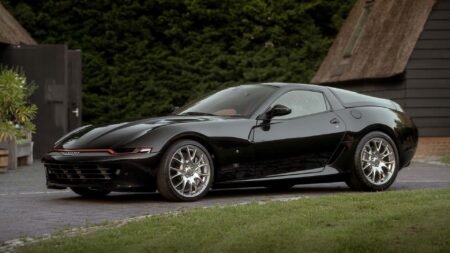




Doubt the power of design? Look no further than the Ferrari Luce kerfuffle, the AMG GT 4-Door uproar, or the Jaguar Type 00 disgrace. Given the fierce and sometimes dysfunctional relationship between storied brands and their most loyal fans, it’s no wonder these high-profile design outliers were considered betrayals of trust. Mess with an icon, risk the future credibility of your beloved brand.
It’s been four quiet years since BMW’s acquisition of Alpina in 2022, so it’s no wonder Bimmer loyalists breathed a collective sigh of relief when the Vision BMW Alpina concept finally broke cover at the Villa d’Este Concorso d’Eleganza.
Vision BMW Alpina Design Study
Photo by: BMW
Sleek and gracefully proportioned, the one-off effortlessly pulled off numerous romanticized BMW design signatures—shark nose, kidney grille, Hofmeister kink, and cab-rear bias for starters. Instead of exaggerated caricatures or distorted interpretations of these hallmarks, this Alpina exudes a calm modernity that works both as a concept car on the shores of Lake Como and as something you could imagine in your suburban garage.
We caught up with Alpina’s leadership and design team to break down how and why one of the year’s most well-received designs came to life.
White Space
Unlike a certain astronomically priced prancing horse EV, there is a rational white space between the 7 Series ($100k +) and the Group’s next-priciest offering, the Rolls-Royce Ghost ($370k). Bigger picture, there is also room for competition amidst players in that space like Bentley and Maybach. BMW Alpina CEO Oliver Viellechner suggests the market is ripe within the nascent segment.
“The growth of wealth globally is still very robust,” he says, citing a BCG (Boston Consulting Group) study that projects a 9 percent increase per year in ultra-high net worth individuals. Viellechner suggests that particular demographic is not only growing, it’s evolving.
“Those individuals really tend to change their spending behaviors. There’s a trend toward more subtle, more understated, more experience-driven consumption beyond just products and massive expressive luxury.”


Photo by: BMW
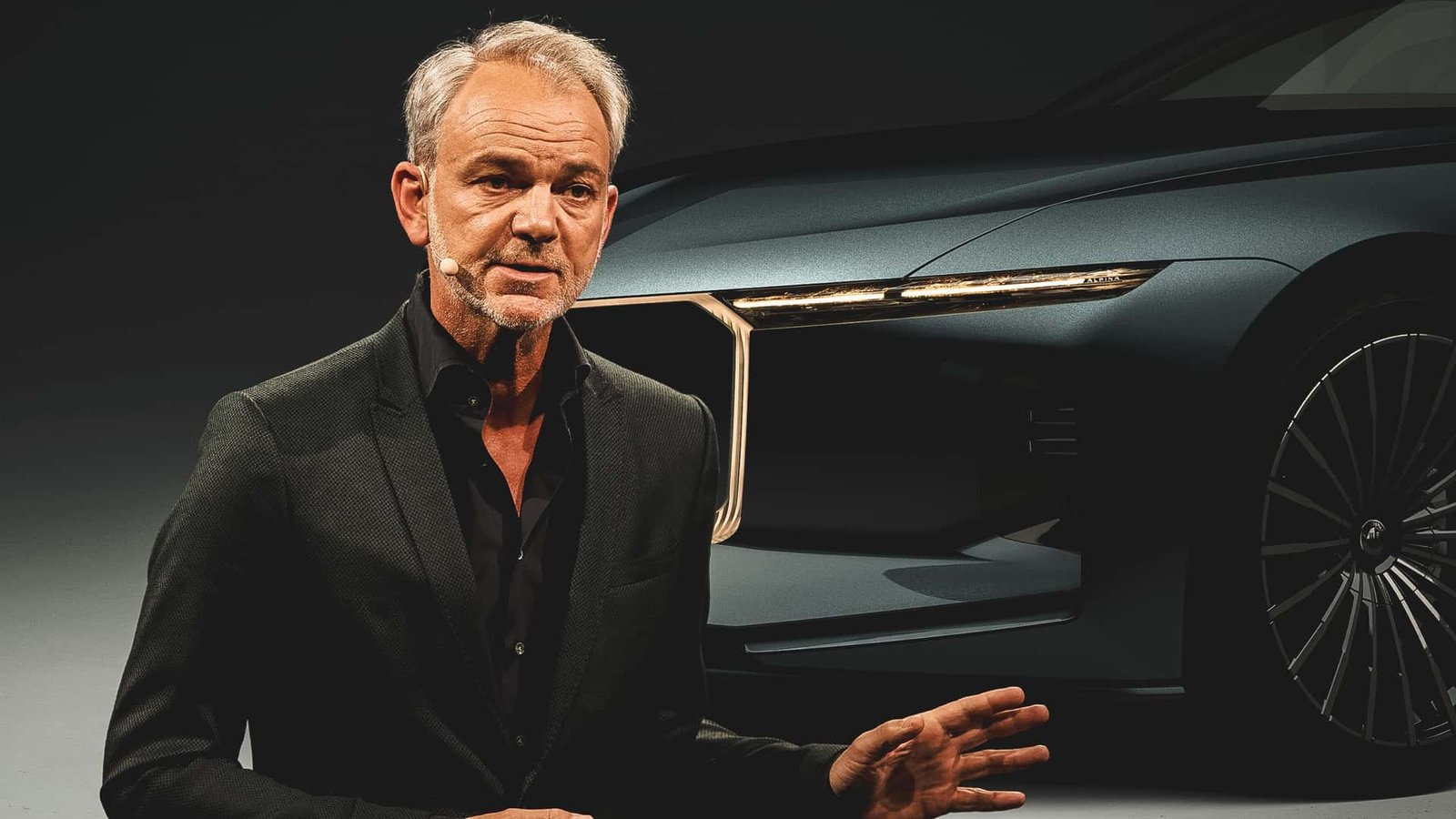
When it comes to product planning, head of BMW Group Design Adrian van Hooydonk says that Alpina’s positioning was carefully considered.
“I was there when we acquired Mini and Rolls-Royce, so I know how BMW goes about bringing a new brand into the fold. We studied history long and hard and tried to keep what we think is important and develop it further. And that’s how we went about with BMW Alpina.”
Van Hooydonk says he had several dinners with Alpina clients to put a finer point on what makes the nameplate appealing—those little snippets helped refine the brand’s brand elements.
“We showed them bits and pieces of what we’re going to do. Sometimes just the wheel, some colors, upholstery, a new logo.”
‘We studied [Alpina] history long and hard and tried to keep what we think is important and develop it further.’
But Alpina’s new direction was neither taken lightly nor chosen by committee, Viellechner says.
“Alpina has a very loyal and emotional group of fans, and we are absolutely aware of the responsibility that comes from that. We had a lot of very heated discussions in that process, both in the design department as well as in the wider organization. But we agreed on one baseline: that we want to nurture the character and honor the brand’s heritage and take that forward.”
Dialing In The Brand
While Alpina’s history can be dissected ad nauseam, building a future that’s sustainable, credible, and profitable requires careful consideration of a universe of variables. Think: 3D chess, not gut instinct. Anything can happen; there’s the existing fanbase and the possibility of its contraction, the potential cannibalization of the donor cars Alpinas will be based on, and how to manage existing Alpina hallmarks that have been carefully developed, curated, and grown since the nameplate was founded in 1965 by Burkard Bovensiepen.
Van Hooydonk describes the microcosm of cars within the BMW Group for context.
“What we try to do in our lineup is design distinct characters. The XM, the M3, a MINI, or, for that matter, a Rolls-Royce are very different characters. And I think BMW Group has been very good at distinguishing the brands from one another, even when you touch the steering wheel. Each has distinct character traits like human beings in a family.”
‘Alpina has a very loyal and emotional group of fans, and we are absolutely aware of the responsibility that comes from that.’
So what makes Alpina special, and how to embrace its uniqueness? Van Hooydonk explains it eloquently.
“Alpina is for connoisseurs, meaning people who love driving… like driving fast but don’t want to communicate to the outside world that they bought a race car… that would be an M customer.”
But that’s not to say they don’t appreciate speed, he adds. VP of Design Maximilian Missoni says, “Alpina and M both have their DNA rooted in performance… You will always want to be at the edge with an M. But in my opinion, [Alpina] is all about comfort, luxury, and confidence.”
Photo by: BMW
Alpina’s style of performance has been described by the phrase ‘Speed, not sport,’ and the 300 kmh (186 mph) top speed figure was repeatedly mentioned as a benchmark for the brand.
“Alpinas have always been faster than BMWs,” van Hooydonk says. “Alpina customers want to travel fast and far in great comfort. That’s what we’re going to set these cars up to do, and our engineers are working on this as we speak.”
Missoni adds that Alpina’s driving characteristics will stand apart from BMW or M cars. “The engineers are working on a very unique Alpina behavior, Alpina character, and that’s what you can expect.”
Concept Or Crystal Ball?
While the Vision BMW Alpina Concept is based on the soon-to-be-discontinued 8 Series platform, expect the new brand’s first production car to be based on a 7 Series sedan when it bows in 2027. And while the concept is powered by a twin-turbo V8, future products will not necessarily be limited to pure internal combustion.
“Customers will have a choice from the portfolio of powertrains from the respective BMW vehicles,” Missoni says, and that the first Alpina is “… deliberately positioned at the top end of the lineup.”
That said, we’re not banking on BMW Alpina’s first model as being as drop-dead striking as the concept that bowed at Villa d’Este.
Photo by: BMW
Van Hooydonk reveals, “We feel we don’t need to show off a lot of difference in the exterior. It will be rather subtle.” However, he did hint that interior color and trim options will offer more room for individualization. “In the interior, though, you can have whatever you want,” he added. “There are going to be a lot of offerings in terms of personalization for Alpina customers.”
The new BMW Alpina will also be exclusive, offering lower production numbers than standard BMW models. “We’re not going to flood the market,” van Hooydonk insists. But perhaps the biggest hint toward what will differentiate the new BMW Alpina comes from the market trend Viellechner’s team has kept an eye on most closely. “There’s a trend toward more subtle, more understated, more experience-driven consumption beyond just products and massive expressive luxury.”
We anticipate BMW Alpina’s future will be as restrained as it is exclusive—great news for those tired of the same ‘ol ultraluxury players.
Read the full article here