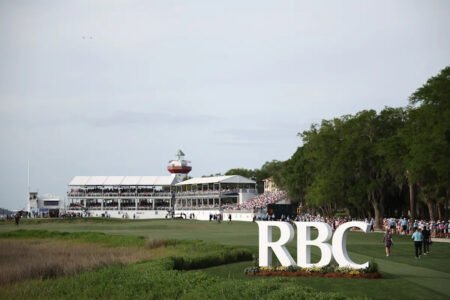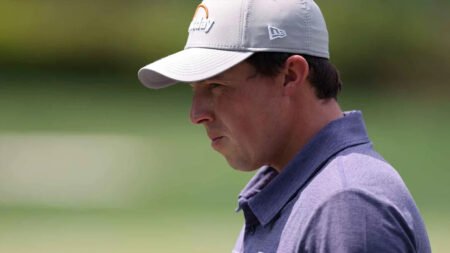




Over six weeks, the PGA Tour features five events, including three with $20 million purses and two majors. Each event demands the world’s top players to perform at their peak, both mentally and physically. This challenging stretch runs from the RBC Heritage to the PGA Championship at Aronimink Golf Club on May 14. Justin Thomas, who is defending his title at Harbour Town this week, is right at the start of this run. On Tuesday, he explained what the current schedule demands from players who have to get through it.
“Yeah, but it’s tough. I mean, it’s not how I would prefer to draw it up, I would say. I think especially when it comes to majors, because majors are, the season is important,”he told the media. “Going to very difficult courses into a major I don’t think is probably how it would be drawn up for a lot of guys.”
Advertisement
“But majors are kind of what guys will generally build their schedule off of, in a sense, for what they need to do to prepare for a major, and it’s also how your legacy in the game is remembered for a lot of people,” said JT.
JT was asked what it feels like to actually be in this stretch, rather than just read about it. Thomas was not complaining. As a two-time major winner still getting his body back into shape after a surgery last year, he calmly pointed out the challenges. Thomas made it clear: majors are the foundation of a player’s schedule. They matter not just for FedExCup points but also because they define how a career is judged.
Mandatory Credits: @fraserstavern/Instagram
This spring, the issue is clear: golfers face a series of difficult courses before Aronimink. Heritage, Doral, and Quail Hollow are all challenging, and they come back-to-back before the second major. Thomas admitted the system is still under construction and scheduling changes are expected.
Advertisement
The effects are already showing. Augusta National is the toughest walk of the year, with long rounds and days that leave players fatigued. Recovery time is minimal. When players reached Harbour Town, the physio room was full. Thomas had only one day to recover between Augusta and Hilton Head. This is the reality of the current schedule between a major and a $20 million event.
Justin Thomas is not the only one to see it this way.
Rory McIlroy, fresh off his second straight Masters win and absent this week, has also pointed out that the spring schedule puts a heavy workload on players. His answer is focused on his own needs, not the broader system.
“I’ll always choose the schedule that best fits me.”
Advertisement
Even Justin Rose withdrew from the RBC Heritage after a grueling week at the Masters. May be to recover mentally, or physically, only he knows.
Scottie Scheffler, currently world No. 1, has also been clear about the demands of the calendar. In 2025, he chose to skip the Truist Championship to ensure he was ready for the PGA Championship. The pattern is clear. Top players are now building their schedules to suit themselves, not to fit the tTour’s calendar.
This behavior did not occur in isolation, as it is a direct response to a structure that has been compressing steadily for years.
Justin Thomas and the PGA Tour Calendar That Stopped Protecting the Major
The crowded schedule started when the PGA Championship moved from August to May in 2019. This change added a second major to the spring without removing any existing tournaments. Later, after LIV Golf emerged, the PGA Tour introduced Signature Events with $20 million purses, smaller fields, no cuts, and more FedEx Cup points to keep top players.
Advertisement
The schedule grew from eight to nine events when the Cadillac Championship at Trump National Doral was added for 2026, landing in the six weeks between Augusta and Aronimink. Reports on the scheduling debate said this change only further compressed an already congested calendar, leaving golfers outside the top 50 in FedEx Cup points with just four full-field events in a nine-week spring period.
The PGA Tour’s Future Competition Committee is developing a new structure: a two-track system with 21 to 26 events for top players and a separate qualification path for others. Thomas has already asked how it will work, saying, “When do I find out if I’m in this?”
The system is still being created, as his comments at Harbour Town showed. But what we know is that more changes are on the way.
Read the full article here