



- Toyota’s chairman believes everyone has gravitated toward electric vehicles.
- Akio Toyoda feels ‘very alone’ in supporting combustion engines.
- Toyota wants to keep ICE alive with carbon-neutral fuels and hydrogen.
For the sixth consecutive year, Toyota is the world’s best-selling automaker. However, EVs played only a marginal role in defending its crown in the battle against the Volkswagen Group. The Japanese giant has been lagging in the electric race, although recent entries like the C-HR, Urban Cruiser, and Highlander show it is intensifying its efforts in an already crowded EV market.
However, Toyota’s chairman famously said in early 2024 that EVs will never exceed 30 percent of global sales. Just a few months ago, Akio Toyoda stated there are still many places around the world where people cannot do without gas-fueled cars because charging infrastructure remains underdeveloped. But while he is a strong believer in combustion engines, the company’s former president and CEO says he now feels in the minority.
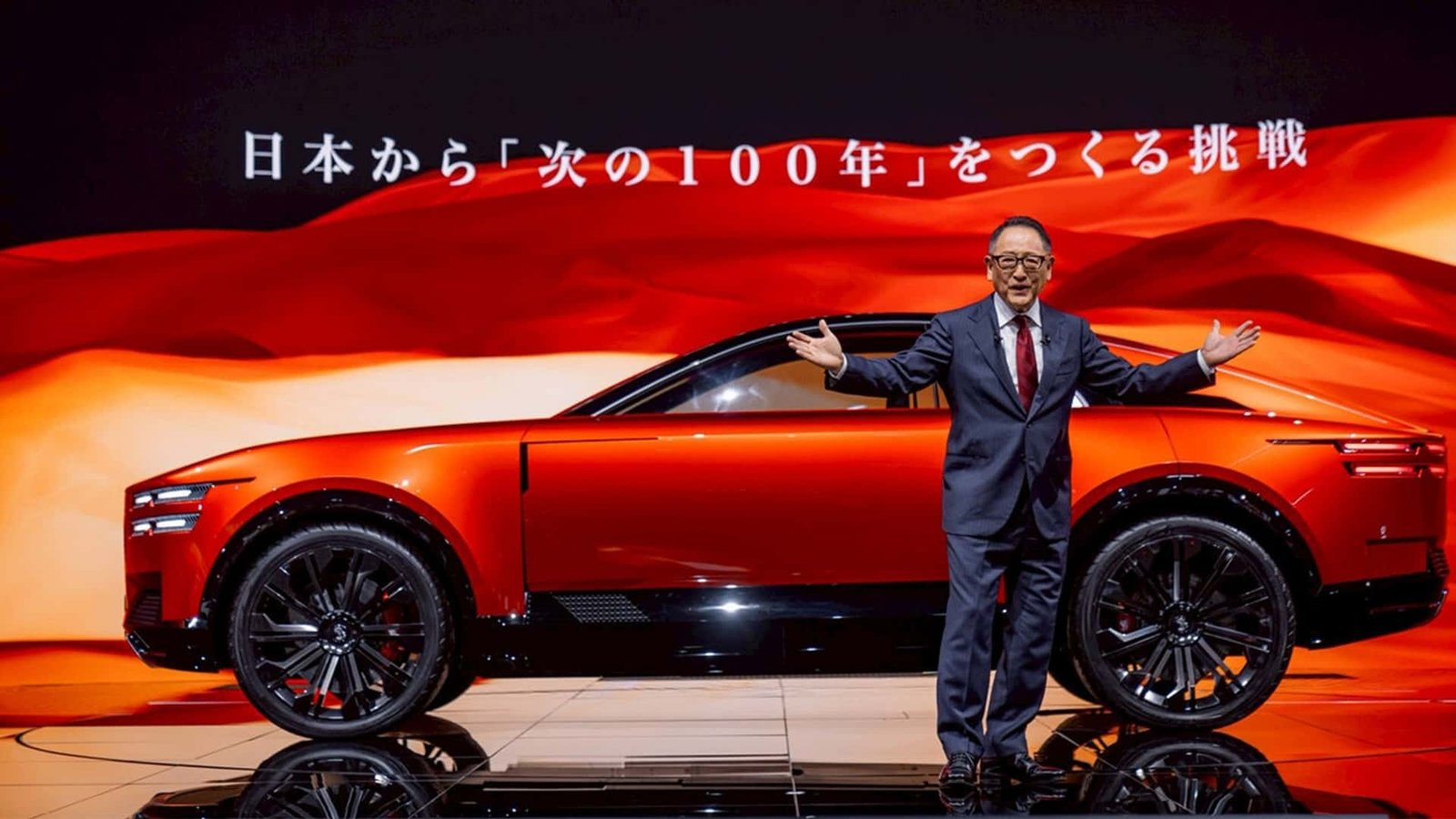
In a candid interview with British publication Carwow, Akio Toyoda revealed he feels “very alone” in continuing to show appreciation for cars powered by combustion engines. At the same time, he is under the impression that everyone else is gravitating toward EVs.
Toyota Chairman Akio Toyoda
Photo by: Toyota
‘Everybody is shifting to EVs, this is the biggest fear for me. Three or four years ago, I was the only one to say to the media that I love smell, I love sound and I love engines, and I want to keep the jobs for engine suppliers. But it seems to me that I’m the only one. I feel very alone.’
Toyota Argues Gas Cars Are Still A Necessity
In 2026, it is fair to say Toyota still hasn’t embraced EVs with the same aplomb it showed with hybrids following the revolution kick-started by the Prius in the late 1990s. Akio’s skepticism doesn’t stem only from his passion for combustion engines, though. Last year, he made a rough estimate that the 27 million hybrids the company had sold up to that point had a carbon footprint similar to that of nine million EVs when factoring in battery and vehicle production.
It is worth noting that his calculations assumed all electric cars would be made in Japan, where thermal power plants do much of the heavy lifting in energy production. In that scenario, a single EV was as dirty as three hybrids, but the reality is far more nuanced, with many variables at play.
Photo by: Toyota
Against All Odds, Toyota Isn’t Giving Up On Combustion Engines
Having set up Gazoo Racing (GR) as a standalone sub-brand, Toyota continues to support gas engines in performance applications. It is even working on a completely new turbocharged 2.0-liter four-cylinder unit for future GR-branded products, including the long-awaited Celica revival. At the same time, it has engineered a new V8 for the GR GT hybrid supercar, and possibly other types of models as well.
Toyota is also trying to extend the shelf life of conventional engines by making them compatible with carbon-neutral fuels. Over the past few years, it has experimented with hydrogen-powered combustion engines. Its newest effort is the TR LH2 Racing, which will be showcased later this week at the 24 Hours of Le Mans.


Photo by: Toyota
Motor1’s Take: Toyota’s former number one appears disappointed with how “everybody” is moving from ICE to EV. The company does appear determined to keep combustion engines alive for as long as possible, while further improving hybrid technology to extend their lifespan.
Stricter emissions regulations, especially in Europe, are accelerating the decline of traditional powertrains. This is visible in the latest registration data published by the European Automobile Manufacturers’ Association. With most automakers launching a wide range of EVs, it is no surprise that one in five vehicles registered in Europe this year did not have a gas engine.
ACEA numbers show that through the first four months of the year, EVs reached a 20.9-percent market share in the European Union, UK, Iceland, Liechtenstein, Norway, and Switzerland.
Read the full article here