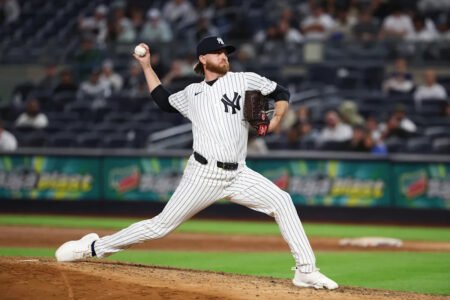



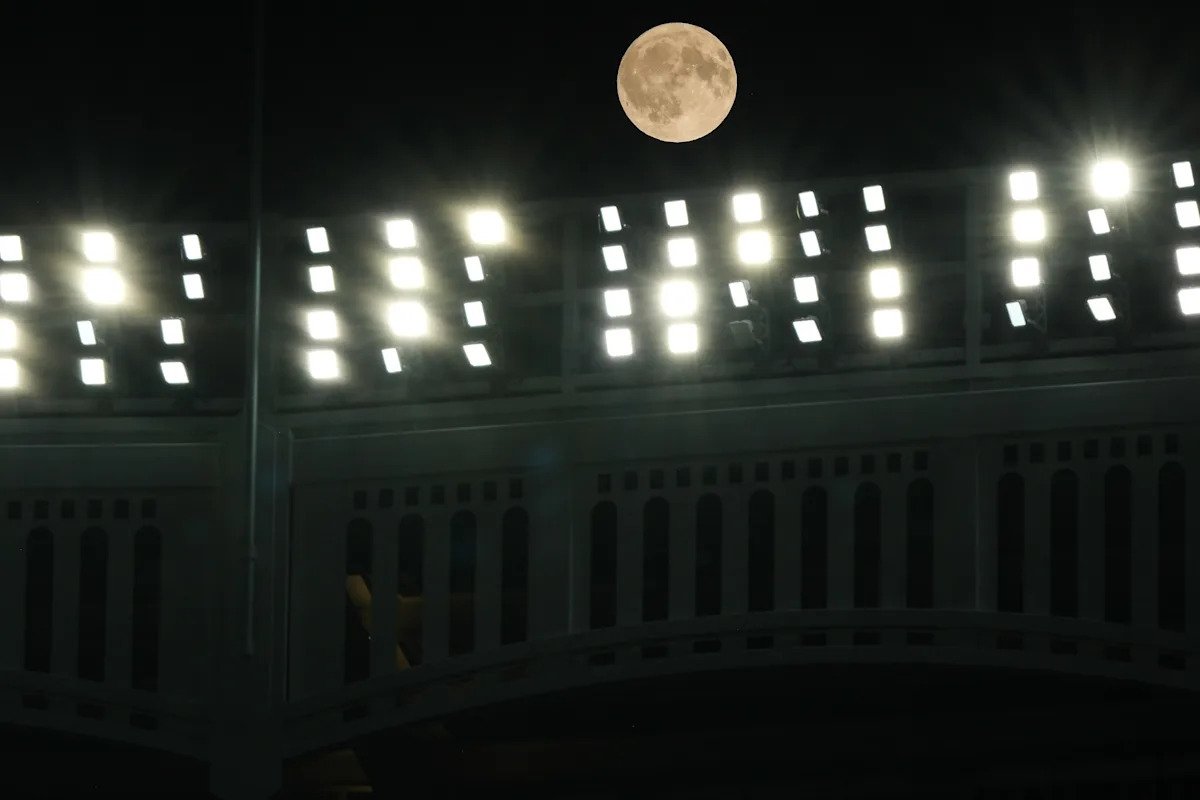
It’s been a part of the Yankee Stadium experience for years. The Bombers have runners on base, the visiting manager makes the slow walk out to the mound, and signals to the bullpen in left field. Immediately, the door in the left-field fence opens up, the new reliever steps onto the field, and immediately the Yankee Stadium scoreboard begins to play a rally video, intended to intimidate the new pitcher and pump up the crowd.
Over the last few years, the Yankees have experimented quite a bit with the in-game stadium experience, bringing in a DJ to blast music and sound effects between pitches and implementing various closer entrances for Clay Holmes, Luke Weaver, Devin Williams, and David Bednar. Accordingly, the organization has experimented with these rally hype videos. Last summer, for example, they engaged in some subtle advertising with a Jurassic World-themed vide of Yankees batters stalking pitchers like prey, conveniently introduced a few weeks before Jurassic World Rebirth premiered in theaters. Then, as the old scoreboard gave them fits late last season (in fact, I saw the system crash so often I almost wrote an article last year about it), they shifted to a light-centered video, cutting almost all the lights in the stadium and putting a “Public Service Announcement: Yankees Rally Incoming” emergency alert on all functioning screens.
Advertisement
After making a big deal about the new scoreboard installation, it should not be surprising then that the Yankees revamped their rally hype video again. When a new pitcher came into the game this week, the lights in the Stadium were dimmed, and a QR code was put on the screen. This QR code linked to a light show website, which took over the flashlight of each participating cell phone and incorporated them into a stadium-wide light show.
From a technical standpoint, the effect was incredibly cool — thousands upon thousands of lights flashing throughout Yankee Stadium in the night, taking over for the Stadium lights and supplementing the scoreboards and screens as the pitcher reached the mound in preparation for his warmup pitches. And it’s thematically appropriate, too, as between the increased prominence of the DJ and the amount of music played before the game and between innings, it’s clear to me that the team is intent on giving Yankee Stadium a bit of a club vibe this season. These cell phone light shows really help contribute to that atmosphere. And the effect has done its job — many in the crowd used the QR code, and the energy in the Stadium, even on the cold nights when the Yankees were losing to the Athletics, skyrocketed for that short minute.
There’s just one problem: Because of it, Yankee Stadium now needs a strobe warning.
The human body doesn’t always respond well to flashing lights. For many people, looking at it for too long can cause headaches and migraines. For people with photosensitive epilepsy, even a brief exposure to flashes and strobes can cause seizures. These effects are common enough that, when I was the lighting designer of an amateur theatre group back in college, we felt compelled to post strobe warnings outside the theatre even when the show’s most intense light cue was the LEDs changing color a couple of times — after all, it’s better to be safe than sorry.
Advertisement
Now, you might say, wouldn’t someone who has such sensitivity to light know not to put themselves in this kind of position? Obviously, the answer is yes — but for the most part that involves avoiding concerts with big light shows, fast-paced videogames, or movies with a lot of on-screen explosions. It didn’t used to mean baseball games. But now, suddenly, it does — and people need to be made aware.
Read the full article here