




You won’t be surprised to hear the 2026 PGA Merchandise Show was massive. Golf’s continued growth has brought more products and innovation from different arenas to match the new players in the game. There seemed to be more exhibitors than ever at the Orange County Convention Center last week. Even the line to register for golf’s biggest convention was the longest that long-time attendees had ever seen.
Your browser does not support the video tag. Just Released: Hot List 2026 Looking for the clubs that will take your game to the next level? Start your search here with golf’s premier buying guide. EXPLORE NOW
Advertisement
What were the standout products and important ideas that people will be talking about throughout the year? Our editors rounded up some of the coolest stuff that caught their eyes while navigating the PGA Show.
This yet-to-be-released portable launch monitor is already turning heads: Shot Scope LM1
/content/dam/images/golfdigest/fullset/2026/1/pga-show-2026-shotscope-launch-monitor.jpeg
It almost sounds too good to be true.
A $200 launch monitor. No subscription. Built-in screen. Real ball data, indoors or out. In a category dominated by four-figure price tags and recurring fees, Shot Scope’s new LM1 enters with a value proposition that feels deliberately disruptive. The question, of course, isn’t whether it’s inexpensive—it clearly is—but whether it’s useful enough to matter for real practice.
Advertisement
On paper, the LM1 checks more boxes than you’d expect at this price. It’s a compact Doppler-based unit, slightly smaller than an iPad, with a 3.5-inch color display that delivers instant feedback without requiring a phone, tablet or app connection. Setup is refreshingly simple: Place it six feet behind the ball, power it on and start hitting. Ball speed, clubhead speed, smash factor, carry distance and total distance appear on the screen within seconds. No pairing. No calibration ritual. No friction.
Those five metrics are, not coincidentally, the five numbers that drive almost every productive range session. How fast you’re swinging. How fast the ball is leaving the face. How efficiently you’re delivering energy. And how far the shot actually goes. Shot Scope isn’t trying to compete with tour-level systems that parse spin axis, face angle and dynamic loft to the tenth of a degree. They’re aiming at the golfer who wants clarity, not complexity—and that restraint is part of the product’s appeal.
The built-in display changes the entire experience. You don’t need to pull out a phone between shots, and you don’t need to manage Bluetooth connections on the range. The LM1 stores up to 1,000 shots internally, which you can sync later to your Shot Scope account for session review or comparison. It’s a practice tool first, not an entertainment device. There’s no simulator integration, no virtual courses, no attempt to blur the line between training and gaming. For $199.99, that feels like an intentional choice rather than a limitation.
Accuracy expectations should be realistic. At this price point, you’re not buying tour-grade measurement precision or premium industrial design. Battery life tops out at five hours, the casing is functional rather than luxurious, and club-delivery data is intentionally absent. But what you do get is consistency on the numbers that matter most—enough reliability to track trends, dial in gapping and understand whether your contact quality is improving over time.
Advertisement
And that’s ultimately the point. The LM1 isn’t built for the data maximalist or the simulator enthusiast. It’s built for the golfer who wants feedback, accountability and a clearer picture of what’s actually happening at impact—without spending a fortune to get it. In that context, Shot Scope hasn’t just made an affordable launch monitor. They’ve made one that, for a large segment of golfers, might be all the launch monitor they actually need. Shot Scope LM1 is available March 26 for $199. — Jonathan Wall, managing editor, equipment
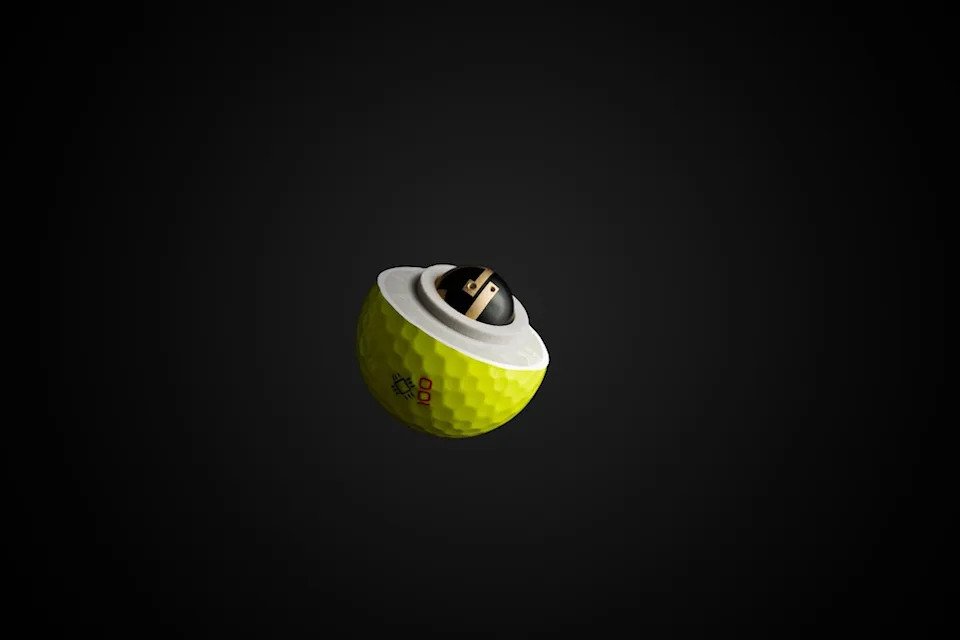
Smart golf balls that provide launch-monitor data: Chip’d
/content/dam/images/golfdigest/fullset/2026/1/chipd-golf-ball-pga-show-2026.jpg
It took 10 years of trial and error and extensive research, but Chip’d unveiled a new product at the 2026 PGA Show that is poised to turn heads in the golf equipment/tech business. Anil Agarwal spent nearly two decades supplying microchips for companies like Samsung and LG. He got connected to California-based PGA professional Josh Marris, who had the idea about putting a chip into a golf ball to begin to track data. Designing a chip that could withstand impact from a golf ball but also small enough to not affect performance wasn’t an easy feat. The finished product was on display in Orlando with one of the busiest booths we witnessed. “Like Josh says, this is basically our iPhone 1,” Agarwal said. “It’s just the beginning.” Tests have proven the ball can withstand high clubhead speed, but as of now, the Chip’d ball is designed for putts—and will sync with an app that will provide data like ball speed, launch and spin to study one’s stroke. A three-pack of balls were being sold at the PGA Show for $299 in pre-sale, with an MSRP for $399 to come. –Stephen Hennessey, managing editor
Advertisement
RELATED: How Ben Griffin’s big golf ball bet paid off
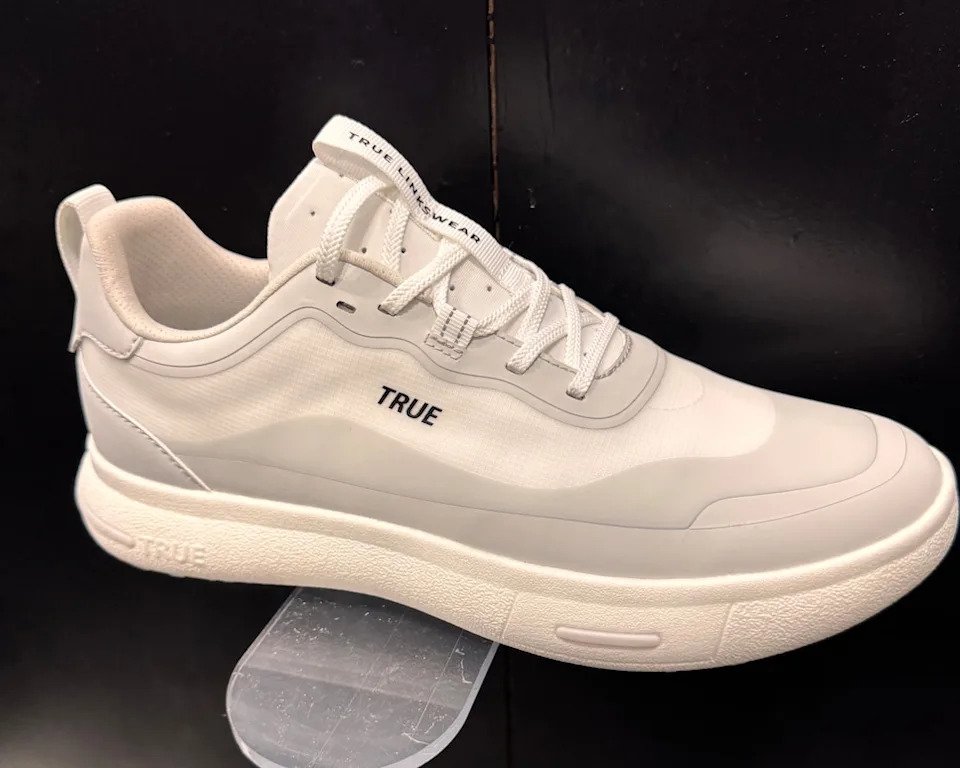
Revolutionary golf shoes: True Linkswear Antigravity shoe
/content/dam/images/golfdigest/fullset/2026/1/pga-show-2026-true-linkswear.jpeg
There’s a reason the footwear world pays attention when a material escapes the running category. Nearly every modern marathon record has been set atop PEBA-based foams—light, resilient and explosively responsive. Golf shoes, by contrast, have spent the last two decades recycling variations of a heavier EVA.
True Linkswear’s new Antigravity shoe represents a rare departure from that pattern.
At the center of True’s Antigravity is a Pebax superfoam midsole, a material more commonly found in elite running shoes than golf footwear. Compared to traditional EVA, the foam is roughly 50-percent lighter while delivering about 30 percent more energy return—a combination that explains why it rarely shows up outside of premium race-day trainers.
Advertisement
“Numbers like that are almost impossible. Ten percent is amazing,” said Jeremy Moore, True’s president. “There hasn’t been a really big breakthrough in material innovation until Pebax.”
/content/dam/images/golfdigest/fullset/2026/1/pga-show-2026-true-linkswear-bottom.jpeg
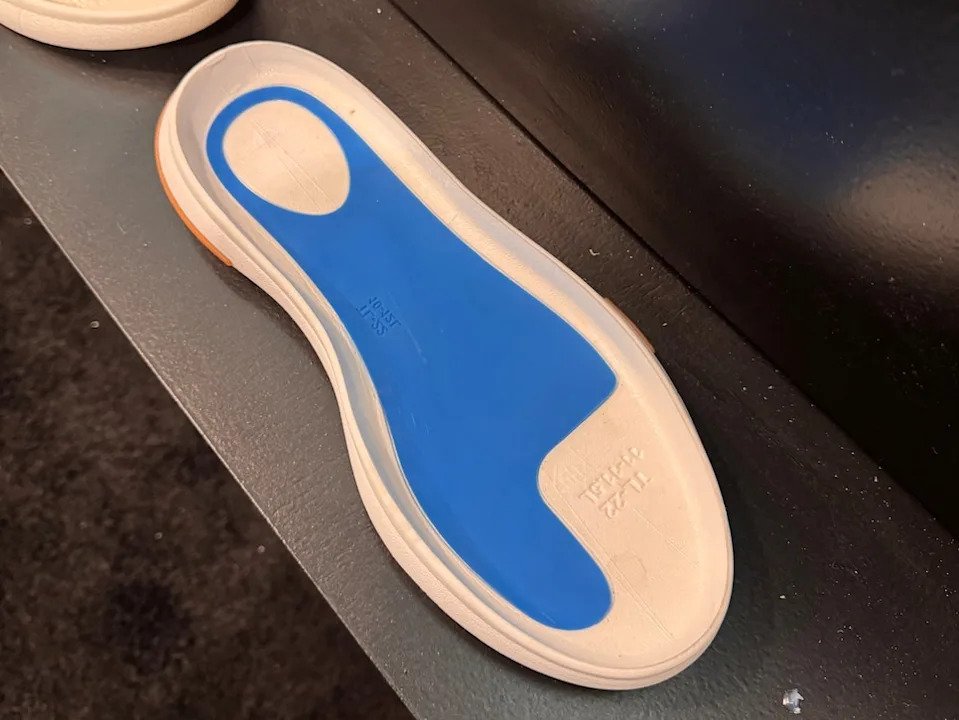
That liveliness creates a challenge. Left on its own, the foam moves too much for a rotational sport. True’s answer was a full-length nylon speed board, embedded within the midsole to add torsional and lateral stability without muting the rebound. The result is a shoe that feels noticeably energetic while walking but controlled through the swing.
The design stays true to True’s minimalist roots. Antigravity features a 4–6 mm heel-to-toe drop, roughly half of what most major brands build into their shoes. That geometry has real performance implications. During a period when Jon Rahm was testing footwear across the industry, his fastest ball speeds (190 mph) came barefoot. True’s platform got him closer than anything else (188 mph)—without removing the shoe entirely.
Advertisement
The philosophy behind that approach is simple.
“I want people to start looking at shoes as part of their equipment,” said PGA Tour pro and True co-founder Ryan Moore. “Your shoes and your golf ball are the only two things that are a part of every shot on the golf course. That’s it.”
True’s Antigravity shoes will be available at retail March 17 and retail for $199. –JW
RELATED: I found a pair of women’s golf pants I like. And that’s saying something
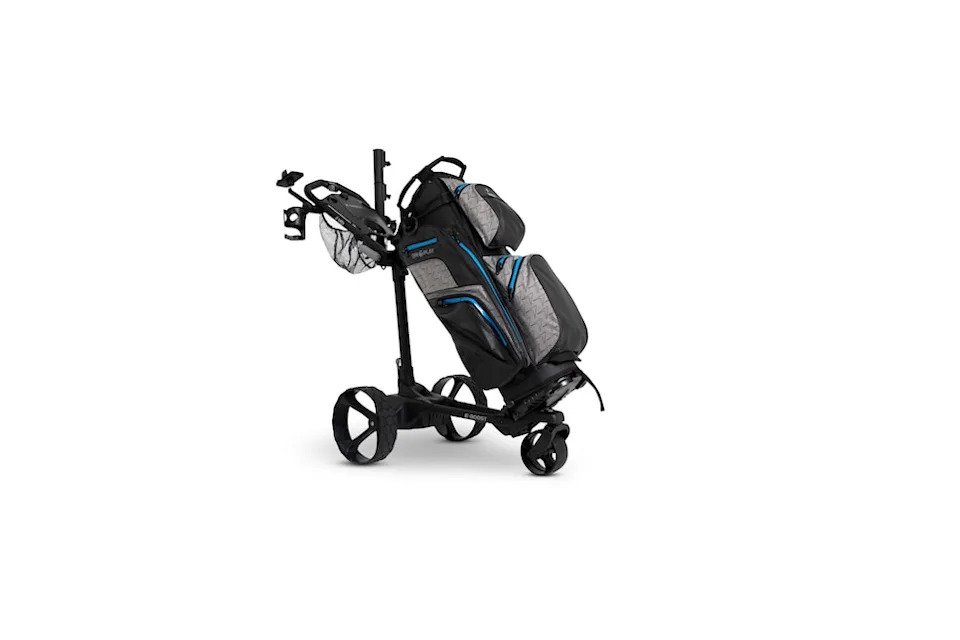
An affordable remote push cart approachable for the non-tech golfer: MGI E-Boost
/content/dam/images/golfdigest/fullset/2026/1/MGI_EBOOST_Black_With_Bag.jpg
Remote-controlled, motorized push carts have become uber-popular among players who prefer to walk but don’t want either the hassle or physical exertion of pushing a cart or lugging a bag while hoofing it. Still, a segment of players either don’t like the heft while taking the pushcart in and out of the trunk or the heft of the price tag (often $1,500 and higher).
Advertisement
That said, no one enjoys pushing a cart up a steep hill. MGI addresses this problem with its new E-Boost cart—a true pushcart equipped with a lightweight battery that can be used to turn it into a motorized cart for those uphill climbs.
To be clear, you still navigate the cart by hand (there is no remote control), and if you think you’re getting 18 holes of fully motorized time out of the battery, you’re kidding yourself. But that’s not what this cart is for. Although the battery will last a dozen-plus holes, it’s meant to provide relief on uphill climbs or perhaps a hole late in the round when you need to conserve a little energy. And let’s face it, we’ve all been there. It’s not only easy on the legs and back, but on the wallet, too. Available Feb. 1, the price is just $599. –E. Michael Johnson, equipment editor
RELATED: How we process nearly 20,000 shots to produce the industry’s leading review of new golf equipment
Customize your golf clubs with a patented, do-it-yourself kit: Caddy Wrap

/content/dam/images/golfdigest/fullset/2026/1/caddy-wrap-pga-show-2026.jpg
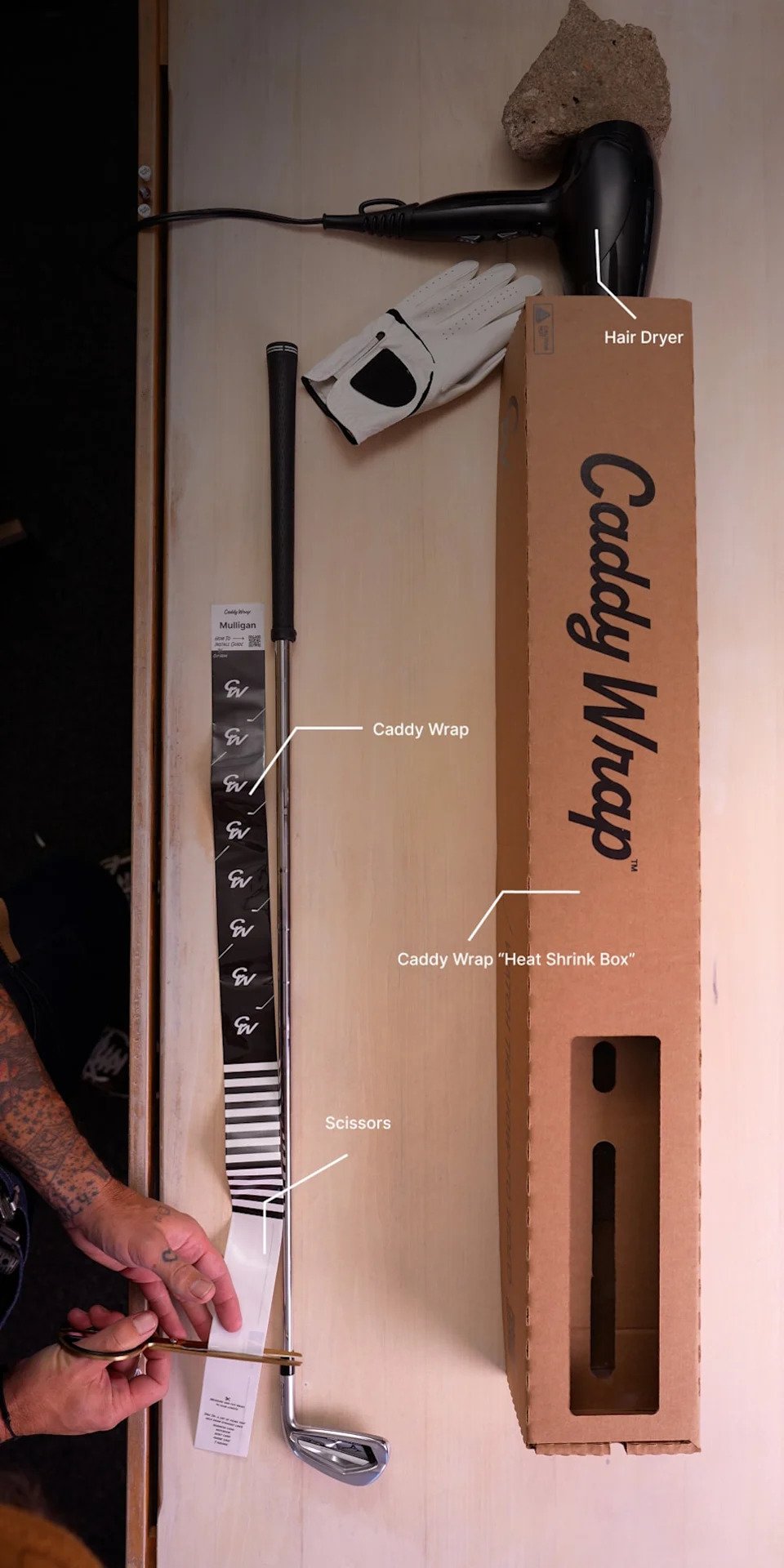
Adam Benton looked to his experience in the skate and snowboard industry to fill a void in golf. Skaters and snowboarders are always applying stickers and fun designs to their gear. Why didn’t that exist in golf? Benton, a CMO from the film and design world, launched Caddy Gear last year and got great response as a direct-to-consumer product. He came to the PGA Merchandise Show in 2026 and was overwhelmed by the response. “It’s really arming golfers with the opportunity to do it themselves,” Benton said.
/content/dam/images/golfdigest/fullset/2026/1/CW-GRYS-Collab-7.jpg
Golfers choose a pattern they’d like to affix to their golf shafts on Caddy Wrap’s website, and the company sends you a patented box that allows you to stick the wrap on yourself in an easy three-minute process. You need a pair of scissors, tape, a glove and a hair dryer to go with the box. The hand dryer heats up the box, which allows the wrap—essentially like a shrink wrap—to stick to the shaft. Benton said the wraps will last two to three years, but the process of swapping wraps is simple. Pre-designed patterns are $14.95 per club and you can customize your own design for $29.95. The box is a one-time $8.95 fee. Pretty soon, you’ll feel like a clubfitter—adding designs like wood grains or candy wraps to your irons. Benton likens it to the motorcycle enthusiast who loves to work with all the parts, feeling a connection to their ride before it becomes a part of themselves. “The connection becomes ingrained,” he said. The company will work with country clubs and companies to do larger custom orders—and expect to see a few select collaborations in the coming months. –SH
Advertisement
RELATED: Hot List: The Best Drivers for 2026
A golf glove backed by good science: Marucci golf glove
/content/dam/images/golfdigest/fullset/2026/1/LKD_Marucci_golf_glove.JPG
There are a lot of high-tech products at the PGA Show, but the product that caught my eye was decidedly more low-tech.
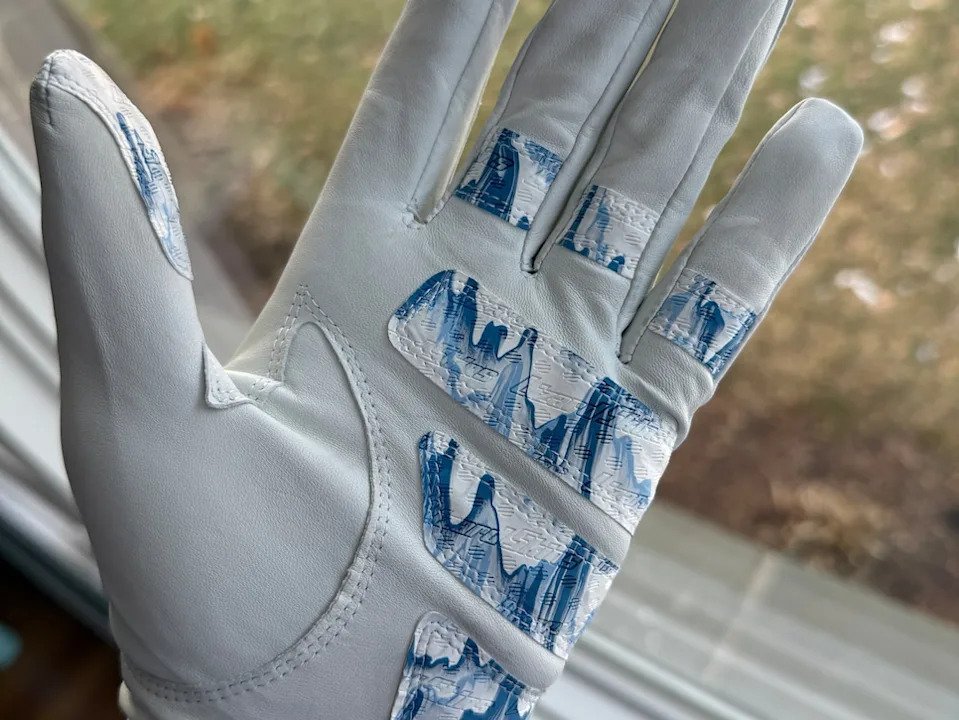
It’s a soon-to-be-released golf glove by Marucci, which is one of the most-used bat brands in the MLB. At the 2026 PGA Show, the company announced it was using its Lizard Skin gripping technology—which it uses on the grips of its bats—to create a new glove for golfers.
MLB players use the material because it has more friction than leather, which means better grip. In their new golf glove, they’ve placed this extra gripping material in some key areas of the glove: In three spots along the palm, at the base of the fingers, and on the top of the thumb. Increasing the grip in these areas mirrors the grip pressure patterns of tour pros. It’s all supported by data, too: Preliminary studies by grip-pressure expert teacher Liam Muckow found up to a 36-percent reduction in dispersion (meaning golfers hit it straighter) and a slight uptick in ball speed. And in case you were wondering, the extra material is just half a millimeter thick, which makes it indistinguishable for most golfers. –Luke Kerr-Dineen, senior editor
Advertisement
Better options for more skilled junior golfers: U.S. Kids Golf Tour Series 6
/content/dam/images/golfdigest/fullset/2026/1/pga-show-us-kids-driver-2026.jpeg
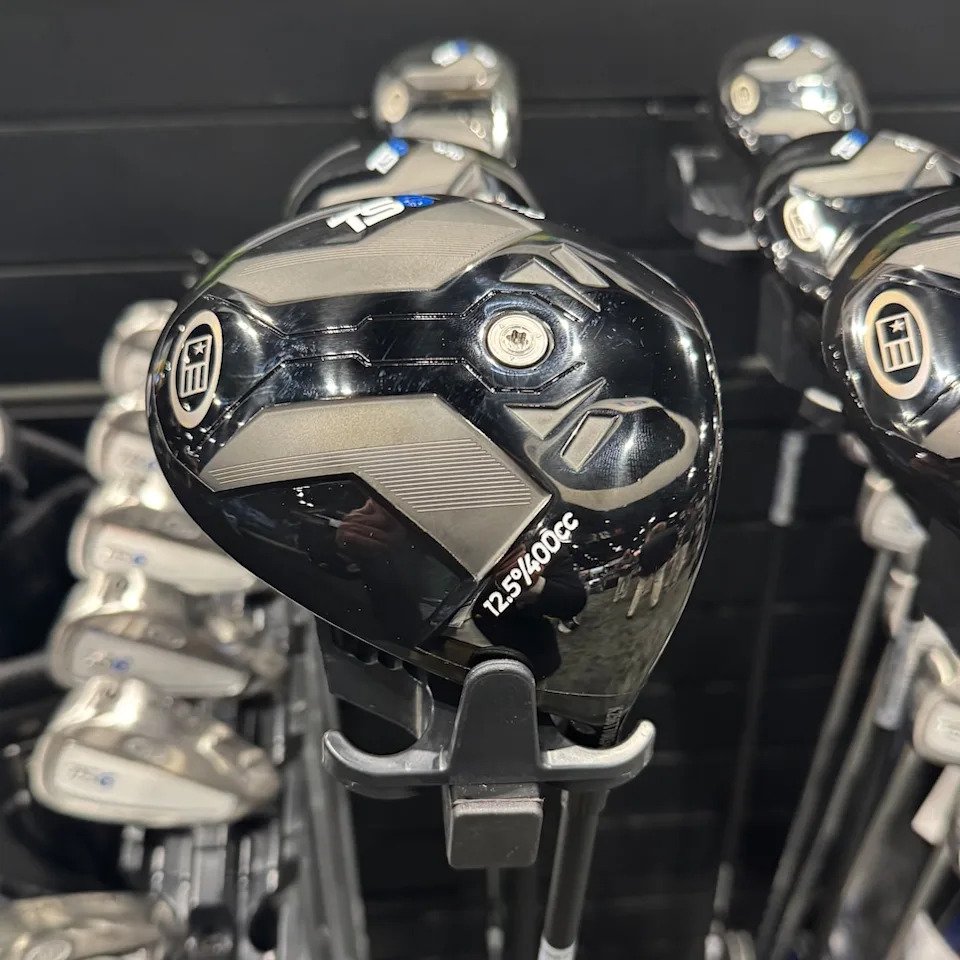
No one’s studied the right way to get juniors into better fitting than Dan Van Horn, the founder of U.S. Kids Golf. So when he saw some of the better younger players looking to add shaft length to their drivers in search for more distance, it gave him pause. He understood the push for more distance, but adding length was messing up the balance point and the swing efficiency that have been the hallmarks of U.S. Kids Golf’s proven weighting system. He got to work and the result is the new Tour Series 6 set, which includes a redesigned driver head and shaft to answer the better younger players need for speed. It continues the company’s long-proven theme for developing better swings: Lighter is faster.
“We said, ‘Can we get additional length and not hurt the player so he or she stays in the same swing plane as the other clubs?’ ” Van Horn said. “We don’t want a completely different driver swing, and that’s what we were seeing when young players started adding length. We want all clubs staying swing weighted together as a unit. If you just add length to our standard club, you’re going to lose the feel of the head, and what we were seeing was that the added length was actually starting to slow some of these swings down, not speed them up, and the player gets confused.”
Advertisement
The TS6 set is designed to be that bridge set of clubs for the better younger player who is not yet ready for full-size clubs but already has developed into a skilled player. While the driver features a longer shaft than the standard entry-level Ultralight line, the shaft also is stiffer. The head includes interchangeable sole weights to tweak launch and spin. The irons in the set feature a thinner face design with a vibration damping insert low in the cavity.
The TS6 is set to be available in early spring. –Mike Stachura, senior editor, equipment
RELATED: Hot List: The Best Irons for 2026
An AI-powered messaging service to make life easier for members: Club Pilot
/content/dam/images/golfdigest/fullset/2026/1/pga-show-2026-club-pilot.jpg
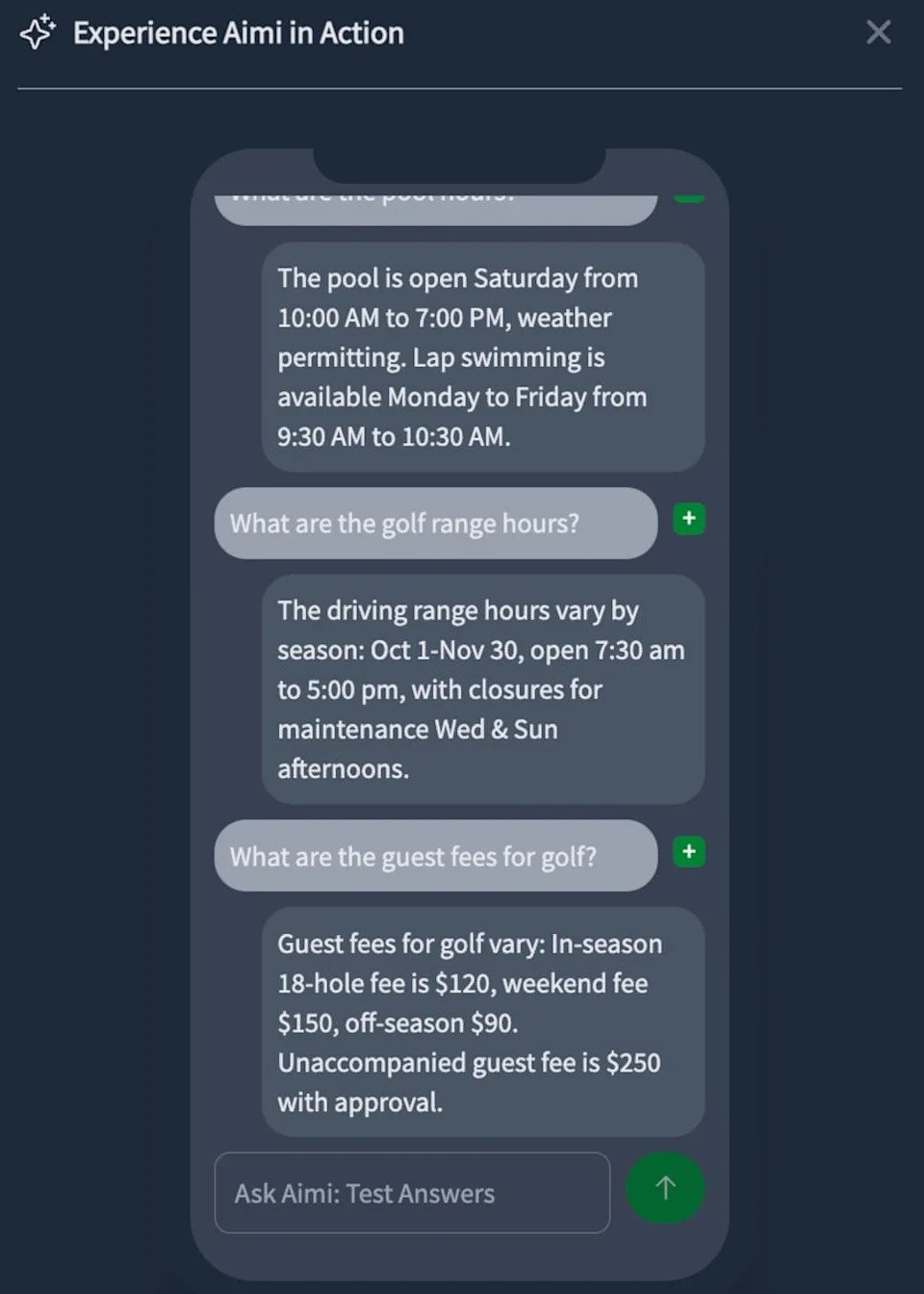
AI this, AI that. The last thing you might want to read about is another example of robots taking over the world. We promise, this one is exciting for golfers—and especially golf course operators. Data from the National Golf Foundation reveals that over $100 million in resources is spent by clubs devoting resources to answering phone calls. Most of those questions are simple inquiries like “What time does the range open?” or “Is lunch being served today?” A new AI-powered mobile-first and club operations platform unveiled at the PGA Show, Club Pilot, has the potential to make communicating with members more efficient for clubs. Club Pilot provides facilities with an easy-to-use platform to allow the club to train the AI on simple FAQs, so club members can send a text to Club Pilot’s Siri or Alexa equivalent, Aimi. Club Pilot’s Byron White also points out that text messages are opened way faster than emails, so it’s beneficial for a golf facility to have a system to send regular text updates to its members. A club official adds a few documents as PDFs into the Club Pilot interface, and all of a sudden, the platform is trained. “We want it to be very simple for clubs to get up and running within minutes,” White said. The club-branded version of the app also allows in-app messaging between members. There are three price tiers, starting at $99/month. –SH
Advertisement
More opportunities for those who deserve it: National Golf Player Development Foundation

/content/dam/images/golfdigest/fullset/2026/1/ngpdf kids.jpeg
The PGA Show is about the gear, of course. Walking through the show, it felt like it would take a couple of weeks to fully experience everything that was there. And don’t worry, over the coming weeks and months, I’ll be writing plenty about the products I saw at the show.
But the PGA Show is also about the people. It’s about connecting with people from all over who are all doing something to make the game better. This year, I met someone this year who’s doing some incredible work for the Black golf community. Mark Lowry, who spent 20 years working for the First Tee, founded the National Golf Player Development Foundation to support competitive golfers of color pursue their dreams. The NGPDF provides scholarship money to help young players pay for everything from instruction to tournament fees. They have corporate partners, including the PGA Superstore, which gives NGPDF players discounts on gear, and GolfTec, which offers discounts on simulator time and lessons.

/content/dam/images/golfdigest/fullset/2026/1/mark lowry ngpdf.jpeg
Since being founded in 2023, the NGPDF has been helping kids compete in junior tournaments across the country. And now, five NGPDF players are about to head off to play college golf in the fall. Seeing all of the ways people are thinking about golf and the spaces where it can become better had me leaving the PGA Show feeling energized. I’m carrying that buzz as I return to the polar vortex of the Northeast.
Advertisement
If you’re curious to learn more about the NGPDF and Mark’s work, his website is here. –Keely Levins, staff writer
More From Golf Digest

Golf Digest Logo Which goes farther, a fade with driver or draw with 3-wood? Our test gives a clear answer
Read the full article here