



- Audi is overhauling its interior design for next-generation models.
- Smaller screens and physical controls are coming back.
- Future models will have nicer materials, including real metal.
Automakers are rarely as candid as Audi was in a Motor1 interview last year, when a company official surprisingly admitted that the brand’s interiors are not what they once were. Oscar da Silva Martins, Head of Product and Technology Communication at Audi, openly acknowledged that “we have certainly been better in terms of quality in the past.” During the same chat with our German colleagues, the luxury automaker pledged a return to form: “We will get there again.”
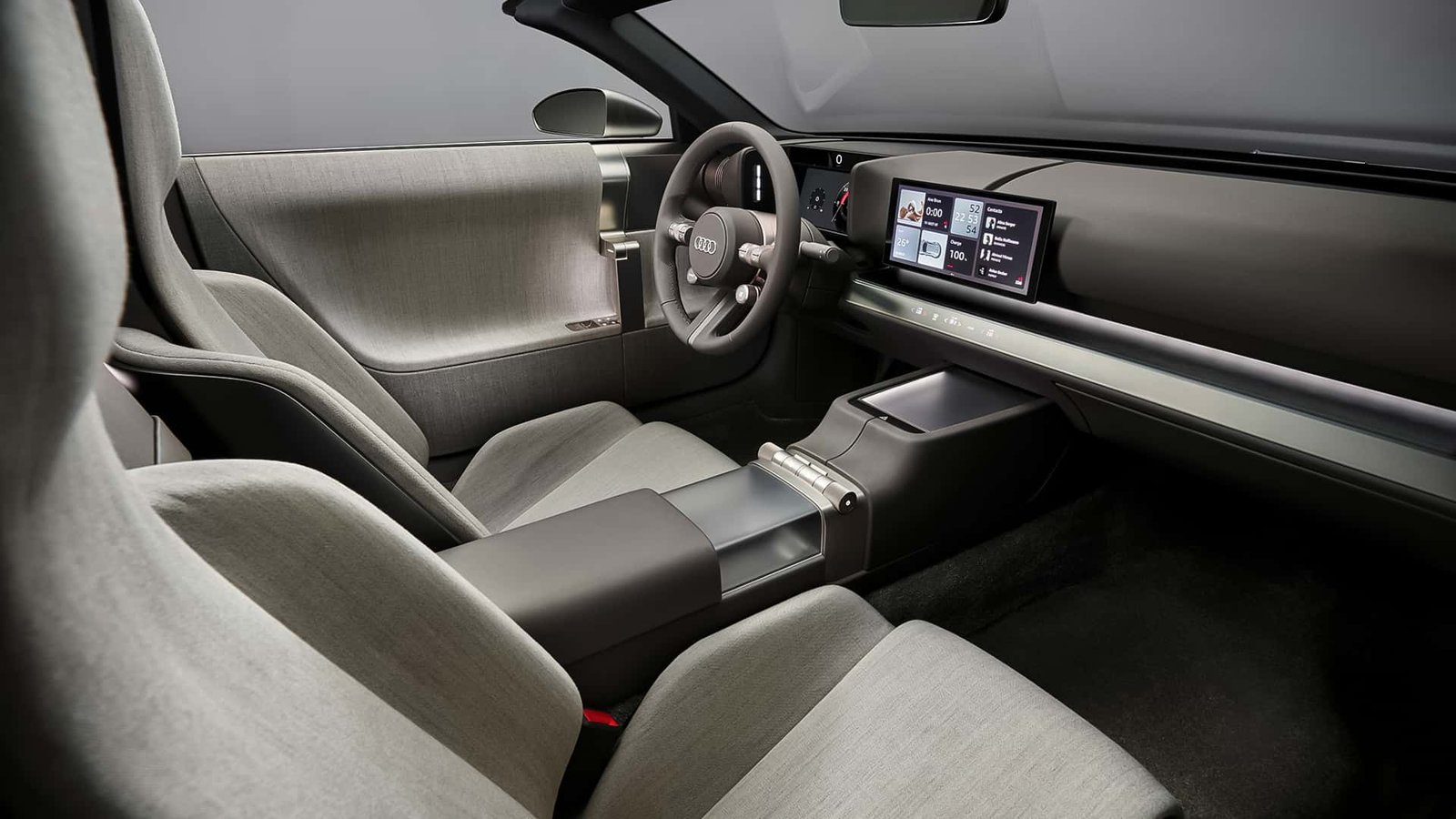
Since that interview, Audi has rolled out a new design language dubbed “Strive For Clarity,” also known as “The Radical Next.” It made its debut on the Concept C, a preview of an electric two-seater with a targa roof due as early as next year. The sporty EV’s interior is completely different from the current crop of Four Rings models. It tones down the screens, brings back some physical controls, and uses higher-quality materials throughout the cabin.
The production-ready Concept C will kick off Audi’s interior revolution, an effort to bring back what made the brand’s cabins so special before screens and cheaper materials took over. Speaking with Australian magazine GoAuto, the company’s Chief Technical Officer vowed to restore the qualities that once earned Audi top marks for cabin design and execution.

Audi Wants Smaller Screens, Better Materials
‘In the future, [Audi will] integrate the Radical Next interior design…we want to be very subtle on the display size and haptic elements. We will put a lot of attention into real materials. If you see a material that looks like metal, it should be metal. We believe it’s part of our DNA to also have some physical elements—buttons and turning wheels—and every one of these should have the classical Audi click and touch and feel.”
Audi’s CTO pointed out that customer preferences vary across global markets and that there are major differences between China and the rest of the world. That’s one of the reasons why the company partnered with SAIC to establish a separate AUDI brand (without the iconic Four Rings) specifically for the Chinese market.
Cars like the E5 Sportback and E7X feature minimalist interiors with vast expanses of screen real estate and very few physical controls. For the rest of the world, the legacy Audi brand has pledged to move away from oversized displays and recapture the magic of its early-2000s interiors. However, it’s not going to happen overnight. New vehicles are developed years in advance, and their designs are locked in long before the first production car rolls off the assembly line.
The 2028 A4 E-Tron Will Lead The Way
The first volume model to embody Audi’s new philosophy will arrive in 2028, when the A4 returns as a fully electric sedan. In the meantime, the soon-to-be-revealed Q9 flagship SUV and the electric A2 should be the final models from the old guard, so expect more of the same. That said, Ingolstadt has technically already launched a production model that embraces the new approach.
Yes, we’re talking about the Nuvolari. However, the Lamborghini Temerario-derived hybrid supercar is limited to 499 units, so it doesn’t really count in the grand scheme of things. Given its electric sports car nature, the Concept C won’t be a common sight either, but at least it won’t be production-limited. These two performance models serve as blueprints for what lies ahead, and we’re looking forward to seeing how Audi translates their ideas into next-generation mainstream models.

28
Source: Audi
Motor1’s Take: Hopefully, more automakers will follow suit and realize that cost-cutting in the name of fatter profit margins has its limits. If companies cross the line, and let’s be honest, most already have, they risk losing buyers who are unwilling to accept a sea of glossy black plastic while screens are shoved in their faces.
The Concept C and Nuvolari are promising steps in the right direction, but let’s wait and see how Audi applies its new interior philosophy to regular production cars. The A4 E-Tron should give us a much better understanding of what all the “Radical Next” marketing jargon actually means.
Read the full article here