


Late April is, in many ways, one of the most fun times to look at stats. Now that the season is a month old and can officially be considered “in full swing,” we’ve got just enough data that we have a true representative sample to begin analyzing, but not so much that weird beginning-of-season quirks haven’t fallen away completely. With that in mind, I feel this is a perfect opportunity to dive into the Statcast data and take a look at what we see in order to find some fun, but ultimately meaningless, stats from the first month of 2026.
Death Star Ignitions
We start by introducing the new stat I made up which inspired me to do this piece in the first place, the Death Star Ignition. As you probably know, every time a Yankees pitcher reaches a two-strike count when there are two outs at home, the Stadium plays the Death Star siren. After a rough introduction a couple of years ago, during which time David Cone referred to it as a pregnant whale, it has become a staple in the Bronx, and while not quite as iconic as the P.C. Richard’s whistle after a strikeout, the siren is well on its way to this status, especially among younger fans.
Advertisement
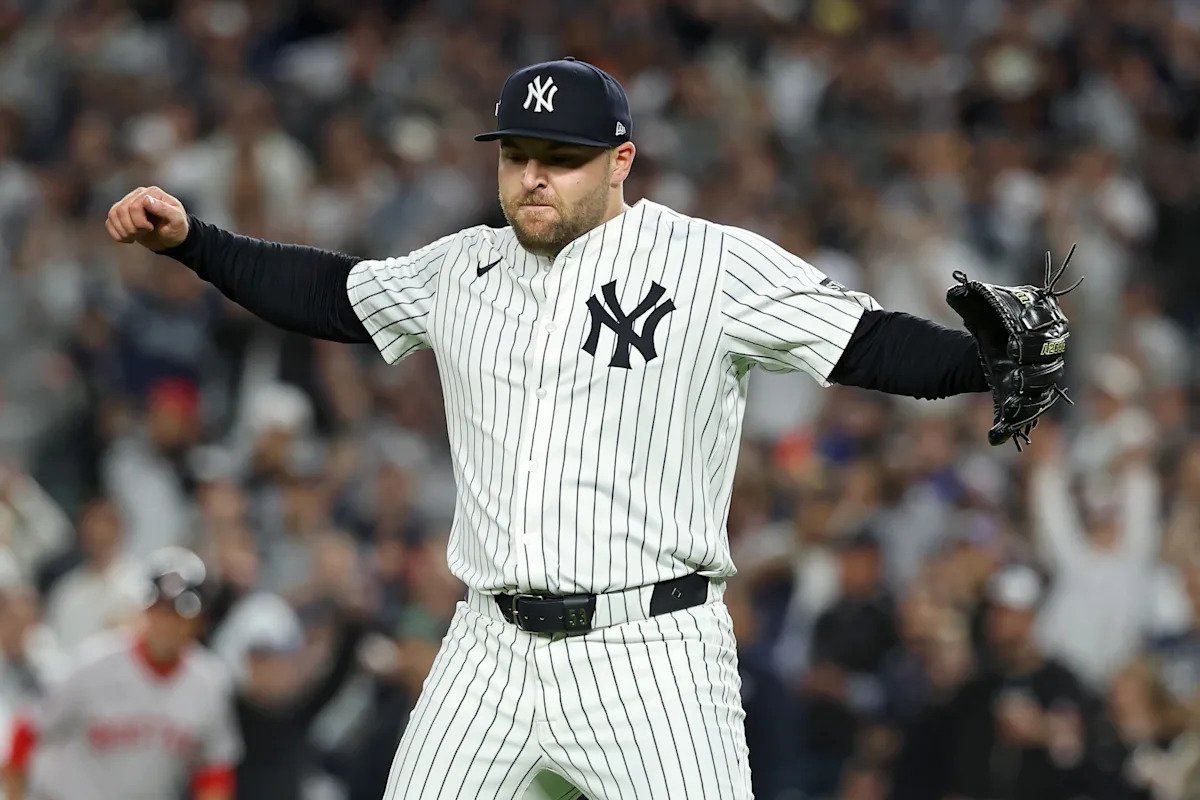
Of course, whenever a team does this sort of visual or audio cue to indicate that there are two strikes on a batter, it makes a subsequent strikeout all the more aesthetically pleasing. And so, I decided to dive into the Statcast data to figure out which Yankees pitchers have been able to most often record the inning-ending strikeout. For this exercise, I divided these strikeouts into two categories: single-reactor ignitions (inspired by the destruction of Jedha City and the military installation on Scariff in Rogue One) occur when a pitcher fails to strike out the batter on the next pitch, but is able to eventually record the K, while a full reactor ignition (such as the one in the original movie) represents a strikeout on the next pitch.
It probably doesn’t come as much of a surprise that the pitchers who have the highest rate of firing the Death Star this season are among the team’s leaders in strikeouts…with a catch, though. Fernando Cruz, whose 35.7 strikeout percentage heading into action last night leads the team, has struggled to get an inning-ending strikeout while at home. Well, you know what they say: that’s baseball, Suzyn.
Batted Ball Shenanigans
Of course, since we’re already on Statcast, let’s also see what players have been given gifts by the baseball gods (have lucked into a hit on a softly batted ball) and who has been cursed by them (a hard-hit ball straight into a glove).
Advertisement
Right now, the three softest hits by a Yankee this season — at 40.3, 35.4, and 28.6 mph off the bat — shouldn’t really count for this exercise, as they are bunts, although I do want to give props to Austin Wells for reaching on a bunt single. Outside of these, then, the softest hit on the year heading into action last night belongs to Randal Grichuk, whose single past a diving Caleb Durbin on April 21st clocked in at just 49.6 mph.
View Link
On the flip side of that, the hardest batted ball to become an out comes off the bat off, perhaps unsurprisingly, Aaron Judge, whose ground out to Trevor Story on April 22nd was 112.4 mph off the bat — just, unfortunately, straight down.
View Link
Advertisement
For the pitchers, Max Fried on April 11th is the beneficiary of some good luck, as Junior Caminero’s ground ball to Jazz Chisholm came off the bat at 111.1 mph — beating, by just one tenth of a mph, Jac Caglianone’s flyout on the 18th off Will Warren.
View Link
Note: Although if you want to get technical, Bobby Witt Jr.’s double on April 19th was technically hit harder, but since the out came at the plate, not on the batted ball, I didn’t count it.
Former Yankees prospect Agustín Ramírez, meanwhile, has the softest hit against any Yankee pitcher this season, dropping a soft grounder into No Man’s Land between third base and the pitcher’s mound at a whopping 48.6 mph.
Advertisement
View Link
Note: technically speaking, this was the fifth-softest ball, with the first four being bunts by members of the Tampa Bay Rays, three of which came off the bat of burgeoning Yankees Killer Taylor Walls.
Some final fun facts
Last, and certainly not least, we’ve got a rundown of some basic fun facts that don’t require much explanation, but are nonetheless amusing:
-
Last season, Yankees second baseman Jazz Chisholm invented a new stat: home runs plus stolen bases. So which Yankee currently leads this stat, affectionately called the Jazz Chisholm? What a surprise — it’s Aaron Judge, whose 11 home runs and 5 stolen bases give him a grand total of 16 Jazzes on the season. Behind him, we’ve got José Caballero’s 14 (3 HR + 11 SB), Jazz Chisholm’s 12 (3 HR + 9 SB), and Ben Rice’s 11 (10 HR + 1 SB).
-
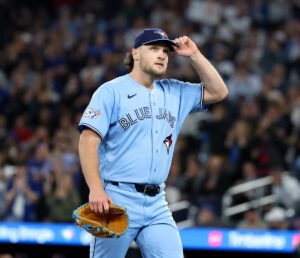
Heading into action last night, Caballero and Rice were tied atop the team in Win Probability Added at 1.4. In two appearances against the Yankees this year, Jordan Romano has -1.7 Win Probability Added — yes, that means that Romano has contributed more to Yankees victories than anyone else this season.
-
Despite being the second fastest runner on the team according to sprint speed (behind only, checks notes, Amed Rosario?), Caballero has grounded into the most double plays so far this season (five).
-
While Trent Grisham’s overall performance at the plate has been below expectations, as he’s slashing .165/.321/.341 prior to last night’s game, he trails only Rosario and Paul Goldschmidt when it comes to getting runners in: 22.2 percent of runners on base score when he comes to the plate.
Read the full article here