


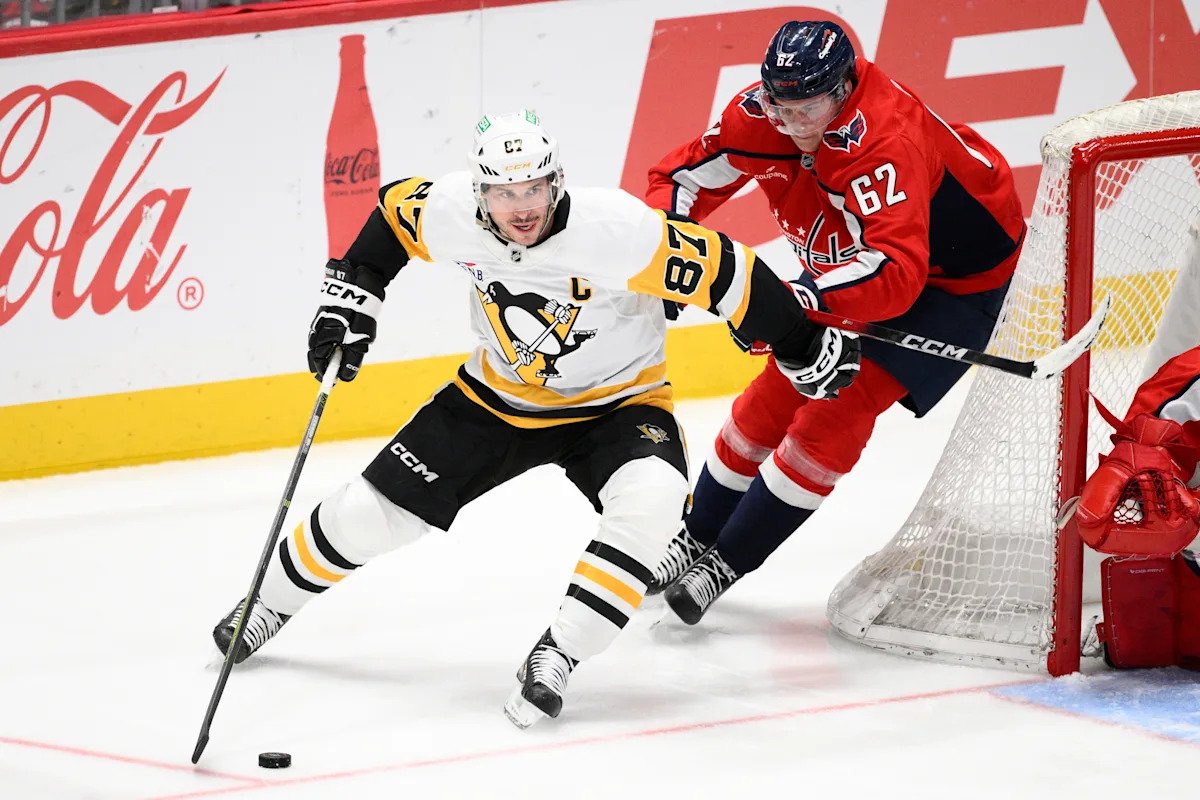
PITTSBURGH (AP) — Sidney Crosby, his face cleanly shaven for now, settled into the bench inside the Pittsburgh Penguins dressing room on Thursday and pulled a black baseball cap over his head.
For the first time in what felt like a long time, Crosby didn’t have to spend part of a mid-April afternoon cleaning out his locker and answering questions about how another season got away from the Penguins or wonder what might lie ahead during another uncomfortably long summer.
Advertisement
Not after a team that began the season with modest expectations — externally anyway — morphed into one of the NHL’s biggest surprises by finishing a strong second in the Metropolitan Division to return to the playoffs following a three-year absence that at times felt far longer.
Jokingly asked if he liked talking about the postseason more than whatever murky future might lie ahead, the 38-year-old Crosby — free to let his patchy playoff beard return after an extended break — just smiled.
“Way better,” the only player in NHL history to average at least a point in 21 straight seasons said. “This is what you play for, to compete for the Stanley Cup. And I think after some years not being able to do it, I think we appreciate it even more.”
Perhaps because it was so unexpected.
Advertisement
Pittsburgh began the season with a largely unknown first-year coach in Dan Muse and a slew of new faces to play alongside Crosby and fellow franchise fixtures Evgeni Malkin and Kris Letang. The Penguins ended it as the NHL’s third-highest scoring team while showcasing the mix of flash and resilience that served as the club’s trademarks during a string of 16 consecutive playoff appearances from 2007-22, three of which culminated with a Stanley Cup parade through downtown Pittsburgh in the early days of summer.
Reaching those giddy heights again would take some doing. Yet the Penguins are in the mix, and after spending three years watching the postseason go on without them, they will take it.
“The potential has always been there,” said defenseman Erik Karlsson, whose third season in Pittsburgh might be among the finest of his 17-year career. “And this year we really found a way to bring it out of everybody and be where we are today.”
A destination that long felt like a rite of spring for the better part of two decades until Pittsburgh’s playoff streak came to an abrupt end in 2023. Yet as one missed appearance turned into two and then three, there was a real sense from Crosby, Malkin, and Letang that the clock was ticking on their historic partnership.
Advertisement
“I think there may have been, ‘We got to get back to the playoffs’ or, you know, during the time when we were out, how much we missed being in, and having conversations like that,” Crosby said.
Yet, even with Malkin’s contract status beyond this season very much up in the air, they didn’t try to think of this year as one last ride. There was too much going on with the arrival of Muse — a longtime NHL assistant with a reputation for helping young players develop — to get sentimental.
As understated as former Penguins coach Mike Sullivan was forceful, Muse brought to Pittsburgh a detailed, workmanlike approach that preached accountability on both ends of the ice. Not one for “rah rah” speeches or soaring oratory, Muse instead focused on preparation and transparency.
“He’s a good communicator,” Crosby said, who added Muse makes it a point to make sure “everyone understands what’s expected of their role.”
Advertisement
It certainly helped that Muse took over a roster masterfully remade by general manager Kyle Dubas, who deftly retooled around his Hall-of-Fame-bound core by bringing in players designed to not make the Penguins so top-heavy.
Far too often in recent years, Pittsburgh went as Crosby and Malkin went, with little around them to pitch in. Not so much in 2026.
The offseason additions of forwards Justin Brazeau and Anthony Mantha (both of whom set career highs in goals and points), the precociousness of teenager Ben Kindel — who turns 19 on Sunday — and the chemistry of perhaps the best fourth line in the league in Blake Lizotte, Connor Dewar and Noel Acciari helped the Penguins survive this season even with Crosby and Malkin both missing significant time due to injuries.
Brazeau could sense the urgency when training camp started in September. It has rarely wavered over the last seven months.
Advertisement
“I knew we had a lot of guys that were hungry to prove something in this league,” Brazeau said. “I think that can be a good recipe.”
It certainly has looked that way. The Penguins played perhaps some of their best hockey down the stretch, emerging from a crowded field to reach the postseason with room to spare.
Each time it seemed things were teetering — notably in December when Malkin was lost for a month with an upper-body injury and again when Crosby was forced to miss several weeks while recovering from a knee injury sustained at the 2026 Milan Cortina Olympics or during any of its 16 overtime/shootout losses that cost them valuable points — the Penguins would right themselves.
Karlsson, who returned to form after a couple of shaky first years in Pittsburgh, led the way. The three-time Norris Trophy winner brushed off the idea that he is enjoying a late-career renaissance and played some sort of outsized role in Pittsburgh’s rise, instead directing the spotlight to a team that spent an 82-game grind defying the odds.
Advertisement
Why stop now?
“I think that the belief in here is very high,” he said. “What I think, unfortunately, is there’s another 15 teams that are in the same situation. So we’re just excited to be able to dance.”
___
AP NHL: https://apnews.com/hub/nhl
Read the full article here