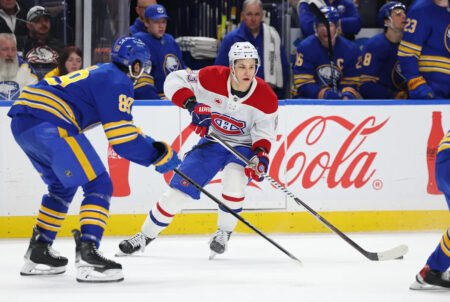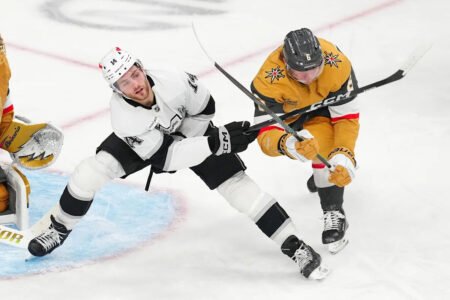




For a league that has long prided itself on parity, the “loser-point” system, in place since 2001, has never made more of a mess than it has this season. With over a third of the schedule played as the NHL pauses for the break, the Toronto Maple Leafs find themselves six points out of a playoff spot with a 27-21-9 record. Meanwhile, the Vegas Golden Knights hold a 27-16-14 record. Both teams have 27 wins in 57 games, but because the Golden Knights’ have five more losses occurring in overtime or a shootout, they earn extra points. Coupled with the fact that they play in a weak division, these two teams find themselves in very different situations despite identical win totals.
Now, I’m not arguing that the Leafs and Golden Knights are on perfectly equal footing. The Leafs have not played well and deserve their current standing. However, the Golden Knights’ 27 wins are tied for 20th overall in the NHL. They are currently tied for third in wins within their own division, yet they still enjoy the privilege of holding the No. 1 seed in their divisional playoff bracket. At the current pace, there will be teams with enough wins to feel they should have advanced to the postseason, but they will fall short because they played in the wrong division or didn’t accumulate enough “loser points” from overtime losses.
Advertisement
Simply put, the NHL has made reaching overtime a skill in itself, and it’s hard to argue otherwise. The league is currently on pace to award the highest number of overtime “loser points” in a single season. Many observers have noted that third periods have become boring, particularly in the late stages of a tied game, as teams play more conservatively to guarantee themselves that single point.
Despite ranking 12th overall in points, the Vegas Golden Knights, Photo courtesy of NHL.com
Of the four major sports (NFL, MLB, NBA, and NHL), the NHL is the only one that insists on a divisional format for the playoffs. It’s also the only league that awards different point values depending on whether a team loses in regulation or extra time. For comparison, the NFL does not award a “loser point” if a game isn’t settled after overtime; it simply ends in a tie. While rare, ties have been happening more frequently there over the years.
The NHL’s logic: the standings look closer when a team is only six points away from a spot. However, it is nearly impossible for trailing teams to make up ground when “three-point games” are constantly being awarded on out-of-town scoreboards. Interestingly, the NHL actually adopted the international three-point system (three for a regulation win, two for an overtime/shootout win, and one for an overtime loss) during the 4 Nations Face-Off.
Advertisement
Many players have stated they prefer that format. Wouldn’t you rather see your team play for more points in the third period instead of protecting the one they already have? While there may be little appetite for change in the near term, the league should certainly look at returning to the 1-8 conference seeding system that most players and fans prefer. At the very least, that would prevent situations seen in recent years where two of the top five overall teams are forced to meet in the first round.
The reality is that the league seems hesitant to change, likely because they haven’t been truly embarrassed into it yet. But if a team finishes in the top 10 in wins this season and still misses the playoffs, that might finally spur the change we need.
Read the full article here