

Ever wondered what it really feels like to win a major championship? Most of us will never experience it — but we can get a glimpse into the physiology behind the highs and lows of a major Sunday thanks to data provided by Whoop, the wearable fitness tracker endorsed by Rory McIlroy.
On Monday, Whoop shared McIlroy’s numbers from the final round of the Masters, and one factor stood out above everything else: his composure under pressure.
Advertisement
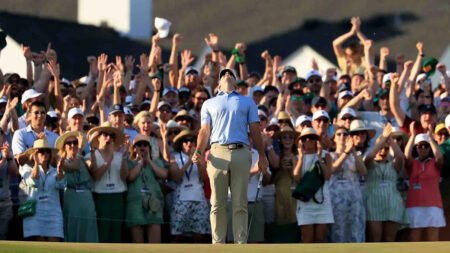
When McIlroy took a two-shot lead into the final hole, his heart rate told a compelling story. According to Whoop, McIlroy’s resting heart rate is in the 47- to 49-beats-per-minute range, but after his wayward tee shot into the trees right of the fairway on 18, his rate spiked to 135 BPM — a normal response in a high-stakes moment. But McIlroy quickly regained control. By the time he stepped into his second shot, his heart rate had dropped to 121 BPM.
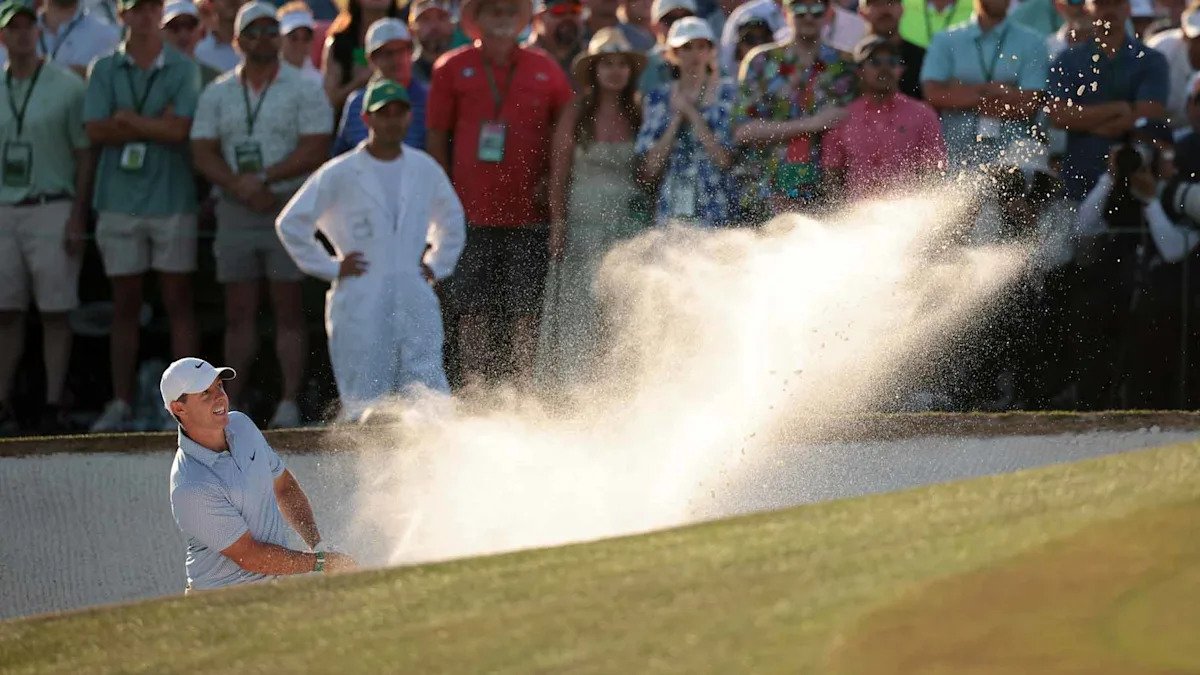
After McIlroy hit his approach into the front greenside bunker, his heart rate rose again to 136 BPM, but he again quickly settled himself. On his par putt, McIlroy’s heart rate fell to 117 BPM before dropping to BPM over his winning tap-in.
The data points to a striking conclusion: In the moments most players tense or speed up, McIlroy did the opposite — he slowed himself down.
News
Haotong Li dressed in white stands on the green with his head bowed and hand on his face, appearing disappointed, at the Masters. Lush green bushes fill the background.
McIlroy exhibited the same pattern of calm and control across the entire tournament. His recovery scores remained consistently high — 87% on Sunday, peaking at 94% — signaling that his body stayed primed. His strain reached 16.8, which reflects sustained effort without tipping into fatigue.
Advertisement
Sleep, often overlooked, also gave him an edge. He logged over 9 hours Saturday night into Sunday (92% sleep performance) and averaged 8.5 hours across the weekend. His resting heart rate stayed remarkably steady, between 47–49 BPM — proof that his elite conditioning and recovery was paying off.
And the workload was no joke: more than 24,000 steps on Sunday alone, and more than 91,000 across all four rounds.
The takeaway? McIlroy has learned to steady himself under pressure. In his most intense moments, he doesn’t let adrenaline take over — he reins it in and regains control. Down the stretch, that composure can make all the difference.
The post Rory McIlroy kept his cool Masters Sunday. This revealing data proves it appeared first on Golf.
Read the full article here