
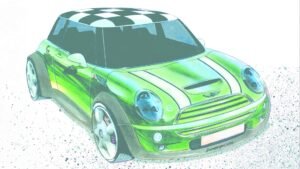

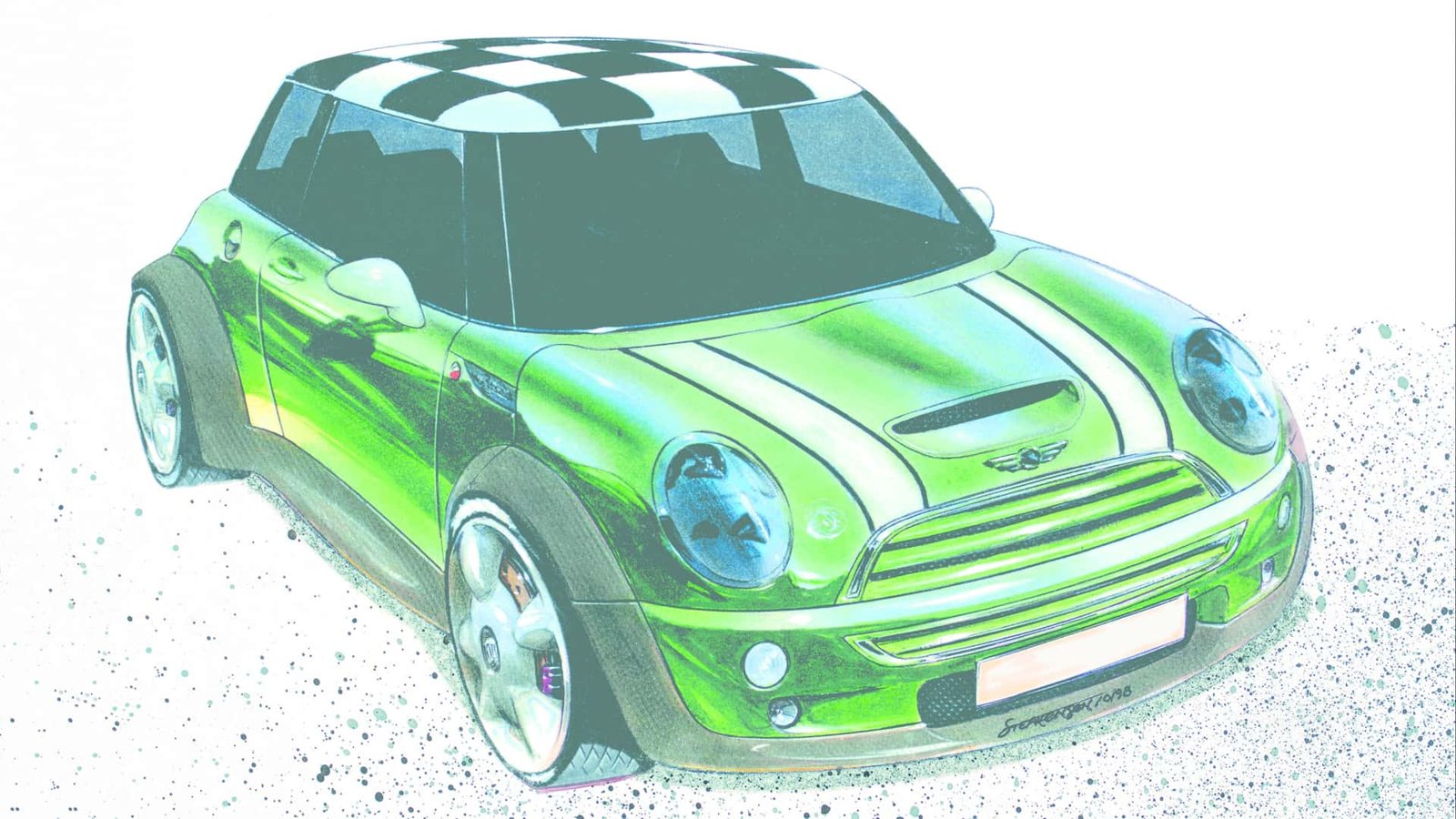
- Mini’s next Cooper is sketched to echo the 2001 R50’s short overhangs, upright glass, chunky roof and round headlamps.
- BMW is weighing a rear-wheel-drive Gen6 EV platform, putting the motor at the rear for better balance, traction, and handling.
- Nothing’s signed off yet as current Minis remain front-wheel drive, and Gen6 RWD could free cabin space if batteries sit low.
The next Mini Cooper is already being sketched with one eye on the past and the other on a big mechanical shake-up. Mini’s design boss has confirmed early work on a new Cooper that borrows heavily from the 2001 R50’s stance and proportions, while BMW engineers weigh a switch to a rear-wheel-drive Gen6 electric platform.
That would be a major break from today’s front-drive Minis, especially for US buyers looking at small EVs that still feel playful rather than anonymous. The twist is that nothing is signed off yet, so the car you might be eyeing for your next daily is still some way off, and what’s on sale now remains front-wheel drive.
Photo by: Mini
Gen6 RWD Platform
Right now, the latest electric Cooper uses a front-drive platform from a Chinese joint venture, while Mini’s gasoline Cooper continues on an evolved version of the previous chassis. BMW’s Gen6 electric hardware, already rolling out on Neue Klasse models like the new iX3, puts its main motor at the rear and promises a more dynamic balance from the start.
BMW development boss Joachim Post has framed a rear-drive Mini as an option on the table rather than a done deal, with “sheer driving pleasure” as the benchmark. In practice, a motor at the back should mean cleaner steering feel, better traction when you punch it out of a junction, and more scope for playful rotation on a back road compared with today’s front-driven Cooper.
If engineers can tuck the battery low between the axles and push the wheels out, the Gen6 layout could also free up cabin space despite compact exterior dimensions. That matters when rivals like the Renault 5 and Fiat’s electric city cars are trying similar tricks. A related plan for a rear-wheel-drive BMW 1 Series electric hatchback hints at how far BMW is willing to push small cars back toward rear drive.
R50 Looks
Mini’s head of design Holger Hampf has been clear that proportion is “non-negotiable,” pointing to the way people across countries and even five-year-olds instantly recognize a Mini just from its stance. The 2001 R50 is the reference point: short overhangs, upright glass, chunky roof, and the familiar mix of round headlights sitting over a simple grille opening.
Hampf has also talked about combining those recognisable cues with what he calls clever packaging and “smile-creating” details rather than building a retro museum piece. Expect the round headlamps and grille relationship to stay, along with a strong roof band and planted wheels at each corner, even as crash structures, big batteries, and modern driver-assist hardware take up more space under the skin than the R50 ever had.
Motor1’s Take: If Mini pulls this off, the Cooper could go from a small inconspicuous hatchback to a more distinctive driver’s car with sharper handling. But it all depends on BMW approving the rear-drive hardware and whether engineers can make the packaging work within the budget and crash-test requirements.
Read the full article here