



- The reborn city car gets a dedicated EV platform to maximize interior space.
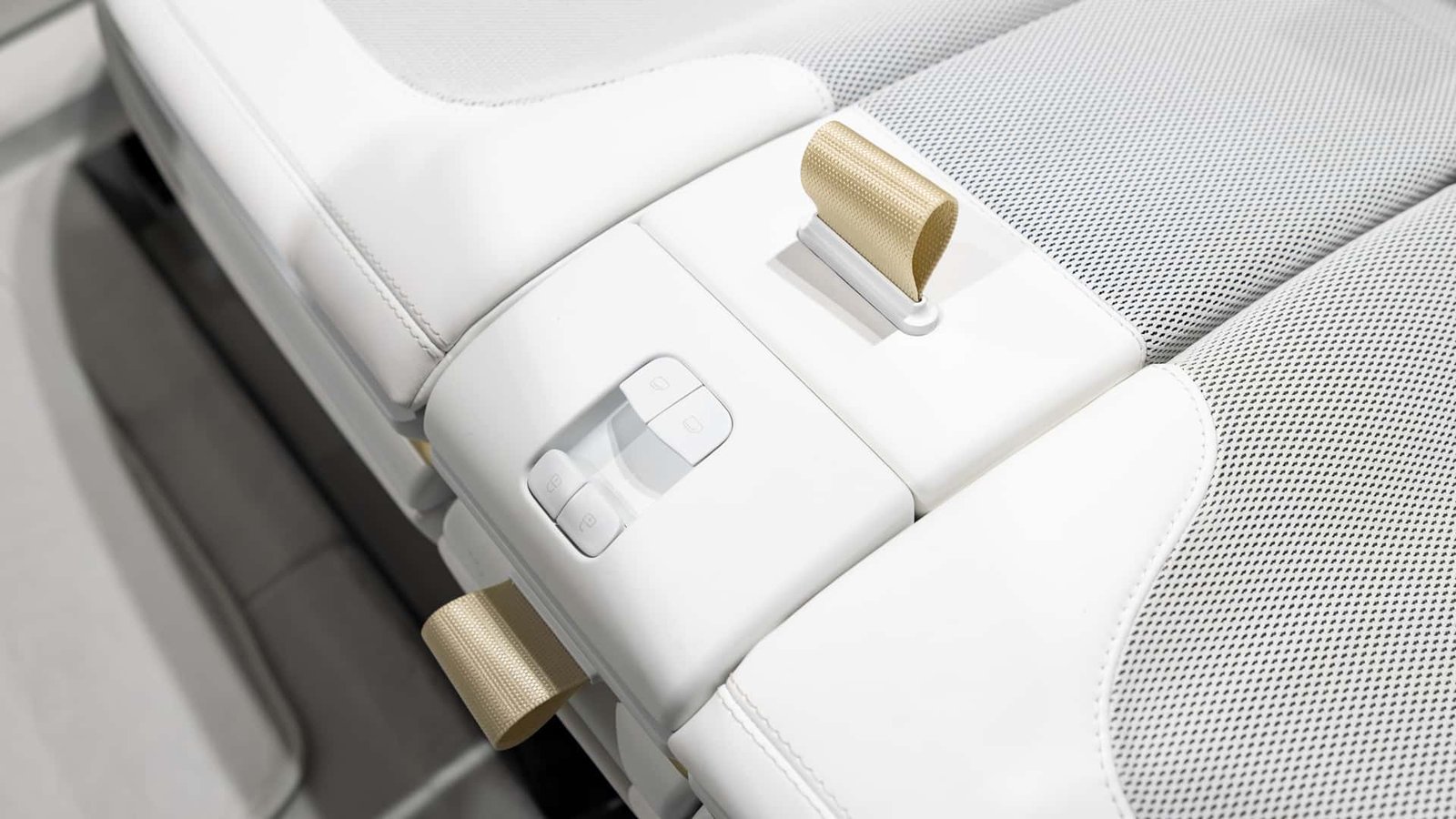
- The Smart #2 has the window switches and lock/unlock buttons between the seats.
- The central section folds to create a continuous bench seat.
It’s safe to say that Smart is milking the return of its city car for all it’s worth. We first saw the ForTwo successor back in March, when the diminutive hatchback made its debut in Beijing. However, we only saw the exterior design penned by Mercedes. Now, we’re getting our first look inside on the occasion of the electric car’s European debut. During an event in Rome, the Smart #2 revealed its party trick: a bench-seat design.
Don’t go into it thinking the tiny car can accommodate three people because it’s not an American fullsize truck. It’s still a strictly two-seater affair, but the central section folds down to create a continuous bench seat. The window switches and door lock/unlock buttons are located on the upper edge of that movable section, which features a loop the driver or passenger can use to raise or lower the middle portion.
Essentially a folding center armrest that merges with the two seats, it’s a neat trick designed to maximize the versatility of what remains a small cabin. Not only does the bench-seat design give the illusion of a wider interior, but it also makes it easier to exit through the opposite door when the car is parked in a tight space.

The Smart #2 Won’t Go Screen-Crazy
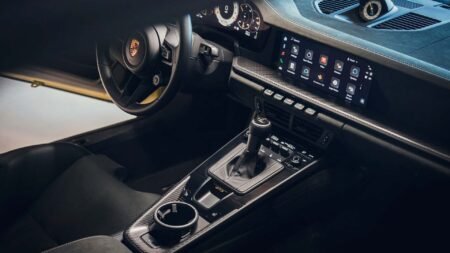
Elsewhere, the Smart #2 gets a curvaceous dashboard shaped like an “S,” complete with turbine-style air vents that wouldn’t look out of place in a Mercedes. The dashboard won’t be overburdened by supersized screens, but don’t expect many physical controls, either. Although it’s officially labeled as a concept, the production vehicle can’t be all that different considering it will debut in the coming months.
While the previous-generation Smart shared its platform between combustion-engine and EV versions, the new #2 is exclusively electric and rides on a dedicated architecture. In theory, that should significantly improve packaging, creating a roomier interior by stretching the wheelbase as much as possible while shortening the overhangs. A turning circle of just 22.8 feet (6.95 meters) matches the old EQ ForTwo and makes it ideal for the urban jungle.
There’s a 35.7-kWh battery pack underneath, good for an estimated 186 miles (300 kilometers) of range on the WLTP cycle. Smart claims the next-generation EV takes less than 20 minutes to recharge from 10 to 80 percent. Another pleasant surprise is the decision to install a multi-link independent suspension in a segment dominated by less sophisticated setups.
Small In Size, Big On Safety
When the original Smart arrived in the late 1990s, Mercedes made a big deal about its Tridion cell and how it would protect occupants in the event of an accident. Fast-forward to 2026, and the #2 is said to take the safety cell to the next level, though we’ll have to wait for the production model’s debut to learn the details.
The wraps are coming off this October at the 2026 Paris Motor Show, with sales beginning next year. Like all models in Smart’s sprawling lineup, the #2 will be assembled exclusively in China. As a reminder, Ineos Automotive bought the Hambach plant in France in late 2020 to build the Grenadier SUV and Grenadier Quartermaster pickup.


24
Source: Smart
Motor1’s Take: It’s refreshing to see a return to form, as recent Smart models have strayed far from the formula created by Mercedes. The current lineup consists of significantly larger and heavier vehicles than the Smart cars of yesteryear. The new #2 will be a true ForTwo successor, minus the combustion engine.
Pricing could be an issue because a growing number of affordable EVs are larger and more spacious. The #2 is expected to start at around €20,000, which means it’ll go up against the reborn Renault Twingo and the upcoming second-generation Dacia Spring.
Read the full article here