

MIAMI, Fla. — There is a version of the McLaren Golf story that works.
The clubs are real, and the performance is there. I have hit the Series 3 irons and you feel it immediately. At impact, there is a clean, solid sensation, along with the kind of feedback that makes better players nod quietly and reach for another ball. They look the part, too. While they are a better-player’s distance iron, when you look down at them in the address position, you see a sleek sedan and aesthetics that seem built rather than assembled. For a company playing its first round in the equipment game, that’s a great start.
The McLaren Series 3 iron.
But the golf world has seen this movie before, and the portion that contains the opening credits is always the same. Big name. Bold pricing. Talk of disruption and the promise of something new. A launch event featuring loud videos, splashes of colors and plenty of promises. And then, somewhere around the 18 to 24-month mark, the real test begins.
Advertisement
McLaren Golf has hired enough industry veterans to know what it’s walking into. It has been careful to distance itself from the co-branding arrangements the golf world has seen before. This isn’t Oracle Red Bull Racing x TaylorMade. It isn’t Ferrari x Cobra Golf from back in 2012. McLaren Golf wants to be a golf company, full stop, not a licensing deal dressed up in carbon fiber and papaya orange.
That’s the right instinct, but the problem is that the market doesn’t make that distinction yet. When people see the McLaren name on a hosel, the first thing they think about is Zak Brown and the Monaco paddock, not a metal injection molded iron built for a golfer who wants more feel and forgiveness.
That’s the gap McLaren Golf has to cross, and it’s wider than it looks.
More: McLaren Golf releases the Series 1 and Series 3 irons
Advertisement
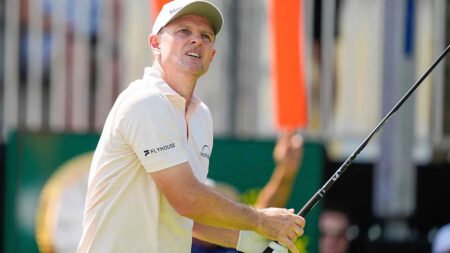
Justin Rose is the right man to help close it. At 45, Rose has become something of a sympathetic figure in professional golf after finishing second to Rory McIlroy at the 2025 Masters. He’s a player known for precision, attention to detail, preparation. When he had briefly had the lead at 2026 Masters a few weeks ago, before he finished T-3, people rooted for him. He’s likable, media-savvy and his game translates perfectly with what McLaren Golf is trying to say about itself.
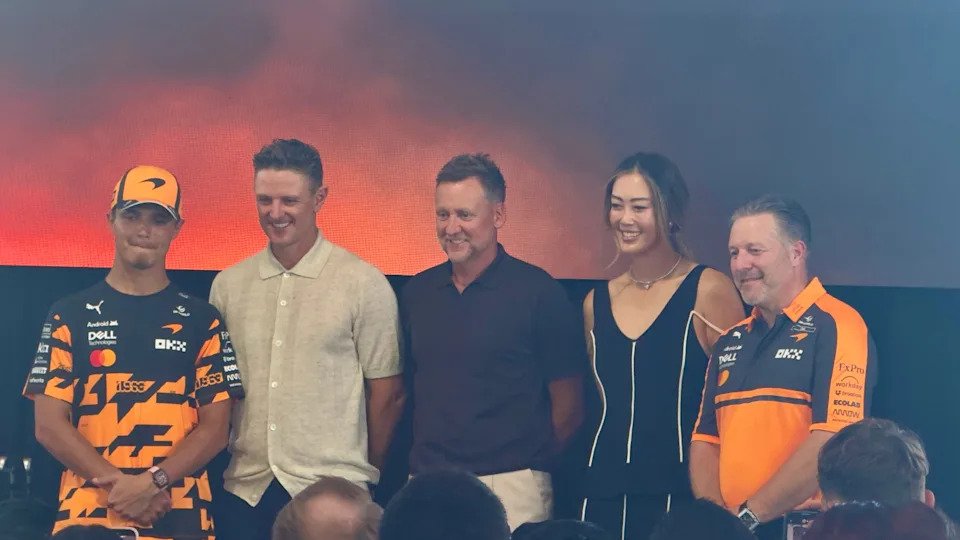
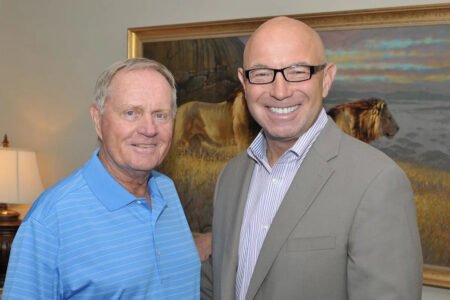
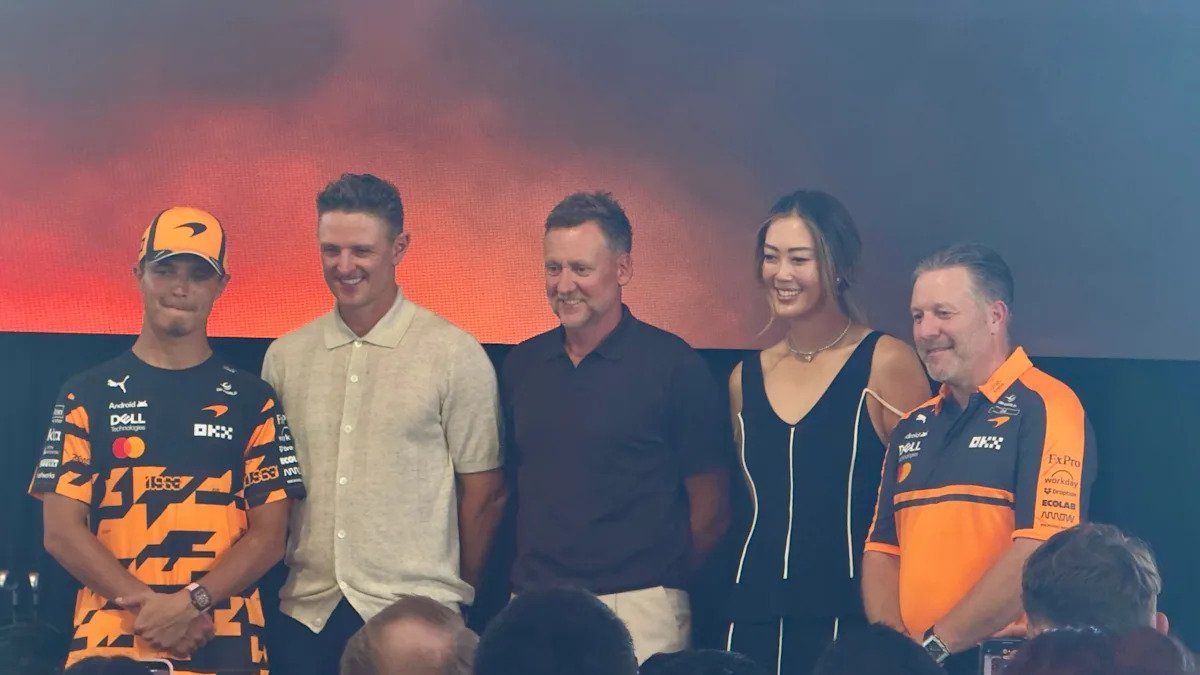
Kandi Norris, Justin Rose, Ian Poulter, Michelle Wie-West and Zak Brown at the McLaren Golf launch event.
If Rose contends in majors with McLaren irons in his bright orange bag, it will create the kind of visibility and validation that startup brands dreams of.
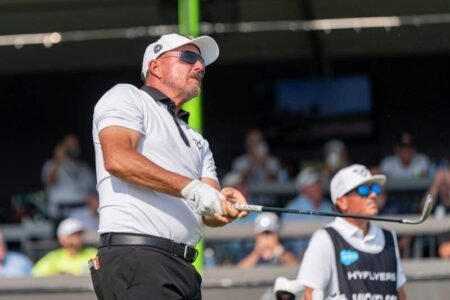
Ian Poulter and Michelle Wie West, who are also brand ambassadors and equity holders, feel like a different calculation. Poulter, now on LIV Golf, isn’t playing in majors and isn’t on network television. He’s a recognizable name, but recognition fades when the camera stops following you. Wie West is iconic, genuinely, but she hasn’t been a competitive presence in years. Both signings feel less like performance endorsements and more like additions to McLaren’s social media infrastructure. Reach over relevance. That’s not necessarily wrong for a brand in launch mode, but it puts more weight on Rose’s shoulders than any one player might want to carry.
Advertisement
And then there’s the price.
The $375 per iron cost is real money. A set of seven clubs clears $2,500 before you’ve thought about a fitting or a bag. For a certain kind of golfer, the one who leases a new new luxury SUV every three years and keeps a locker at two or three private clubs, that price isn’t an issue. That player buys them because they’re good and because they’re McLaren. It’s a market that exists and PXG proved it. But PXG also proved something else: that you can’t live there forever.
PXG launched as the maker of some of the most expensive gear in golf at a time when a lot of brands were still licking their wounds from the recession of 2008 and its fallout. It was built around the idea that extraordinary performance commanded extraordinary prices. The clubs were good, the buzz was real, and for several years, the ultra-premium positioning held. Then, quietly, the prices started coming down. Not dramatically, but meaningfully. Today, PXG drivers and irons are priced in line with companies like Callaway, Ping, TaylorMade and Titleist.
Advertisement
Fanboys buy once, but serious golfers buy on performance and value, even when value is relative.
McLaren Golf is at the beginning of that arc right now. The racing faithful will come. The company’s launch event in Miami was filled with beautiful people admiring Formula One cars, sipping champagne and watching splashy videos. They took selfies standing next to those impressive machines, often holding a club. They’ll admire the Series 1 blades, and many will buy the Series 3 irons. That’s the idea of a launch event, but those are not the people who will turn McLaren Golf into a success, thriving, long-term business.
The business is what happens after the launch event is over.
It’s what happens when McLaren needs to fill out those remaining categories. The drivers, the fairway woods, the wedges, the putters. All of those clubs, like the irons that were just released, are going to be compared not just to other premium clubs, but to the expectations set by the name McLaren. Given that name, and the positioning of the brand, golfers are going to want to know if McLaren gear outperforms stuff made by Cobra, Mizuno, and brands that cost less and carry decades of credibility.
Advertisement
McLaren’s clubs are good. The strategy of limited distribution, with direct-to-consumer sales and with sales through premium fitting partners makes sense. The Tour presence with Rose is smart. The ambition to be a 14-club brand is the right ambition.
But the challenge ahead isn’t making great clubs. McLaren can do that. The challenge is becoming a great golf company. One that people think about the way they think about Mizuno or Titleist or Ping, not because of what the name means in auto racing, but because of what it means on the range, in a fitting bay, and out on a course where the only thing that matters is what the ball does when you hit it.
McLaren Golf needs to be known for its clubs, not cars. Achieving that is a long race.
This article originally appeared on Golfweek: McLaren Golf can make golf clubs, but real test is just starting
Read the full article here