


Millions of people around the world started playing golf during the COVID-19 pandemic. One of those happens to be the greatest Winter Olympian in history.
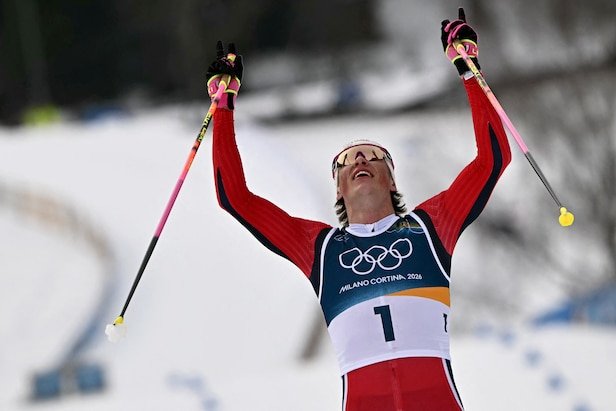
Johannes Klaebo won a record six gold medals in cross-country skiing last month at the 2026 Winter Olympics in Milano Cortina. He finished his historic season this month at World Cup finals in Lake Placid, where he was crowned the winner of the season-long sprint, distance and overall titles—becoming the first male skier to claim the trifecta.
Advertisement
Klaebo is considered the greatest male cross-country skier of all-time. But now that he’s heading home to Trondheim, Norway and the off-season is upon him, he’s got a new sport that’s about to occupy his mind: golf.
“We figured we’d just try something new,” Klaebo said of his first time playing in 2020. He and eight of his best friends decided to go out and try it. None of them had played golf before. “It just took me one round of golf, and I was like, ‘this is something I’ll need to continue to do.’ After that, we have been playing as much as I can.”
Like many new golfers, Klaebo spent hours on YouTube, watching instructional videos, trying to learn how to develop a proper swing. The mechanics of the swing are far different from his specialty sport.
/content/dam/images/golfdigest/fullset/johannes klaebo putting.png
Since taking up the game in 2020, Klaebo has become a 7- or 8-handicap. (Photo courtesy of Johannes Klaebo)
Advertisement
Starting with a group of friends who were all also new to the golf made the process fun—and competitive. Who could figure the game out first? Who could become the best at it?
Klaebo hit balls in his yard. He put a putting green in his living room. He was hooked.
“I like to compete,” Klaebo said of his quick love for golf. “I like to do that as much as I can, and to be able to compete against yourself, which is kind of the most fun part. Also competing against your friends and seeing … even though we are on different levels now, we’re able to compete against each other. And we can have a lot of fun competing, so that’s something that I really like. I think that’s kind of the cool part about it, that there are so many options when it comes to the competing aspect.”
More From Golf Digest
Letter from Europe How a world record holding pole vaulter used golf to sharpen his competitive edge
Olympic Hat Trick Perfect attendance: Meet the four men who have played in the three Olympics since golf’s return

Late Scratch? How good at golf could you get if you really practiced?
Advertisement
Trondheim is a town of 200,000, roughly 300 miles north of Oslo. There’s an 18-hole course, a nine-holer and a par-3 course. The DP World Tour also holds a Challenge Tour event at Byneset Golfklubb, not far from the city.
Klaebo and his friends play various formats and put a little money on their matches to make things a bit more interesting.
His rigorous training and racing schedule make it hard for him to play consistently. There are times when he plays a lot, and long stretches where he doesn’t touch a club. Speaking this month via Zoom, Klaebo hadn’t played since August. And he knows that first round back might be rough. He says his handicap is a “7 or an 8,” but admitted he’s mentally prepared to shoot 95 when he finally gets reunited with his clubs this spring.
He still watches instruction on YouTube, but works with teachers now, too, for tune-ups. Especially at the beginning of the season. “I try to have the first couple of sessions with the pros, instead of just starting the season completely wrong every single year,” Klaebo says. “I think it’s good to have someone looking at your swing.”
Advertisement
Beyond the physical challenges of technique, Klaebo has also enjoyed the singular mental anguish that a round of golf can provide.
“Golf is next level when it comes to the mental part,” Klaebo says. “It’s just unbelievable. Every stroke just matters so much. You always need to reset and just try to do your thing every single time.”
Cross-country skiing, which is often noted as the most cardiovascularly demanding sport, requires athletes stand on the starting line and make peace with the fact that they’re about to experience great discomfort. Skiers call it the “Pain Cave”: When you’re asking your body to push to its limits, your legs and arms burning as they fill with lactic acid, your lungs laboring to pull in as much air as possible, your core trying to hold you upright but threatening to fold under the weight of the effort. A little voice in your head reminds you that this pain is of your own creation, and if you just slowed down, it would stop. For the best, another part of your mind quiets that voice, convincing you to continue pushing forward. It is grueling, punishing work. And no one has mastered it like Klaebo.
2261420020
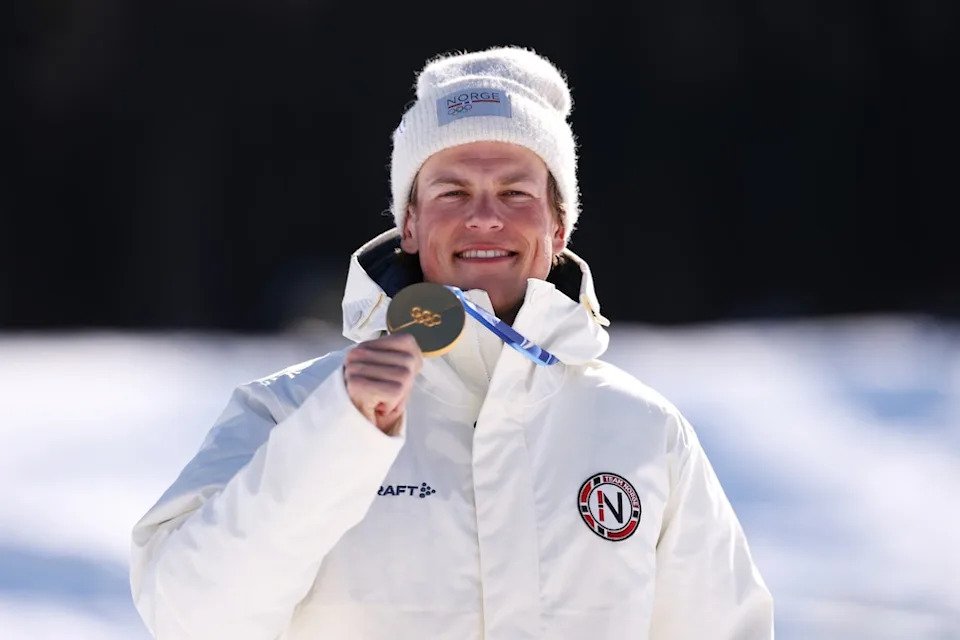
Johannes Klebo’s six gold medals at the 2026 Winter Olympics brings his all-time total to 11, and he plans to compete again in 2030.
Advertisement
Lars Baron
“In cross-country skiing, it’s a little bit different, but it’s still mental to prepare yourself to be in the pain cave when you’re supposed to race,” Klaebo says, comparing the two sports. “It’s a bit more uncomfortable to do cross-country skiing when it comes to the pain you’re getting in, but mental pain, it’s way more in golf.”
Finding time to become a single-digit handicap over the course of a few years, while also becoming the winningest Winter Olympian of all time during that same period, is impressive. But Klaebo wants more.
“I have become better, but it still frustrates me that I’m not better,” Klaebo says.
Advertisement
He’s friends with Norwegian golf pro Kristoffer Reitan, who is making his first Masters appearance in two weeks. Klaebo has played with Reitan a few times and has seen the gap between an average golfer and a pro up close. He called their first outings more embarrassing than anything else. Klaebo knows he’s decent at golf now, but he also knows what it feels like to completely master a sport.
“That’s kind of what triggers me a little bit as well,” Klaebo says. “I love the fact that I’m struggling. Your ball goes from the left side, to the right side, into the woods, and you are standing there and you four-putt and it’s like, ‘holy s—, this is frustrating.’ But on the other hand, it’s really fun to see when you’re getting better.”
There’s a point many golfers are lucky enough to reach, when they’re in that mid-to-high single-digit-handicap range, and if they’re going to get any better, they’ll need to spend some real time working on their games. The days of quick improvements and big leaps are gone. A harsher reality sets in.
“For me now, if I’m going to get better, I’ll need to practice. That’s kind of the thing that I’m struggling with the most, finding time to be just staying on the range, practicing my shots, staying in the putting green, putting all the work in,” Klaebo says. “For me that’s kind of the the challenging part.”
Advertisement
Looking at Klaebo, you can’t imagine average golfers have much in common with him. And yet, he’s one of us, a golfer juggling a day job and the pursuit of a lower handicap. He just happens to also be one the fittest humans on the planet and have 11 Olympic gold medals.
Read the full article here