


- The Jaguar Type 00 could get a range-extending gas engine.
- It would boost the total driving range to 684 miles (1,100 kilometers).
- Even if approved, the Type 00 with a gas engine won’t be available at the EV’s launch.
Ever since Jaguar shockingly hit the reset button a few years ago, it has consistently claimed that internal combustion engines were on their way out. Last month, it lived up to that promise by canceling ICE altogether when the final F-Pace rolled off the assembly line at the Solihull plant in the UK. The other gas-fueled models had already bowed out, making the luxury SUV’s retirement the end of Jaguar’s ICE lineage after 90 years of production.
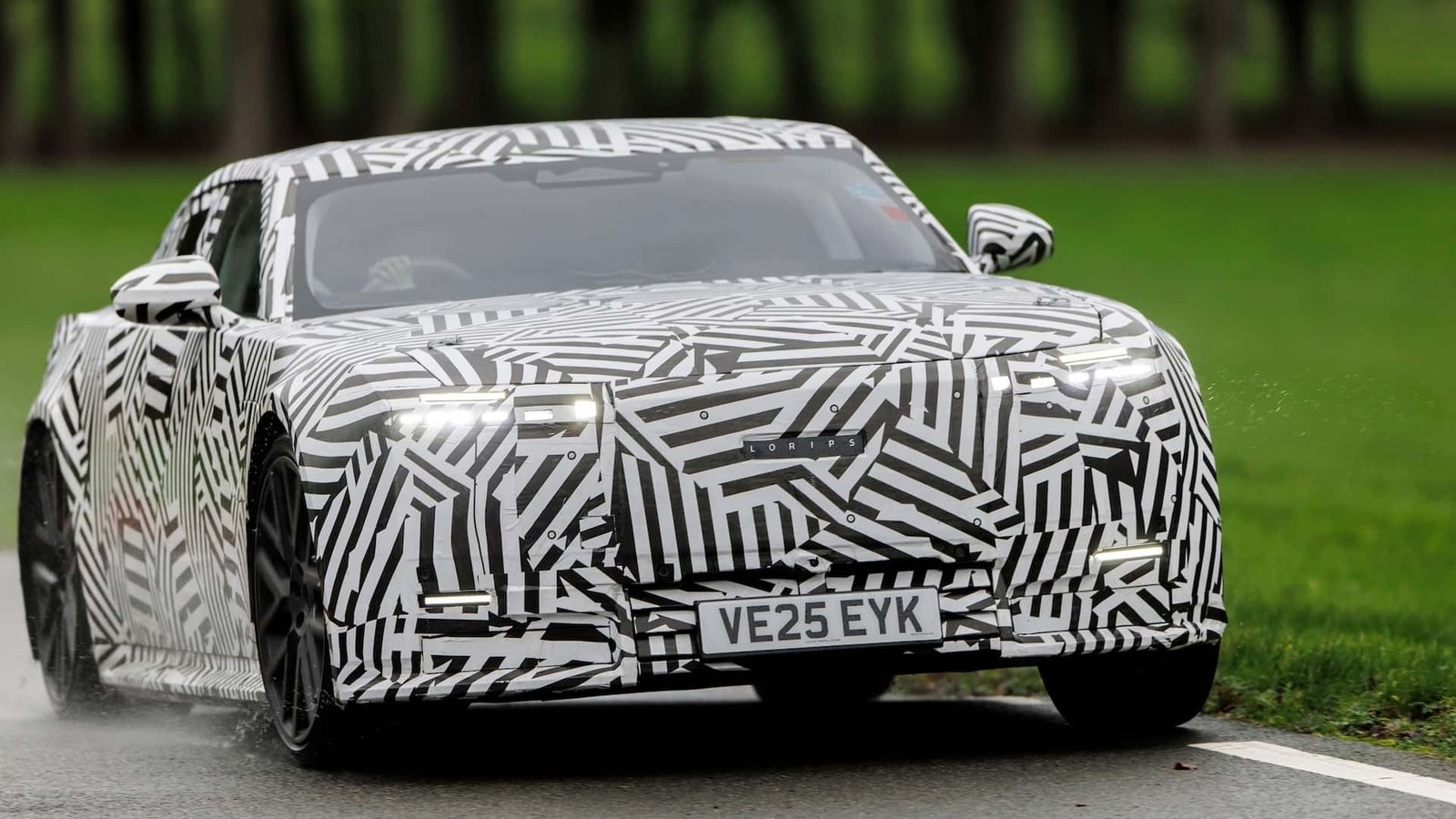
Until the Type 00 arrives in production guise later this year, Jaguar is effectively a carmaker without a single model in production. In the meantime, however, we’re hearing that the pledge to go all-in on EVs may have been premature, as a new report claims the striking car could still feature a combustion engine after all.
According to a fresh report published by The Times, there are growing concerns within Jaguar about the Type 00’s range. Although the battery pack is expected to be on the large side, given the vehicle’s stately footprint, engineers are reportedly exploring adding a gas engine to serve as a generator. That would turn the polarizing four-door GT into an electric range-extending vehicle (EREV).
Photo by: Jaguar
Jaguar has quoted an electric range of 478 miles (770 kilometers) on the WLTP cycle and 430 miles (692 kilometers) per the EPA for the Type 00 concept. While these are healthy numbers, Jaguar reportedly fears they could still deter buyers unwilling to deal with range anxiety. Adding a range-extending gas engine would transform the production-ready Type 00 into a proper GT, capable of covering up to 684 miles (1,100 kilometers).
The Times doesn’t specify the test cycle on which that figure is based, though our money would be on WLTP given that the UK uses the Worldwide Harmonised Light Vehicles Test Procedure. The London-based national newspaper cites “sources familiar with the situation” who claim there is an ongoing “secret initiative” in which engineers have been tasked with extending the car’s range.
As with other EREVs, the combustion engine wouldn’t power the wheels. Instead, it would function solely as a generator to recharge the battery on the move. BMW is considered a pioneer of the technology, having introduced the i3 REx with a motorcycle engine serving as a generator more than a decade ago.

42
Source: InsideEVs
The report adds that a range-extending version of Jaguar’s outlandish GT is unlikely to debut alongside the standard EV later this year. Alternative drivetrains are said to be in the early stages of engineering, suggesting the decision to explore EREVs came when the model was already deep into development.
When contacted by the British publication, parent company Jaguar Land Rover (JLR) declined to comment. The fact that it didn’t outright deny the report hints there may be some truth to the rumor. If engineers are indeed attempting to fit a gas engine into a car that was supposed to be electric-only, it would almost certainly be a small unit.
JLR is reviving the Freelander as a separate brand of China-built models offering range-extenders, among other powertrains. These vehicles are being developed in partnership with Chery, which will engineer and manufacture them locally. It’s too soon to say whether Jaguar will borrow from those range-extending setups, but it can’t be ruled out.
27
Source: Jaguar
Motor1’s Take: Officially, the Type 00 will be built on a “dedicated technology platform” known as the Jaguar Electrical Architecture. However, we’ve long argued that the imposingly long hood seems to beg for a combustion engine underneath. Given the car’s generous footprint, packaging a small ICE may not be particularly difficult.
That said, reengineering the vehicle to accommodate a gas engine won’t come cheap and would further strain Jaguar’s already fragile condition. If approved, the REEV would likely arrive later in the life cycle, sitting alongside the battery-only EV.
Expect Jaguar to charge a premium for the range extender, meaning buyers should be prepared to spend more than the roughly $120,000 expected for the standard electric version.
Read the full article here