

• The 2026 Cadillac CT5 earned Poor ratings in IIHS’s updated side-impact and moderate-overlap front crash tests.
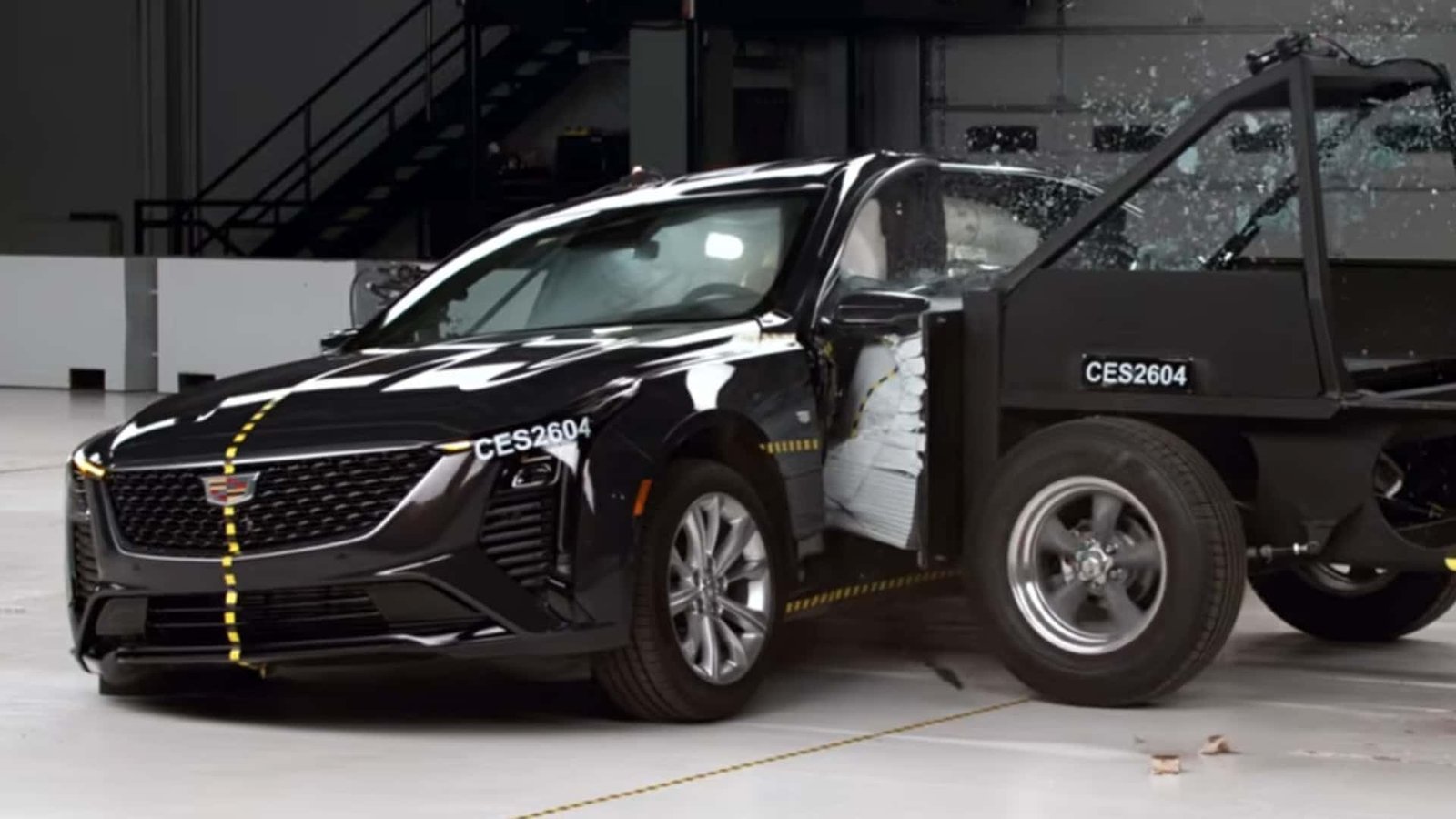
  • In IIHS’s SUV-style side test the driver dummy struck the sill, producing a 161 g peak head load.
  • Despite a 5-star NHTSA overall rating, the CT5 scored Poor for headlights and front crash prevention.

The 2026 Cadillac CT5 just did something you rarely see from a modern luxury sedan: it earned Poor ratings in two key Insurance Institute for Highway Safety (IIHS) crash tests, including the group’s tougher side impact evaluation. That sits awkwardly beside the CT5’s 5-star overall safety scores from the National Highway Traffic Safety Administration (NHTSA) and raises fresh questions about what those stars really capture.

For anyone weighing a CT5 as a daily driver, company car, or fleet sedan, the issue isn’t simply that it “flunked” a test. The real story is how the driver dummy’s head and chest behaved in IIHS’ newer SUV-style crash scenarios and why rivals like the BMW 5 Series and even the Toyota Corolla fared better when the same forces were applied.

YouTube video player

Where The 2026 Cadillac CT5 Fails IIHS Tests

The main trouble spot for the 2026 Cadillac CT5 is IIHS’ updated side impact test, which uses a roughly 4,200-pound moving barrier shaped like a modern SUV hitting the driver’s side at about 37 miles per hour. In that hit, the CT5’s driver dummy slid down past the side curtain airbag and struck the window sill and door trim panel, with a peak head load of 161 g and a HIC-15 of 1,282—values linked to a high risk of severe head injury.

IIHS also ran the refreshed CT5 through its updated moderate overlap front test, again with weak results. Premium Luxury trims between 3,663 and 3,802 pounds showed a moderate risk of chest injury and a likely head or neck injury for the rear seat dummy, which pulled the overall rating down to Poor even though the front structure itself held up well.


2026 Cadillac CT5 IIHS crash test dummy impact - back seat

Photos by: IIHS


2026 Cadillac CT5 IIHS crash test dummy impact - driver's seat

Photos by: IIHS

There are some bright spots. In the same side crash, the rear passenger dummy earned a Good rating for injury measures, showing the back-seat side structure and airbags worked in that scenario. But IIHS also recorded Poor ratings for the CT5’s base headlights and its vehicle-to-vehicle front crash prevention system, so it misses the group’s Top Safety Pick awards entirely and undercuts Cadillac’s broader push to keep traditional sedans relevant.

IIHS vs NHTSA Scores

So how can a car with 5-star NHTSA ratings look this bad in IIHS testing? NHTSA’s New Car Assessment Program focuses on a smaller set of standardized frontal, side, and rollover tests and turns them into a single star score, while IIHS layers on newer, tougher scenarios with separate grades from Good down to Poor. That lets a sedan like the CT5 ace federal tests yet struggle with SUV-style side impacts or rear-seat protection in more demanding evaluations.

Cadillac has leaned hard on the government scores, with a spokesperson stressing confidence in the CT5’s safety and its 5-star NHTSA rating. On that metric alone the car looks strong, and earlier model years hit the same top-line result. But IIHS’ Poor crash ratings, plus weak marks for automatic emergency braking and headlights, show the CT5 trails the best midsize sedans in detailed crash protection and crash avoidance, especially against newer platforms engineered around the latest IIHS protocols from day one.

Results from the same updated side test make the contrast clear. Cars like the BMW 5 Series and Toyota Corolla kept the driver dummy’s head on the curtain airbag and away from hard structures and earned Good ratings, so some mainstream and German rivals manage the SUV-style impact more cleanly than Cadillac’s current sedan. If you are weighing the CT5 against future products like the next-generation Cadillac CT5 combustion replacement or watching other GM safety headlines such as the Cadillac Vistiq third-row concerns, this is the moment to read both IIHS and NHTSA data instead of relying on a single score.


Motor1’s Take: That contrast between federal and IIHS results shows where the CT5 could leave occupants exposed—especially in side hits or for rear-seat riders—so if side-impact performance or consistent protection across test programs matters to you, treat the IIHS findings as a real decision factor alongside the government score, while also watching for any Cadillac updates that might narrow the gap and, in the meantime, favor sedans that already perform strongly in both regimes if you want the widest real-world protection.

Read the full article here

Leave A Reply