



Nissan’s struggles have been well documented, but CEO Ivan Espinosa has a plan to turn things around. At this year’s “Nissan Vision” outlook event at the company’s headquarters in Yokohama, Japan, the automaker shared new details on how it plans to right the ship.
As with many things in 2026, it all starts with artificial intelligence. Beyond that, Nissan plans to roll out new hybrid technology, introduce fresh vehicles in key segments, and streamline its lineup down to the essentials.
We sat down with Nissan in Yokohama to learn more about its plans for the coming years. Here’s what we found.
AI: Driver Assistance Of The Future
Nissan is looking to capitalize on the AI boom with what it calls AI Drive Technology, or AIDT for short. Details are still somewhat vague, but the company says AIDT will build on its existing driver-assistance systems—like ProPilot—to deliver a smoother, more advanced semi-autonomous driving experience.
Long term, Nissan aims to bring AI Drive Technology to 90 percent of its lineup. The first vehicle to feature the system will be the Japan-market Elgrand van, with a redesigned model expected to debut later this year. AI-enhanced ProPilot functionality is set to follow in 2027.
Electrification: Long Overdue
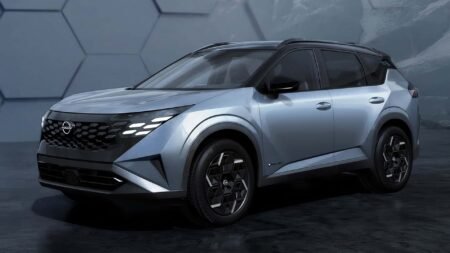
2027 Nissan Rogue / X-Trail E-Power Hybrid
Photo by: Nissan
Compared to some of its competitors, Nissan has been slow to adopt hybrid technology—especially in the US. That’s finally changing. Today, the company gives us our first look at the new Rogue Hybrid (along with the global X-Trail) for 2027, powered by the company’s latest E-Power system.
While the specifics remain limited for this particular model, the Rogue will use Nissan’s third-generation E-Power hybrid system and will be the first E-Power model for the US market. The company has previously claimed a thermal efficiency of 42 percent for the new system, edging out the 41 percent figures cited by Toyota and Hyundai.
Xterra: Don’t Call It A Comeback

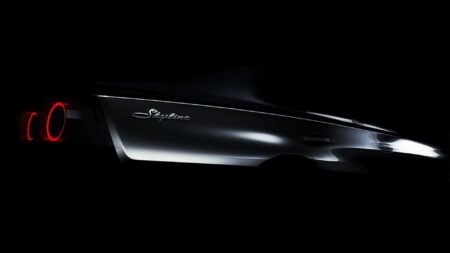
2028 Nissan Xterra Teaser
Photo by: Nissan
At last, the return many US buyers have been waiting for: the reborn Nissan Xterra. The company has long hinted at the SUV’s comeback, quietly releasing details over the past few months. But today, we get an official confirmation and our first official look at the SUV.
The specs are still under wraps, but Nissan says the new Xterra will serve as a “Heartbeat” model for the US and Canada—part of its renewed strategic focus. As confirmed by Nissan, it will feature body-on-frame construction and a purpose-built design.
In a previous interview, a Nissan spokesperson suggested the Xterra may skip the hybrid four-cylinder setups used by some rivals in favor of a naturally aspirated V6. A manual transmission seems unlikely, but the SUV is expected to be highly capable, with competitors like the Ford Bronco and Toyota 4Runner squarely in its sights.
Slimming the Lineup
As part of its broader strategy, Nissan plans to reduce its global lineup from more than 60 models to around 45 across both the Nissan and Infiniti brands. The company will phase out lower-performing vehicles—such as the Versa (RIP)—and redirect those resources elsewhere.
“Core” models, including the Rogue and other strong-selling SUVs, are expected to account for roughly 80 percent of total sales. The rest of the lineup will be made up of “Heartbeat” models like the Xterra, “Growth” models such as the global Juke, and various “Partner” models.
Nissan is aiming to increase average volume per model by more than 30 percent, with a goal of reaching one million annual sales in the US and Canada by 2030. In Japan, the company is targeting 550,000 units over the same timeframe.
As CEO Ivan Espinosa notes:
‘This is the right moment to articulate Nissan’s long‑term vision as we move beyond the Re:Nissan recovery plan and set a clear path for the future. Our vision defines where Nissan is headed, with customer experience as our guiding priority. By advancing mobility intelligence, we will deliver intuitive, advanced, and reliable products and technologies that offer outstanding value and enrich how mobility is experienced.’
Motor1’s Take: AI aside, if Nissan can nail the basics and return its lineup to the bare essentials, the struggling automaker could see a revival happen sooner than later.
Read the full article here