



”
], { type: “text/html” }
);
const iframe = document.createElement(“iframe”);
iframe.src = URL.createObjectURL(blob);
iframe.style.cssText = “width:100%;height:100%;border:0;”;
container.appendChild(iframe);
attachIframeMessageListener(iframe);
}
const observer = new IntersectionObserver((entries, obs) => {
const entry = entries[0];
if (entry.isIntersecting) {
obs.unobserve(entry.target);
requestIdleCallback(() => {
initWidget(entry.target);
}, {
timeout: 200
});
}
}, {
root: null,
rootMargin: “300px 0px”,
threshold: 0.01
});
requestIdleCallback(() => {
$all(“.nl-inline-form-container”).forEach((c) => {
observer.observe(c);
});
});
})();
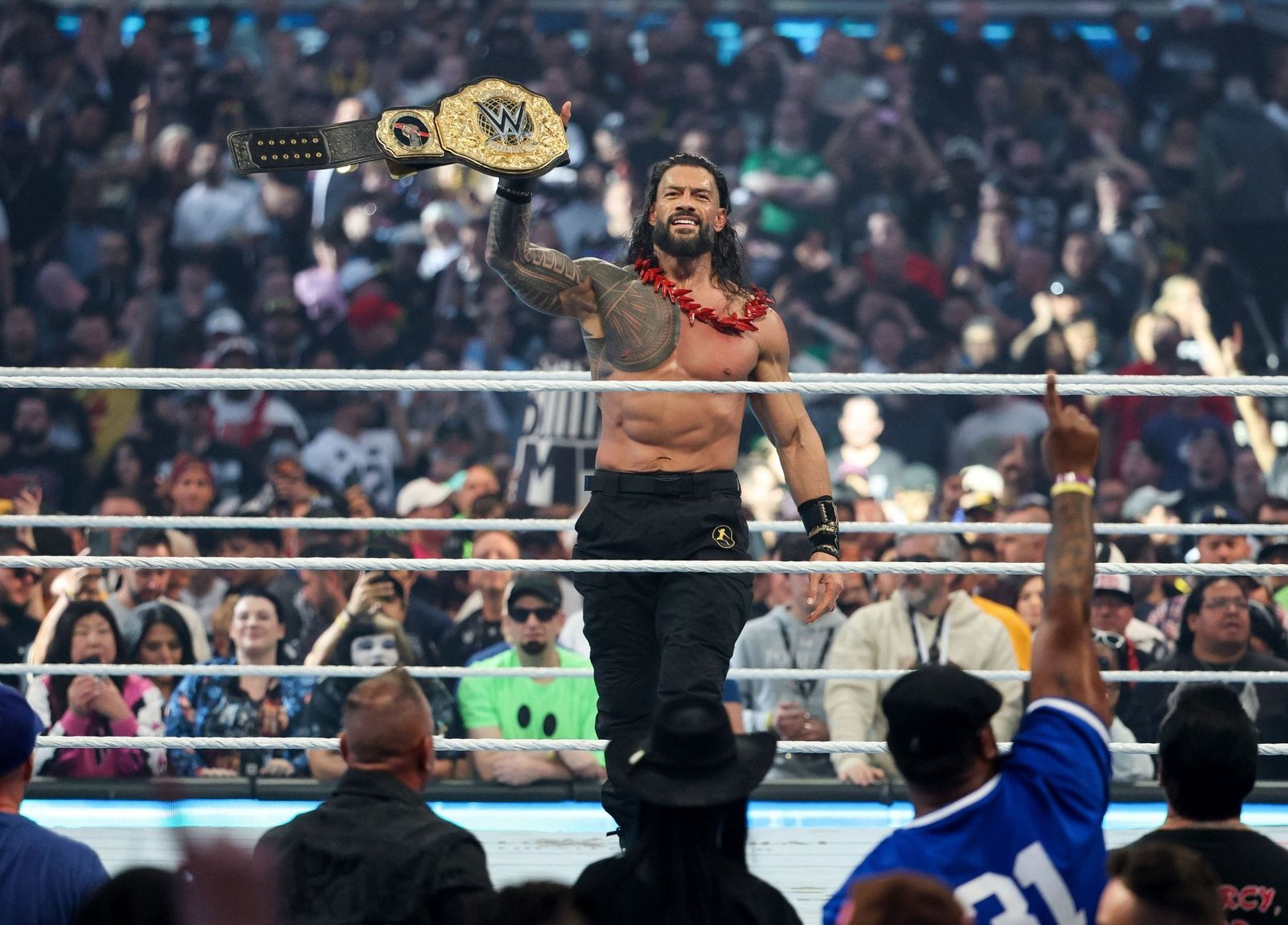
Instead of relying solely on the formula that made him the face of The Bloodline, WWE has added new layers to Roman’s personality, wrestling style, and storytelling. None of these changes has been drastic enough to redefine the character overnight. However, together they have made the champion feel fresher heading into another marquee SummerSlam season.

That said, in this article, we look at five small details WWE has changed about Roman Reigns since he won the World Heavyweight Championship.
#5. Roman Reigns no longer depends as heavily on The Bloodline
For years, Roman Reigns’ championship reigns were almost inseparable from The Bloodline.
Whether it was The Usos, Solo Sikoa, or other family members interfering in key matches, Roman often had backup whenever things became difficult. While those moments fit the story of the Tribal Chief, they also created the perception that he rarely won entirely on his own.
However, since capturing the World Heavyweight Championship, WWE has noticeably reduced that dependence.
The Bloodline still exists as an important part of Roman’s story. However, the champion has increasingly been portrayed as someone capable of handling his biggest challenges without constant interference. Even when family members are present, they no longer dominate every major championship match or segment.
That subtle shift has strengthened the OTC’s credibility as a fighting champion. Thus, allowing The Bloodline to serve as an extension of his character rather than the reason behind every victory.
#4. His promos have become far more emotional
Roman Reigns was once defined by confidence, intimidation, and calculated arrogance. While those qualities still exist, WWE has recently allowed him to show far more emotion during his promos.
Instead of delivering cold, methodical speeches about acknowledging the Tribal Chief, Roman has begun speaking more openly about legacy, betrayal, respect, and the personal stakes behind his biggest rivalries.
Reigns’ interaction with Seth Rollins is perhaps the clearest example. Rather than focusing exclusively on championships, the OTC has repeatedly referenced their shared history, The Shield, and the emotional scars that have followed both men throughout their careers.
Those moments have made Roman Reigns feel more human without diminishing his aura. Fans now see a champion driven by personal motivations as much as by championship success. Hence, adding another layer to one of WWE’s most compelling characters.
#3. His matches now have a noticeably different pace
Roman Reigns has never been known for frantic, high-speed matches. However, there has been a noticeable adjustment to how WWE structures his championship bouts since he won the World Heavyweight Title.
Rather than relying almost entirely on slow, methodical control before outside interference changes the momentum, Roman’s recent matches have featured quicker transitions and longer stretches of uninterrupted action.
The champion has become more willing to trade strikes early, absorb punishment, and engage in extended back-and-forth sequences that showcase both competitors. This subtle change has made his matches feel less predictable while helping each challenger appear more credible.
Also, it has allowed Roman Reigns to display more urgency when defending the championship. Thus, reflecting the idea that every challenger now represents a genuine threat rather than simply another obstacle for the Tribal Chief to overcome.
#2. WWE has given him a refreshed presentation
Roman Reigns is still unmistakably the Tribal Chief. However, WWE has quietly refreshed several aspects of his overall presentation.
Roman’s entrance feels more centered around the prestige of the World Heavyweight Championship than the dominance of The Bloodline. Camera angles frequently highlight the championship before focusing on Roman himself. Thus, emphasizing that he is now the face of WWE’s top prize.
That’s not all. Roman Reigns’ body language has also evolved. Rather than constantly projecting superiority through extended pauses and dismissive expressions, Roman now carries himself with the confidence of an active champion who expects every challenger to push him to his limit.
Even small production details, from commentary placing greater emphasis on his championship accomplishments to the way WWE frames his entrances, have contributed to making this version of Roman feel distinct from the one who ruled through fear during the height of The Bloodline saga.
These changes may be subtle. However, together they have successfully refreshed one of WWE’s most established characters without abandoning what made him popular in the first place.
#1. Personal rivalries now matter more than proving his dominance
Perhaps the biggest change in Roman Reigns’ character isn’t something fans immediately notice. It’s the motivation behind his biggest feuds.
During much of his historic run at the top, Roman’s stories revolved around maintaining his dominance. Every challenger represented another opportunity to reinforce that nobody could dethrone the Tribal Chief.
Since becoming World Heavyweight Champion, that philosophy has gradually shifted. His ongoing rivalry with Seth Rollins perfectly illustrates the difference. Although the championship remains important, the story has consistently emphasized their complicated history, lingering resentment, and the question of who truly stands above the other.
The title almost feels secondary to the personal score both men are trying to settle. The same approach has seemingly been extended to other rivalries, where Roman’s pride, loyalty, and relationships have become just as significant as retaining the championship.
This storytelling direction has made the OTC’s feuds feel more emotionally engaging. Perhaps because fans are no longer watching solely to see whether Roman keeps the title. They’re invested in the personal journeys behind each conflict.
It’s a subtle but meaningful adjustment that has prevented the Tribal Chief’s character from becoming repetitive. By focusing less on proving his dominance and more on resolving deeply personal rivalries, WWE has ensured that Roman Reigns remains one of the most compelling and layered champions on the roster as the Road to SummerSlam continues.
More from Sportskeeda
${getStoryActionHTML(story, storyTitle, permalink)}
`;
if (index == 3 && isOpera) {
storyHTML += `
`;
}
recommendedArticlesContainer.innerHTML += storyHTML;
});
}
}
function getStoryActionHTML(story, storyTitle, permalink) {
if (shouldHidePostActions) return “”;
return `
`;
}
function recommendedArticles() {
var baseUrl = “https://cf-gotham.sportskeeda.com/recommendations/post/5-small-details-wwe-changed-roman-reigns-since-won-world-heavyweight-championship?lang=en&category=wwe”;
pureJSAjaxGet(baseUrl, function(data) {
renderRecommendedArticles(data);
if (isOpera) {
renderOperaFeedAd();
}
}, function() {}, false);
}
var options = {
root: null,
rootMargin: “0px 0px 70% 0px”,
threshold: 0.1
};
var observer = new IntersectionObserver(function (entries) {
entries.forEach(function (entry) {
if (entry.isIntersecting) {
recommendedArticles();
observer.unobserve(entry.target);
}
});
}, options);
var targetElement;
if (showAlsoReadSection && !showAlsoReadSectionV2) {
targetElement = document.querySelector(‘.also-read-articles-container’);
} else {
targetElement = document.querySelector(‘.recommended-posts’);
}
if (targetElement) {
observer.observe(targetElement);
}
function renderOperaFeedAd() {
var operaFeedArticleAd = $(“.opera-article-feed-ad”);
if (!operaFeedArticleAd) {
return;
}
var firstScript= document.createElement(‘script’);
firstScript.setAttribute(“type”, “text/javascript”);
firstScript.setAttribute(“src”, “https://pagead2.googlesyndication.com/pagead/js/adsbygoogle.js?client=ca-pub-1883810847636355”);
firstScript.setAttribute(“async”, true);
firstScript.setAttribute(“crossorigin”, “anonymous”);
operaFeedArticleAd.appendChild(firstScript);
operaFeedArticleAd.innerHTML += `
`;
var secondScript = document.createElement(‘script’);
var secondScriptCode=””;
try {
secondScript.appendChild(document.createTextNode(secondScriptCode));
operaFeedArticleAd.appendChild(secondScript);
} catch (e) {
console.error(e);
}
}
})();
Fetching more content…


Read the full article here