



”
], { type: “text/html” }
);
const iframe = document.createElement(“iframe”);
iframe.src = URL.createObjectURL(blob);
iframe.style.cssText = “width:100%;height:100%;border:0;”;
container.appendChild(iframe);
attachIframeMessageListener(iframe);
}
const observer = new IntersectionObserver((entries, obs) => {
const entry = entries[0];
if (entry.isIntersecting) {
obs.unobserve(entry.target);
requestIdleCallback(() => {
initWidget(entry.target);
}, {
timeout: 200
});
}
}, {
root: null,
rootMargin: “300px 0px”,
threshold: 0.01
});
requestIdleCallback(() => {
$all(“.nl-inline-form-container”).forEach((c) => {
observer.observe(c);
});
});
})();
This has ignited a massive debate across the wrestling community. On one hand, people have been wondering if Jacob Fatu should pledge his loyalty to The Bloodline, on the other, whether the 33-year-old should forge his own path in WWE?
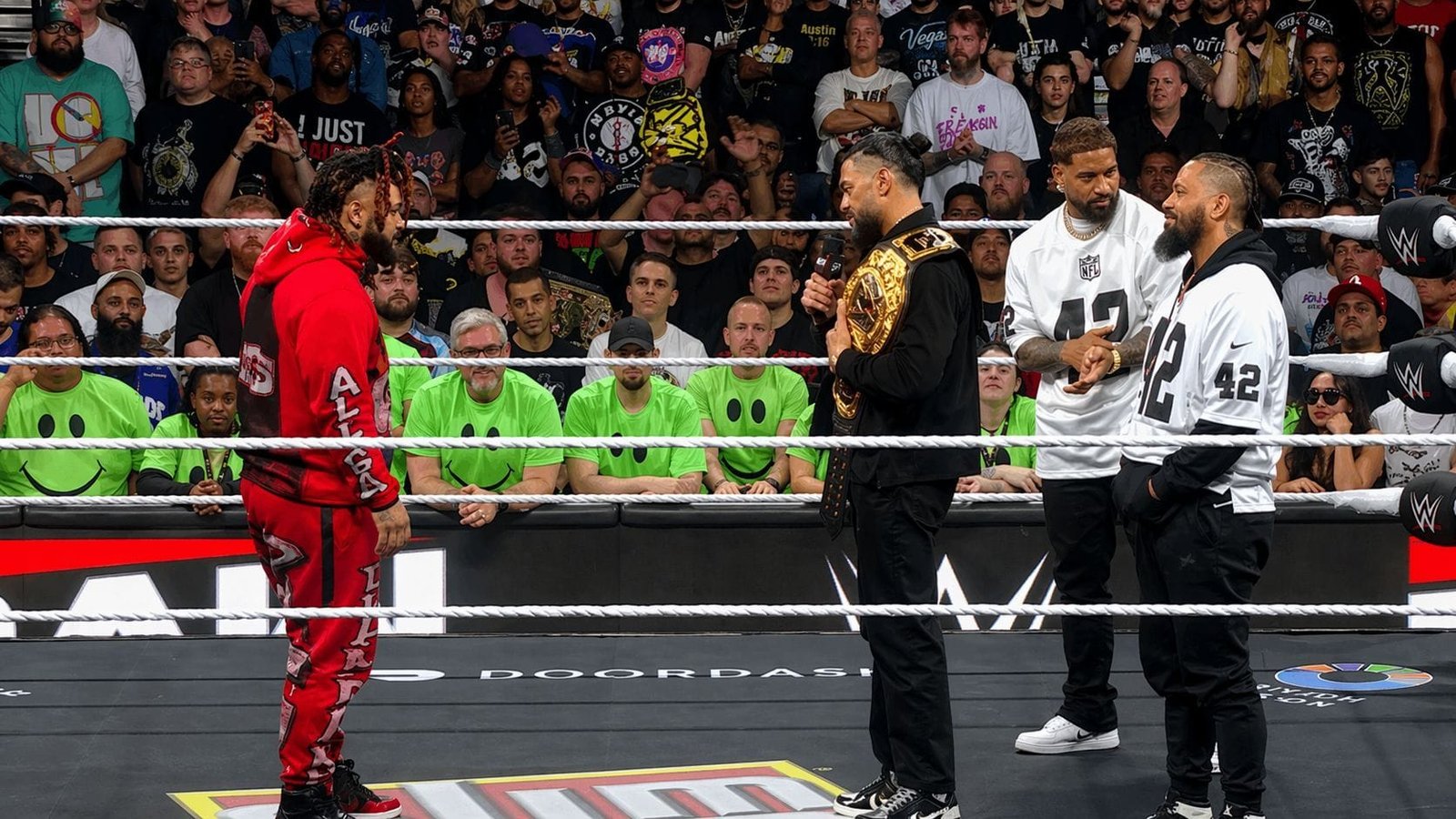
With Roman Reigns recently reuniting with Jey and Jimmy Uso on RAW, the invitation for Fatu wouldn’t be too far from the table. But in the world of WWE, every alliance likely comes with a price.
Hence, in this article, we look at three reasons why Jacob Fatu should join The Bloodline and two reasons why he should stay far away:
Why He Should Join
#3. The Bloodline will have a strong enforcer
Historically, The Bloodline has been strongest when they have had a designated Enforcer to do the hard lifting. Solo Sikoa was perfect in this role for years. However, now that Sikoa is leading MFT, the OG Bloodline lacks that raw, intimidating muscle that The Street Champion once provided.
Although Jey and Jimmy Uso are excellent athletes, they don’t seem to have the same sense of unpredictable violence that Jacob Fatu possesses. Fatu is widely regarded as one of the most agile large wrestlers in the promotion, blending raw power with frightening high-flying movements.
By joining Roman Reigns, The Samoan Werewolf could become the ultimate insurance policy. He would provide the physical intimidation factor that ensures no one dares to step out of line.
#2. Could help the faction grow in numbers
Perhaps numbers have always been the greatest strength of The Bloodline. During their peak, Roman Reigns seemed untouchable because he had an army at his disposal. However, in 2026, the landscape has changed. With new threats emerging on both brands, a three-man unit of Roman and The Usos might not be enough to hold the fort.
Bringing in Jacob Fatu could instantly strengthen their team and help restore the group’s dominance. It also creates a formidable family legacy; having a talented, generational wrestler like Fatu alongside the OTC would make the group seem unstoppable.
#1. Could allow The Bloodline to feud with The Vision down the road – 4 v 4
The biggest argument for Jacob Fatu joining is the potential for a blockbuster feud with The Vision. Arguably, the most dangerous faction in WWE right now is one led by Paul Heyman, featuring Bron Breakker, Bronson Reed, Logan Paul, and Austin Theory.
The Vision has been systematically dismantling the RAW roster. A collision between them and The Bloodline could become inevitable. However, a three-on-four disadvantage would leave Roman Reigns’ crew vulnerable. By bringing Jacob Fatu into the fold, WWE seemingly sets the stage for a legitimate dream match scenario with equal numbers.
The sight of The Samoan Werewolf facing off against The Dog of WWE inside a WarGames cage is the kind of blockbuster match that could fill stadiums. Without Fatu, the feud between The Bloodline and The Vision lacks the balance and competitiveness needed to make it feel like a fair and compelling fight.
Why He Should Stay Away
#2. Jacob Fatu is seemingly better off on his own as a singles act
There is a legitimate fear that joining a group might stifle Jacob Fatu’s individual brilliance. Since his debut, The Samoan Werewolf has been presented as a force of nature. He doesn’t need help winning matches, and he certainly doesn’t need anyone to speak for him.
Fatu appears to have both the charisma and in-ring skills necessary to become a world champion on his own. At WrestleMania 42, we saw that he is capable of handling a main-event caliber storyline, even against a seasoned veteran like Drew McIntyre.
If he joins The Bloodline, Jacob Fatu might risk becoming just another member rather than the standalone superstar he is clearly destined to be. At 34, Fatu is in his prime. Spending that prime in the shadow of Roman Reigns might be a waste of his immense potential.
#1. Could ruin his bad**s character if he joins under Roman Reigns and takes orders from him
Arguably, the most compelling aspect of Jacob Fatu is his unpredictability. He is a werewolf for a reason; he is untamed and dangerous. The moment he joins The Bloodline and starts acknowledging Roman Reigns, that aura of independence would evaporate.
We have seen what happens to bad**s characters when they become subordinates. They often lose their edge to fit the narrative of the leader. If the Samoan Werewolf is forced to stand in the background while Roman cuts 15-minute promos, or if he has to take losses to protect the OTC’s image, his monster status could suffer.
For Jacob Fatu to remain the most feared man in the locker room, many believe that he needs to be the one giving the orders, not the one following them. Staying away from the family drama could allow Fatu to become the apex predator in WWE.
`;
if (index == 3 && isOpera) {
storyHTML += `
`;
}
recommendedArticlesContainer.innerHTML += storyHTML;
});
}
}
function getStoryActionHTML(story, storyTitle, permalink) {
if (shouldHidePostActions) return “”;
return `
`;
}
function recommendedArticles() {
var baseUrl = “https://cf-gotham.sportskeeda.com/recommendations/post/3-reasons-jacob-fatu-join-the-bloodline-2-reasons-stay-away?lang=en&category=wwe”;
pureJSAjaxGet(baseUrl, function(data) {
renderRecommendedArticles(data);
if (isOpera) {
renderOperaFeedAd();
}
}, function() {}, false);
}
var options = {
root: null,
rootMargin: “0px 0px 70% 0px”,
threshold: 0.1
};
var observer = new IntersectionObserver(function (entries) {
entries.forEach(function (entry) {
if (entry.isIntersecting) {
recommendedArticles();
observer.unobserve(entry.target);
}
});
}, options);
var targetElement;
if (showAlsoReadSection && !showAlsoReadSectionV2) {
targetElement = document.querySelector(‘.also-read-articles-container’);
} else {
targetElement = document.querySelector(‘.recommended-posts’);
}
if (targetElement) {
observer.observe(targetElement);
}
function renderOperaFeedAd() {
var operaFeedArticleAd = $(“.opera-article-feed-ad”);
if (!operaFeedArticleAd) {
return;
}
var firstScript= document.createElement(‘script’);
firstScript.setAttribute(“type”, “text/javascript”);
firstScript.setAttribute(“src”, “https://pagead2.googlesyndication.com/pagead/js/adsbygoogle.js?client=ca-pub-1883810847636355”);
firstScript.setAttribute(“async”, true);
firstScript.setAttribute(“crossorigin”, “anonymous”);
operaFeedArticleAd.appendChild(firstScript);
operaFeedArticleAd.innerHTML += `
`;
var secondScript = document.createElement(‘script’);
var secondScriptCode=””;
try {
secondScript.appendChild(document.createTextNode(secondScriptCode));
operaFeedArticleAd.appendChild(secondScript);
} catch (e) {
console.error(e);
}
}
})();
Fetching more content…

Read the full article here