



- The updated Renault Megane E-Tech Electric can now go 311 miles on a single charge.
- It uses a new LFP battery with a net capacity of 67 kWh.
- DC charging power jumps to 165 kW.
The Megane E-Tech Electric was a big deal when it debuted four years ago. It was Renault’s first production EV built on a dedicated platform. In the years since, the French marque’s electric lineup has expanded to include a wide range of models across multiple market segments. Now, the company with the diamond logo is revisiting the first Megane to abandon the combustion engine altogether.
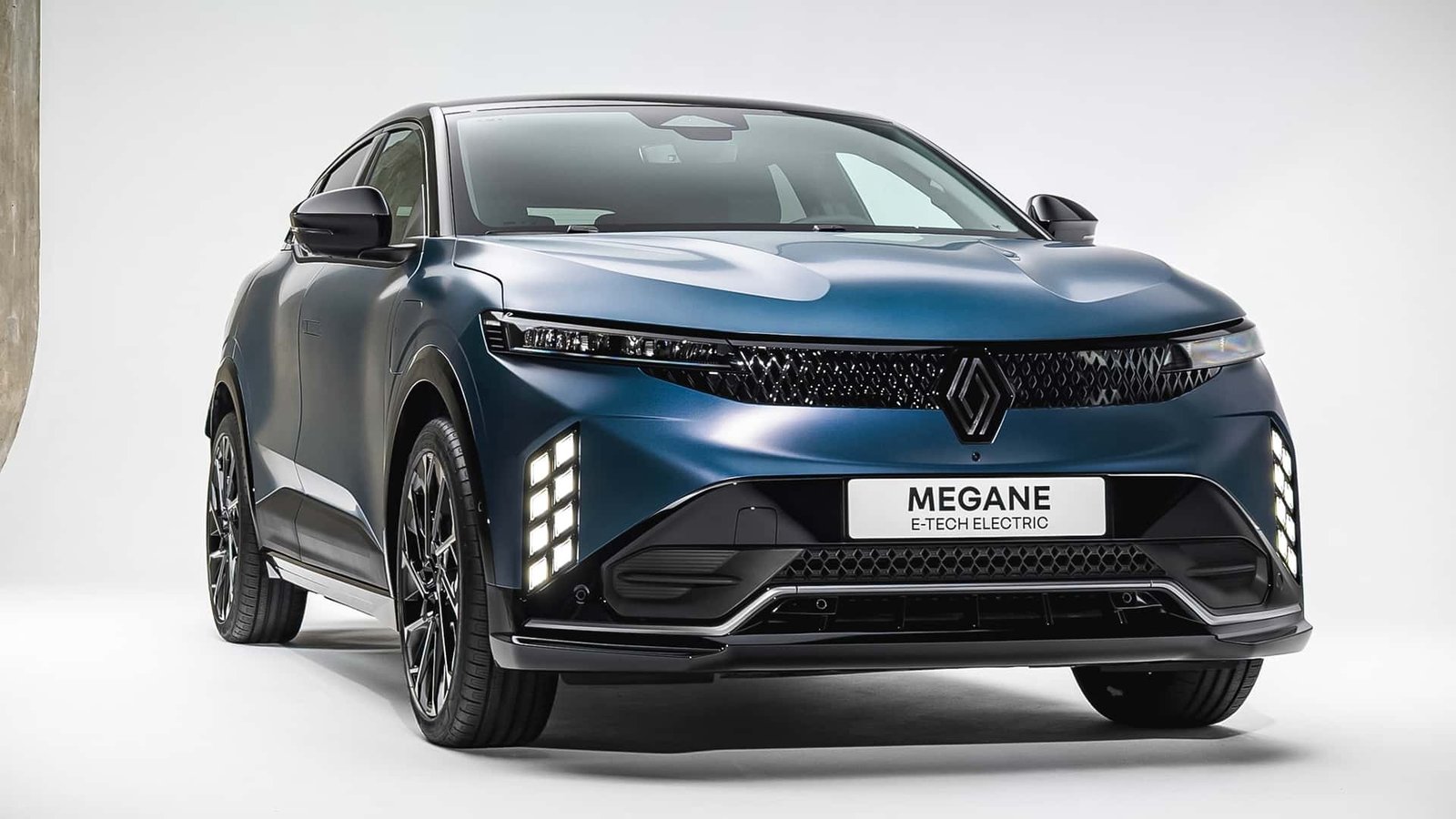
For 2026, the Megane E-Tech Electric goes under the knife with an interesting facelift that eliminates the predecessor’s oddly shaped daytime running lights. Replacing the curved line that appeared somewhat randomly placed across the upper section of the front bumper is an entirely new lighting signature. Designers have applied a diamond motif, with two sets of four stacked elements on each side of the bumper.
Elsewhere, the glossy black faux grille now incorporates dozens of tiny rhombuses flanking the large badge to reinforce the theme. Renault says the updated front fascia creates the illusion of a wider vehicle, although that’s difficult to judge from the press images alone. At the rear, the taillights now feature a more three-dimensional effect and no longer use a glass cover. A redesigned rear bumper is more prominent than before and even incorporates a diffuser-like element with vertical fins.
Photo by: Renault
While facelifted models often eliminate physical buttons, that’s thankfully not the case here. Renault retains separate climate-control buttons instead of integrating all functions into the touchscreen. The 12-inch vertically oriented infotainment display comes standard, as does the fully digital 12.3-inch driver display.
Although the cabin is largely unchanged, one subtle update stands out in the driver-side A-pillar. Renault has added a mandatory in-car camera that monitors driver attention to comply with new European safety regulations. In the Megane E-Tech Electric, it also doubles as a driver-recognition system that can activate personalized settings such as seat position and preferred media sources.


Photo by: Renault
2026 Renault Megane E-Tech Electric: More Range, Faster Charging
Range remains a sensitive subject among prospective EV buyers, and Renault has some good news to share. The Megane E-Tech Electric can now travel up to 311 miles (500 kilometers) on the WLTP cycle thanks to a new lithium iron phosphate battery. The LFP pack has a net capacity of 67 kWh and is physically larger than the previous battery, prompting engineers to raise the vehicle’s ride height by 20 millimeters (0.8 inches).
Not only does the electric Megane go farther, but it also charges faster. Renault has increased DC charging power by 35 kW to 165 kW, reducing the time needed to recharge the battery from 15 to 80 percent to around 24 minutes. That’s roughly 25 percent quicker than before. The new battery powers the same electric motor, producing 215 hp and 221 lb-ft (300 Nm) of torque, sent exclusively to the front axle. It reaches 62 mph (100 km/h) in 7.6 seconds and tops out at 100 mph (160 km/h).
While the press photos showcase the range-topping Esprit Alpine trim, Renault will also offer the Megane E-Tech Electric in the entry-level Techno specification. These will be the only two trims available going forward, as the facelift streamlines the lineup. New 19- and 20-inch wheel designs are available, along with this attractive Satin Slate Blue paint finish.
The 2026 Renault Megane E-Tech Electric will go on sale in Europe later this year.
50
Source: Renault
Motor1’s Take: Renault appears to have made all the right changes to the electric Megane. Combining greater range with faster charging is exactly what prospective EV buyers want to hear. At the same time, the revised styling gives the hatchback a more modern appearance after four years on the market without a significant design update.
The updated Megane now slots into Renault’s expanding EV lineup below the Scenic and above the brand’s trio of reborn icons: the Twingo, 4, and 5.
Read the full article here