




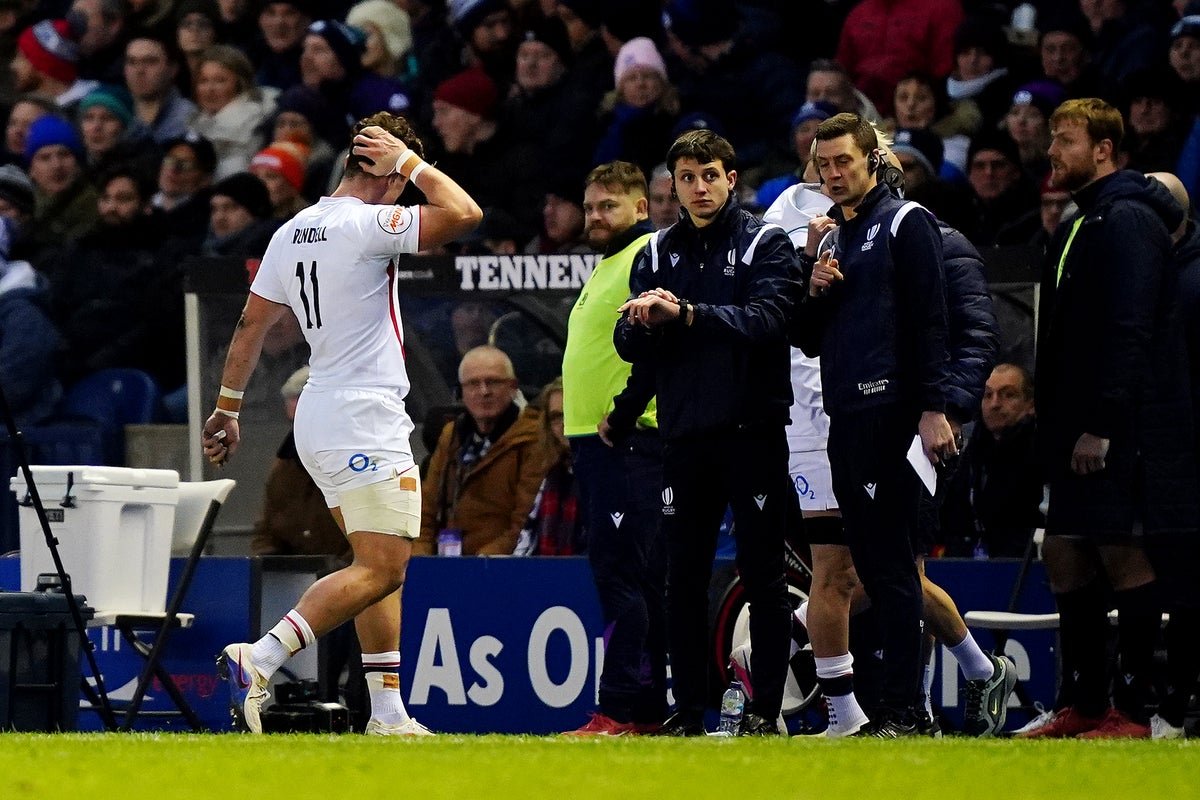
England’s bid for Six Nations glory ground to a halt at Murrayfield on Saturday as Scotland delivered a commanding 31‑20 victory in the Calcutta Cup, extending their recent dominance over the Red Rose and ending England’s 12‑match winning streak.
The Bath winger, Henry Arundell had given England a moment of hope by touching down for his fourth try in two matches soon after the break. But his afternoon unravelled in the first half after being punished for a failure to release in the tackle and then shown a second yellow card for taking Scotland’s Kyle Steyn out in the air, which automatically upgraded to a 20‑minute red leaving England down to 14 men.
Advertisement
Although Arundell’s second yellow was clearly justified there was debate over whether his first booking by Nika Amashukeli was too harsh. England head coach Steve Borthwick, said: “To be honest, when I’m in the game, I don’t spend any time looking back when the referee makes a decision. I go on trying to think about how we’re going to deal with the situation.”
What happens next for Arundell?
Under Six Nations regulations two yellow cards in a match result in a temporary dismissal but do not automatically trigger an additional suspension beyond that period.
However, match officials or the governing body can cite a player for dangerous play if they believe the offence merits further review.
Advertisement
A player receiving a red card, whether from two yellows or a straight red will usually have their case heard by a Disciplinary Panel.
If Arundell is cited for his second yellow offence (the high tackle on Steyn), he would face a disciplinary hearing.
According to typical tournament practice, a citation does not guarantee a ban and if the referee’s reports are deemed not to cross the threshold for further sanction, Arundell could avoid a suspension.
(Getty Images)
What are the rules?
Under Six Nations regulations a player who is sent off after receiving two yellow cards has the right to challenge one or both if they were given for foul play, but not for technical offences.
Advertisement
If the Disciplinary Panel upholds the appeal the red card is removed from the player’s record, although any yellow cards not successfully challenged remain.
Players who accumulate two Citing Commissioner Warnings (CCWs), or a combination of a CCW and a yellow card are treated as if they had been sent off meaning disciplinary procedures are triggered in the same way.
When a player faces sanctions for multiple offences in a single match the panel applies a penalty for persistent offending rather than for each individual yellow card.
The standard entry point for a one-match suspension is one week with final sanctions determined by considering mitigating and aggravating factors, following the methodology set out in RFU Regulation 19.
Read the full article here