

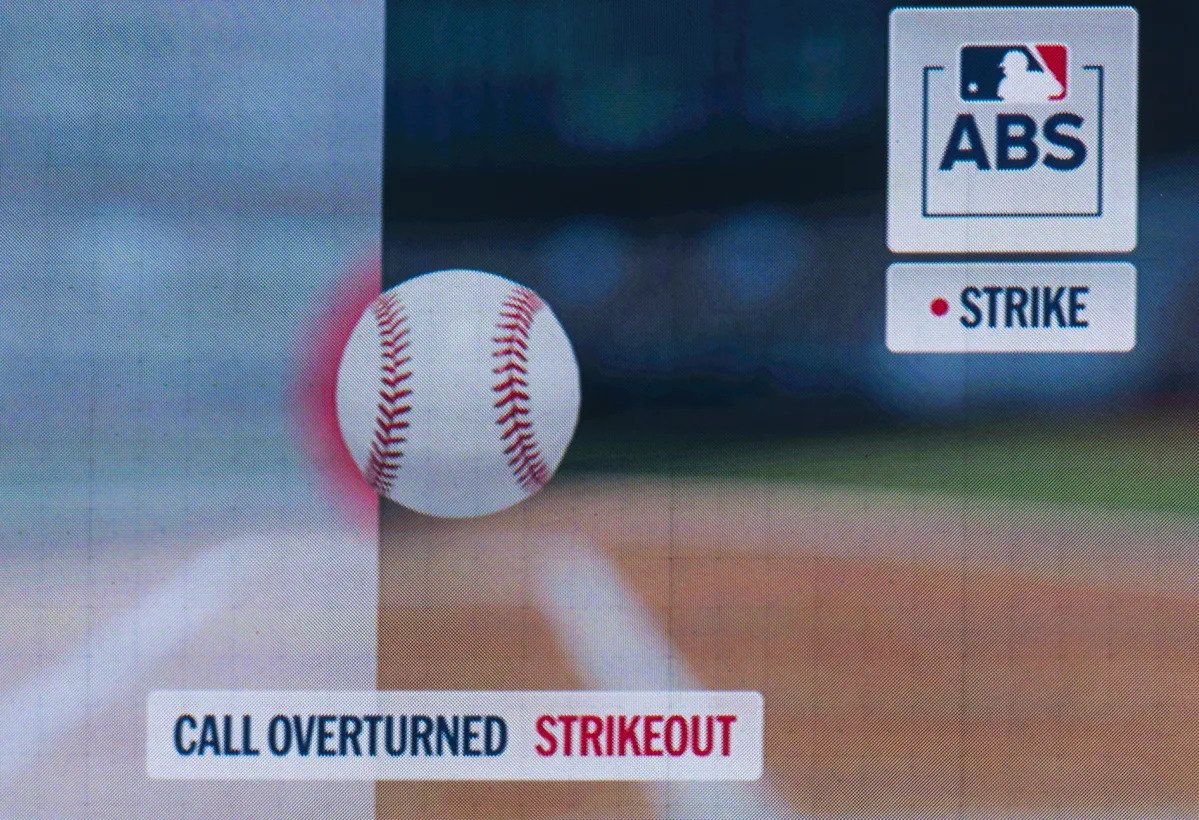
I’ve written a couple posts in spring training about the ABS challenge system and how teams are going to react to it. It seems like an element tailor-built for the Yankees; the team preaches control over the strike zone at the plate and was the first to really lean into pitch-framing almost two decades ago. Knowing the 17” that is home plate is doctrine for the organization, and it shouldn’t surprise us then how good the Yankees have been at challenging so far this spring.
Headed into play against the Cubs yesterday, Yankees hitters had challenged 48 calls, getting 24 (50 percent) correct. That’s more reviews and more wins than any other team, and the ninth-highest “win rate”. Perhaps most important for a team that has at times generated criticism for strikeouts, the Yankees have cut the sixth-most strikeouts because of their talent for overturning calls. On the defensive side, it’s more of the same — the most challenges, the most wins, but more at the league median rate of 59 percent win rate. Five pitchers have also issued challenges, with only two of them successful and just a single review per hurler.
Advertisement
There’s that old rule of thumb that a 75 percent success rate is the breakeven point for stolen bases, if you can’t be successful 75 percent of the time the gains of an extra 90 feet are undercut by how many outs you freely give out. However, the flip side of that rule is that if you’re stealing at a 90 percent rate or so, you’re probably not trying as often as you should — you’re leaving runs on the table by being too cautious.
It seems the Yankees have the same philosophy when it comes to challenging umpire’s calls. They’re OK with having some losses on the ledger as long as they also get the most wins. It’s interesting that the three potential catchers the club will carry on Opening Day (Austin Wells, J.C. Escarra, and Ben Rice) went a combined 15-for-23 in challenges this spring, a sterling 65 percent success rate. Many of the team’s missed challenges on defense came from camp invitees like Miguel Palma and Ali Sánchez. The guys making the calls at the MLB level seem to be pretty on point with what is and isn’t a strike.
This trend is echoed, perhaps unsurprisingly, by the hitting group. That 50 percent success rate mentioned above grows to 56 percent when we only include the players that will be in the dugout on Wednesday in San Francisco — also, I tend to think Aaron Judge will be very good at this kind of thing, and a long World Baseball Classic for him meant he only issued one failed challenge in Grapefruit League play. Just as with the catchers, the success in the review system seems to come mostly from the guys already good enough to be on an MLB roster.
That five pitchers got nominal challenges also should inform us of the April challenge policy. I remember seeing Fernando Cruz working in the back half of a game a couple weeks ago, challenge a ball that was clearly low and with the Yankees having a challenge in hand he seemed to ask for a review just to get some personal experience with the system. It doesn’t seem like the club is particularly interested in letting pitchers challenge much, trusting the much more stable catcher to evaluate.
Advertisement
It looks like the strategy for the start of the year is a very liberal approach to who can challenge calls at the plate or behind it, but not from the rubber, and that the team is not afraid of burning a challenge. Contrast this with the Tigers or Mets, who in spring were extremely controlled with who was allowed to ask for a review, and both clubs ended many games with a challenge still in hand.
If there’s one critique of the Yankees over the last ten years that I have, it’s that they don’t always seem to lean into the urgency of a skid or speedbump. 162 games is a long season, water needs time to find it’s level and all that, but I worry that that attitude is too pervasive within the organizational culture. They seem to be breaking from that philosophy in how they approach challenges — if you can overturn a call in the third inning, and that leads to an early advantage, do it rather than wait for a call in the eighth that may never come.
I’ve been waiting for the ABS system at the MLB level for a long time, and I tend to agree with the strategy the Yankees appear to be taking in how to use it. That approach may change as the season goes on, and I suspect umpiring will get even better than it is once they re-learn the strike zone, but for the first round of real baseball, the Yankees are getting it right when it comes to reviews.
Read the full article here