



The Phoenix Suns All-Time Pyramid was never going to be an easy exercise. I knew that going in. What I did not fully appreciate was how much mental real estate it would occupy. I have gone back and forth on pieces of this for a month and a half, revisiting names, shifting thoughts, second-guessing myself at odd hours.
And nothing, in my opinion, was tougher than the bottom tier.
Advertisement
The five tiers above it have some natural guardrails. Lines of demarcation you can point to. Rules you can apply. Tenure. Accolades. Impact that feels settled over time. The bottom tier does not offer that kind of comfort. This is where bias walks right through the front door and sits on the couch. This is where statistical cases can be made for players who got in and players who did not. This is where personal preference starts driving the car.
Maybe you value rebounding more than I do. Maybe you think awards should carry more weight. Maybe longevity matters less than peak. All of those arguments live here. That is why Tier 6 was a grind. Not because it lacked importance, but because it had too many plausible answers.
So let’s get into it.
Advertisement
I will briefly touch on the honorable mentions first, fully aware that I am going to leave someone out. That is unavoidable. That is how projects like this work. But before we start debating names, let’s take a look at the updated version of the Phoenix Suns All-time Pyramid, now with Tier 6 filled in.
Honorable Mentions
There can only be 21 names in the group, which means there are always going to be players left standing outside the door. Some of those omissions feel obvious. Others are going to spark arguments, and honestly, that is part of the point.
I think Boris Diaw, Mikal Bridges, Leandro Barbosa, Mark West, and even Goran Dragic all have legitimate cases to land in that bottom tier. If you want to put any of them there, I truly have no problem with it. If P.J. Tucker is your guy, I get that, too. I am not here to shut that down.
Advertisement
Where I ultimately landed is rooted in impact. What did you give the organization while you were here, and how did that show up over time? Sometimes that impact came through winning basketball. Sometimes it came through culture. Sometimes it came through stability in moments where stability mattered.
I believe the players I slotted into that tier did more for the Suns than some of the other names that get floated in this conversation, even if that contribution looked different from player to player.
And that is where we get into it. Because those differences matter, and those capacities are worth unpacking.
Tier 6: The Core Contributors


You know how the NCAA Tournament can invite nearly seventy teams and still find a way to argue about the last four in and the first four out? It is a little ridiculous on its face, but that tension is baked into the exercise. With only 21 players making this pyramid, the same thing applies. There is always a last guy in. There is always a first guy out.
Advertisement
For me, that line landed with Grant Hill.
And I love Grant Hill. His resurgence in Phoenix, what he brought night after night, the professionalism, the steadiness, the feel for the game, all of it mattered. That version of Grant Hill was a gift. But when I got down to the final decision, I went with Goran Dragic for the sixth tier.
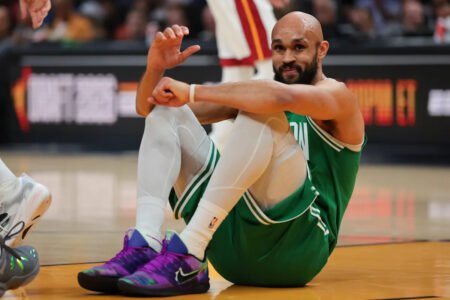
Games played mattered. Time invested mattered. And then there was that season. The Most Improved Player campaign in the 2013-14 season, the same year he earned his lone All-NBA selection. He averaged 20.3 points per game, led a surprising Suns team to the edge of playoff contention, and did it as the engine, not a passenger. If the Play-In tournament existed back then, who knows how far that group would have gone? Goran was the reason it even became a conversation. He also handed out 5.9 assists per game, balancing scoring with control, pressure with pace.
Dragic spent six total seasons in Phoenix across two stints, and along the way gave us one of the most unexpected and iconic playoff performances in franchise history in the 2010 postseason against the Spurs. He dropped 26 points on 10-of-13 shooting and went a perfect 5-of-5 from deep. Even more absurd, 23 of those points came in the fourth quarter alone, while the Spurs managed only 24 as a team.
Advertisement
That night still lives in the Sun’s lore. It still feels unreal. And for me, it is enough. That is why Goran Dragic gets the final spot in tier six.

Eddie Johnson was on the team when I first started watching basketball, and there is one thing you need to understand right away: the guy was an absolute bucket.
To this day, he still sits third all-time in free-throw percentage in franchise history, shooting 87% during his three-and-a-half seasons in Phoenix. That alone is impressive. What really jumps off the page is how much damage he did in a relatively small role. He averaged 18.4 points per game across 222 games, and he only started 70 of them.
Advertisement
That is the definition of instant offense.
Eddie Johnson came off the bench and kept the scoring pressure relentless. There was no let-up. That is why he won Sixth Man of the Year in 1988-89 and then finished third in the same voting the following season. Those Suns teams ranked second in offensive rating in 1988-89 and third in 1989-90, and that did not happen by accident.
In 1988-89, Johnson averaged 21.5 points per game. He played in 70 games. He started seven. Seven! That tells you everything you need to know about how devastating he was in that role. You could not stop the offense, and Eddie Johnson walking off the bench was a massive reason why.
Most people today know him as the colorful voice on Suns broadcasts. The guy with stories. The guy with opinions. But when he played in Phoenix, he was a real problem. And if you were on the other side when he checked in, you felt it immediately.

If you are under 30, you are probably still wrapping your head around how much one defensive player can tilt the temperature of an entire team. What Dillon Brooks has done this season feels jarring if you have not lived through it before. It looks like an anomaly. It feels like culture shock. But this is not new around here.
Advertisement
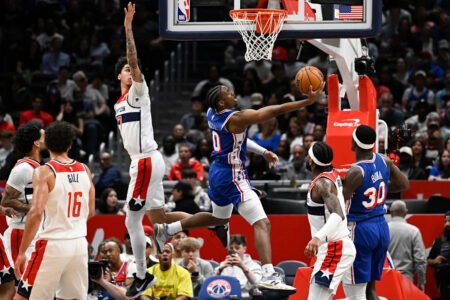
You have to go back to 2005 to find the closest parallel, when the Suns signed Raja Bell as a free agent and quietly changed the personality of the roster. That team needed to get tougher. Full stop. And while I still disagree with the decision to trade Quentin Richardson for Kurt Thomas, and while I will always carry a soft spot for Joe Johnson and his size and shooting, the addition of Raja Bell was a direct response to the San Antonio Spurs. That was the problem to solve. And Raja personified the answer.
This is one of those cases where I had to let the player override my personal bias. Because if I am being honest, I was never a huge Raja Bell guy. I was a scorned fan. I wanted Joe Johnson to stay. I thought the offense would keep humming if you trusted that core and let it grow. And to Raja’s credit, the offense did keep humming. He did not break it. He enhanced it.
Over three and a half seasons in Phoenix, Bell made two All-NBA Defensive Teams. He currently ranks fifth all-time in three-point percentage at 42.2%. He sits third all-time in three pointers made per game at 2.4, with Grayson Allen now holding the top spot. That is real production layered on top of real defensive value.
And then there is the moment, the one that never fades. Raja Bell taking down Kobe Bryant. Something every Suns fan has fantasized about. Something almost no one ever actually gets to do. He did it and it lives forever.
So no, I was not waving the Raja Bell flag at the time. But respect is earned, and he earned every ounce of it. What he brought to Phoenix shaped teams. It changed tone. And whether I liked it or not, he belongs in this conversation.
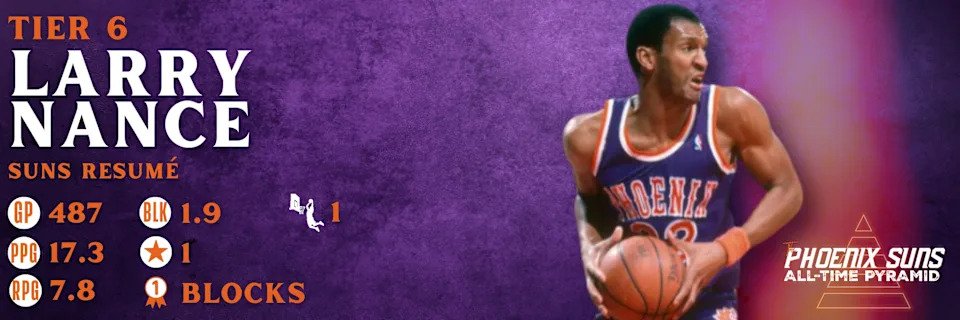
This is one of those names that lives before my time, but the impact is impossible to ignore once you dig into it. Larry Nance was drafted 20th overall out of Clemson in the 1981 NBA Draft, and he spent seven full seasons in Phoenix from 1981 through 1988. That is not a footnote. That is a real stretch of meaningful time.
Advertisement
Over those seven years, Nance averaged 17.3 points and 7.8 rebounds per game. At his peak, he climbed to 22.5 points in 1986-87and 9.9 rebounds in 1987-88, numbers that still hold weight when you place them in context. He sits tenth all-time in minutes played in Suns history, fourth in total rebounds, and he remains the leading shot blocker the franchise has ever had.
Those were not always stable years for the organization. The Suns went through turbulence, uncertainty, and stretches where winning was not guaranteed. And through all of that, Larry Nance was the steady presence. The constant. The guy you could count on to show up, play above the rim, and impose himself on games in ways that numbers alone do not always capture.
He made an All-Star team in 1985, which feels right when you look at his body of work. And then there is the dunk contest. In 1984, he went toe-to-toe with Julius Erving and beat him. The next year, he came back and lost to Dominique Wilkins. That alone tells you the kind of air he lived in and the kind of athlete he was.
When you step back and look at the Phoenix Suns All-Time Pyramid, it becomes hard to justify leaving Larry Nance out. He bridges an era and covers a gap in the franchise timeline that was not always defined by success. He was a player who rose above the chaos, played above the clouds, and left a permanent mark on the organization.

Now here is where I fully admit my bias, because I absolutely loved Stephon Marbury, and I am not going to pretend otherwise. He was not in Phoenix for long, just two and a half seasons, but his impact landed hard and stuck. He bridged the gap between the Jason Kidd and Steve Nash eras, and at that moment, he felt like a breath of fresh air for a franchise searching for its next identity.
Advertisement
Marbury played differently than what came before him. He attacked the basket with force, almost like a fullback hitting the hole, barreling down the lane while cradling the ball and finishing with that soft, patented floater that felt automatic once he got inside.
When you go back and look at the roster from that first season, it is almost jarring. That was Dan Majerle’s final year. Anfernee Hardaway was on the team. But it was the young, electric core of Marbury and Shawn Marion that really grabbed you.
Then the next year, the Suns drafted Amar’e Stoudemire, and the connection was instant. You could feel it. That team was fun in a way that felt like it was pointing somewhere. Playing with Starbury and STAT in NBA2k3 was the way I spent my summer before shipping out to basic training. That’s my bias remembering fondly what that duo could do.
I still remember losing my mind when Marbury hit that miraculous overtime game-winner in the first round against San Antonio. They lost that series 4-2, but it did not feel like a dead end. It felt like the beginning of something.
And the numbers back it up. His 21.3 points per game rank seventh all-time in Phoenix Suns history. His 39.8 minutes per game sit second all-time, which tells you how much responsibility he carried. He won Player of the Week three times in a Suns uniform, made an All-Star team, and earned an All-NBA Third Team selection.
Advertisement
So yes, my bias is absolutely part of why he is on this list, but that bias does not erase the case. It reinforces it. Stephon Marbury was a vibe in Phoenix. Coney Island’s finest remains one of my favorite Suns of all time, and he earns his place in this conversation without apology.

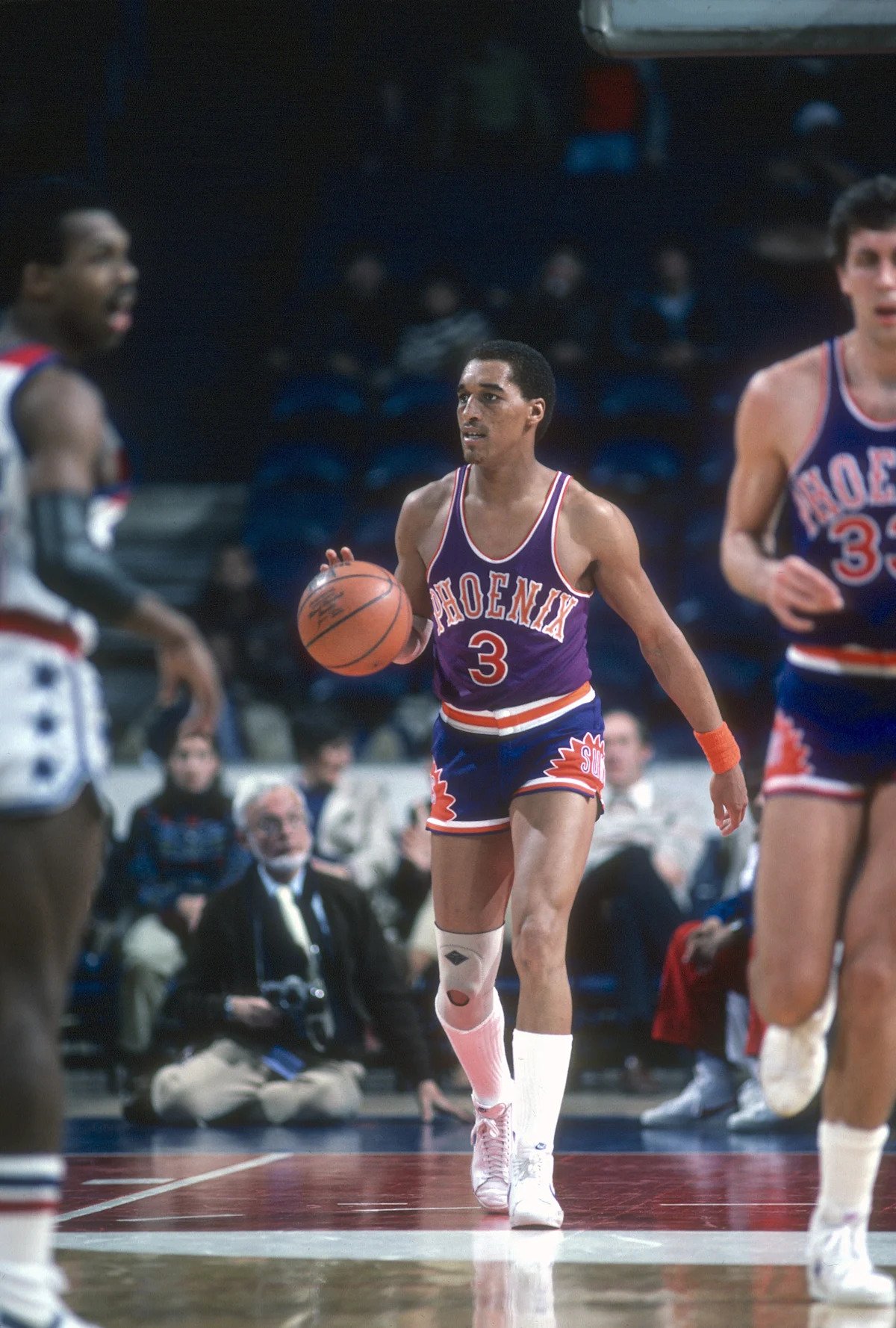
If you want to talk about players who truly made an impact, you do not have to look much further than Dennis Johnson, because what he brought to Phoenix on the defensive end was rare, difficult to replicate, and ultimately irreplaceable.
Johnson arrived in Phoenix already wearing a championship pedigree, having won it all with Seattle in 1979. His arrival signaled a real transition for the franchise, especially considering he came over in the trade that sent Paul Westphal out the door, which alone tells you how significant the moment was.
Advertisement
He only spent three seasons in Phoenix, but those three seasons carried real weight, particularly on the defensive side of the ball, where his presence changed the texture of games night after night.
You can make a strong case that Dennis Johnson was one of the most impactful players in Suns history relative to time spent with the organization. In his first season in Phoenix, he averaged 20.5 points per game while also pulling down 1.9 steals. Across all three of his seasons with the Suns, he was named to the All-NBA Defensive First Team, and he earned two All-Star selections.
Yes, he would eventually move on to Boston and win two more championships, adding even more shine to an already impressive career, but that does not diminish what he was in Phoenix. For a short window, Dennis Johnson was the defensive backbone of the Suns, a player who brought toughness, intelligence, and an edge that the team needed at that point in its evolution. His imprint on the franchise remains one of the most dominant defensive stretches the organization has ever seen.
Whew. Tier 6 done. Tier 5 tomorrow.
So, what do you think? Who would you have as your 6 players in Tier 6? Let us know in the comments below.
Read the full article here