



It was a plan devised in a branch of Kentucky Fried Chicken, then executed inside a boxing gym beneath a railway arch; the murmurs of skeptics drowned out by the sound of trains.
We were in London — Vauxhall, to be precise — on the exact day it was meant to happen: Oct. 13, 2011. That was the date both the fighter and his coach had had in mind when, a decade ago, they ate fried chicken and crafted their exit plan. Now nothing, not even regret, would stop the fighter’s hunger to see it through and say, “That’s all, folks. I’m out.”
Advertisement
By doing so, the fighter could convince both himself and others of his control, his power, his intelligence. He could, by retiring when he said he would, demonstrate that he was different from — better than — those boxers who continued to smash buttons when seeing GAME OVER on the screen. Retirement, after all, was the biggest fight of the lot, they said. Only the smartest ever got it right.
That day in Vauxhall, “I told you so” was the message the fighter wished to send to all at his party. He had just turned 31 and had always vowed he would never fight beyond the age of 30. That was a pact he had made with his coach long before going professional and it explained why journalists were now corralled inside his gym, where unbeknownst to them the fighter had earlier prepared his act. “Do you think they will buy it?” he had asked me in rehearsal. “Does it sound believable?”
As the fighter’s press officer, it had been my duty not only to help him attract an audience that morning, but help him run his lines and reassure him of his ability to convince his audience that he was indeed retiring on his 31st birthday. But of course, us helpers knew the truth. We knew this “retirement” was but a pause, a performance, a point proven. “That’s the date I’ll retire on,” he had reiterated in July, just weeks after losing his WBA heavyweight title to a bigger and better man. “But it doesn’t mean it’s the end.”
In retrospect, maybe going through the motions of retirement was his way of preparing, or just coping; a way to maintain the illusion of control. By taking his leave, he was able to brush off his recent loss — a painful, humbling one — and show the world that he had made peace with his lot. How big and how clever, he hoped they would think. How mature. How refreshingly different.
Advertisement
When he finally left the gym’s office, he was greeted by nods of respect and applause, as though an astronaut returning to Earth. His face remained remarkably straight, with his tongue buried deep in his cheek, and for all anybody knew, this was truly The End; the moment he had planned; the perfect note on which to bow out. That he had, in theory, stuck to his plan was enough to turn a defeat into a victory — small, moral, or otherwise. This was especially true in the eyes of those who had been around the sport for a long time and understood that retirement is the hardest fight of all. To them, it was heartening to hear a boxer was getting out early rather than late and that they were wise enough to preempt their demise rather than experience it in the ring. Some would call it rare, that kind of foresight. Some would even say it was unbelievable.
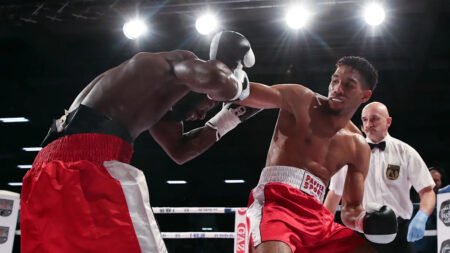
Of course, as we now know, David Haye didn’t retire that day in 2011. In fact, 15 years since his announcement in Vauxhall, we know that he boxed the following year, against Derek Chisora, and then trained to fight Tyson Fury in 2013 only to succumb to injuries and retire — again. We also know that he launched yet another comeback in 2016, which led to easy wins against Mark de Mori and Arnold Gjergjaj before Tony Bellew stopped him twice, in 2017 and 2018.
Haye, by that stage, was 37 years old. He had neither retired when he said he would nor become a famous movie star, as he had hoped. He was instead a fighter until the bitter end; until, that is, his body quit on him and retirement was no longer a choice.
Oct. 13, 2011: Heavyweight boxer David Haye at his gym in South London as he announces his retirement from the sport. Haye ultimately continued to fight another seven years.
(Lewis Whyld – PA Images via Getty Images)
Because of David Haye’s second retirement, Tyson Fury never got to fight his British rival in 2013. Instead, Fury was diverted down a different path, one that would, ironically, lead to Wladimir Klitschko, the man who triggered Haye’s initial retirement in 2011. Even stranger than that was the fact that Fury would end up dethroning Klitschko in 2015 before going on to announce his own shocking retirement, at the age of 27, the following year.
Advertisement
Strange as that was, there had been signs, including on the morning after he beat Klitschko, when Fury met the media in the lobby of his Düsseldorf hotel. He wore no shoes that morning on account of blisters — souvenirs of a hard night’s work — but in white Slazenger socks kept it real, his feet firmly on the ground. Without being prompted, he discussed in great detail his fear of having peaked and wondered out loud whether it could get any better than the night of Nov. 28, 2015. This didn’t mean he had retirement on his mind necessarily, but a comment such as that resonated more coming from someone like Fury than it would from most. He had, after all, been quite open about his ongoing mental health struggles and mood swings, and few would have been surprised to hear him deem winning a world title as The End rather than The Start. Even his uncle and coach, Peter Fury, said to me that morning, “If I drop dead tomorrow, I’m fine with that. We’ve done it.”
After the fight, the only thing Fury wanted to do was get away, disappear. To achieve this, he hopped in a car with his wife, Paris, and travelled 140 miles to Rotterdam, as much an escape as a journey home. If nothing else, taking the scenic route back to England spared them both from having to share a plane with everybody now craving Fury’s attention. It also bought the couple time before the demands of a world heavyweight champion started to impact a family accustomed to and comfortable being outsiders.

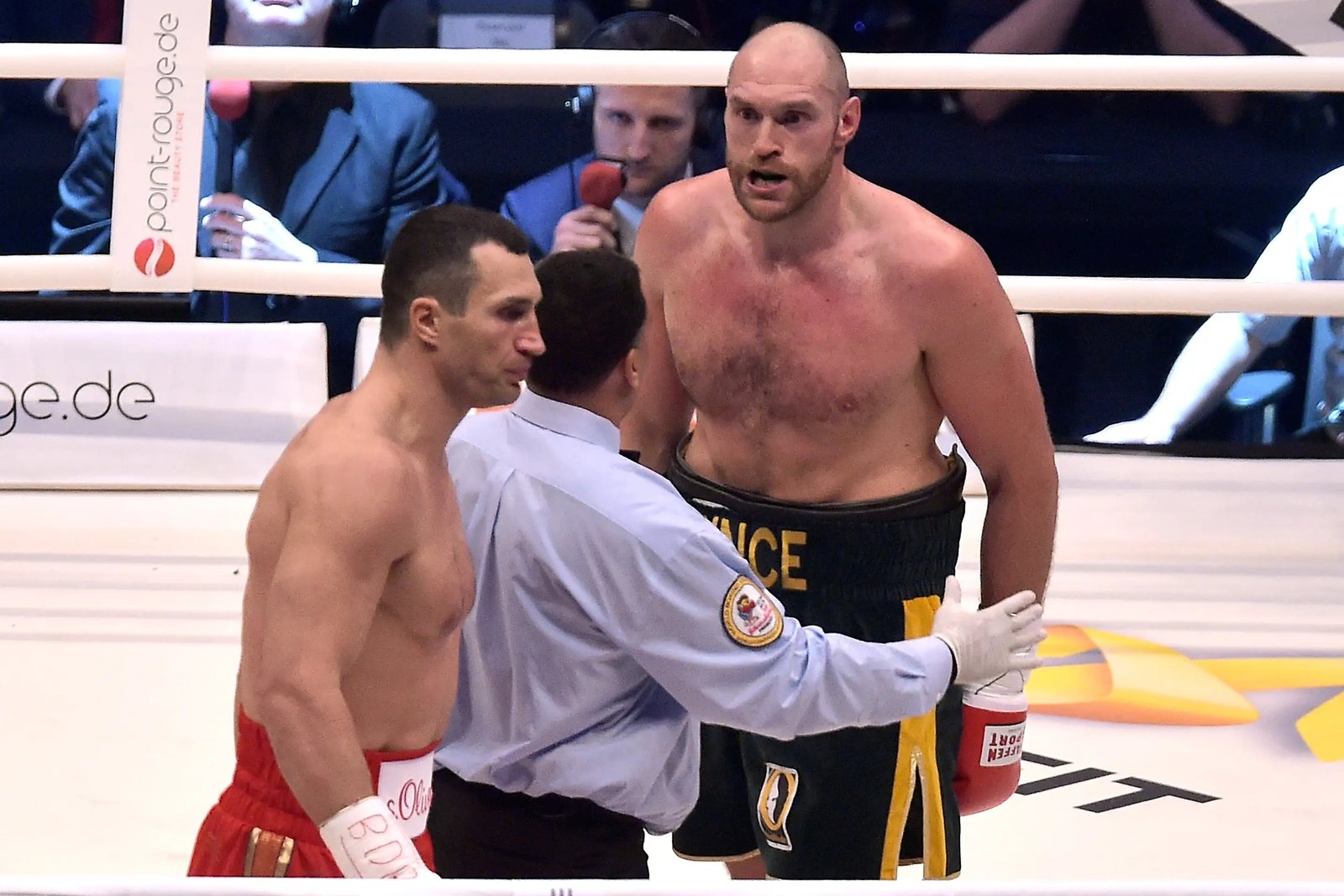
Tyson Fury (right) shocked the world in late 2015 by upsetting heavyweight champion Wladimir Klitschko.
(Sascha Steinbach via Getty Images)
As I was with Haye for his title wins and retirements, I happened to be working as press officer for Fury at the time he became heavyweight champion, meaning I could easily gauge the level of his interest post-Klitschko. Inevitably, as man of the hour, countless interview requests were thrown his way in the subsequent days and weeks — all the major television shows and magazines — yet Fury played hard to get. He stressed to me, “I’m heavyweight champion of the world now, so my time is precious and has a price.” He then negotiated a fee for pretty much every interview and turned down more media engagements than he approved. Much of this behavior was driven by greed, of course, but I also began to suspect that he was increasingly tired of it all. I sensed that he wanted to be left alone for a while and, if so, driving a hard bargain was the surest way to guarantee it.
Advertisement
Then came that bizarre press conference in Manchester, during which Fury went topless and mocked his own weight issues and limitations in front of Klitschko, the champion he had dethroned and would now rematch. It was presumed to be mind games, just Fury being Fury. However, some had an altogether different interpretation, seeing the performance as an insight into Fury’s mind — a mind both complex and falling apart.
Lo and behold, shortly after that performance, we got news of a Fury injury and that was it, the rematch was off. If that wasn’t deflating enough, what followed was even worse. What followed not only added two black eyes to the face of Fury, but ensured that he would never fight Klitschko again.

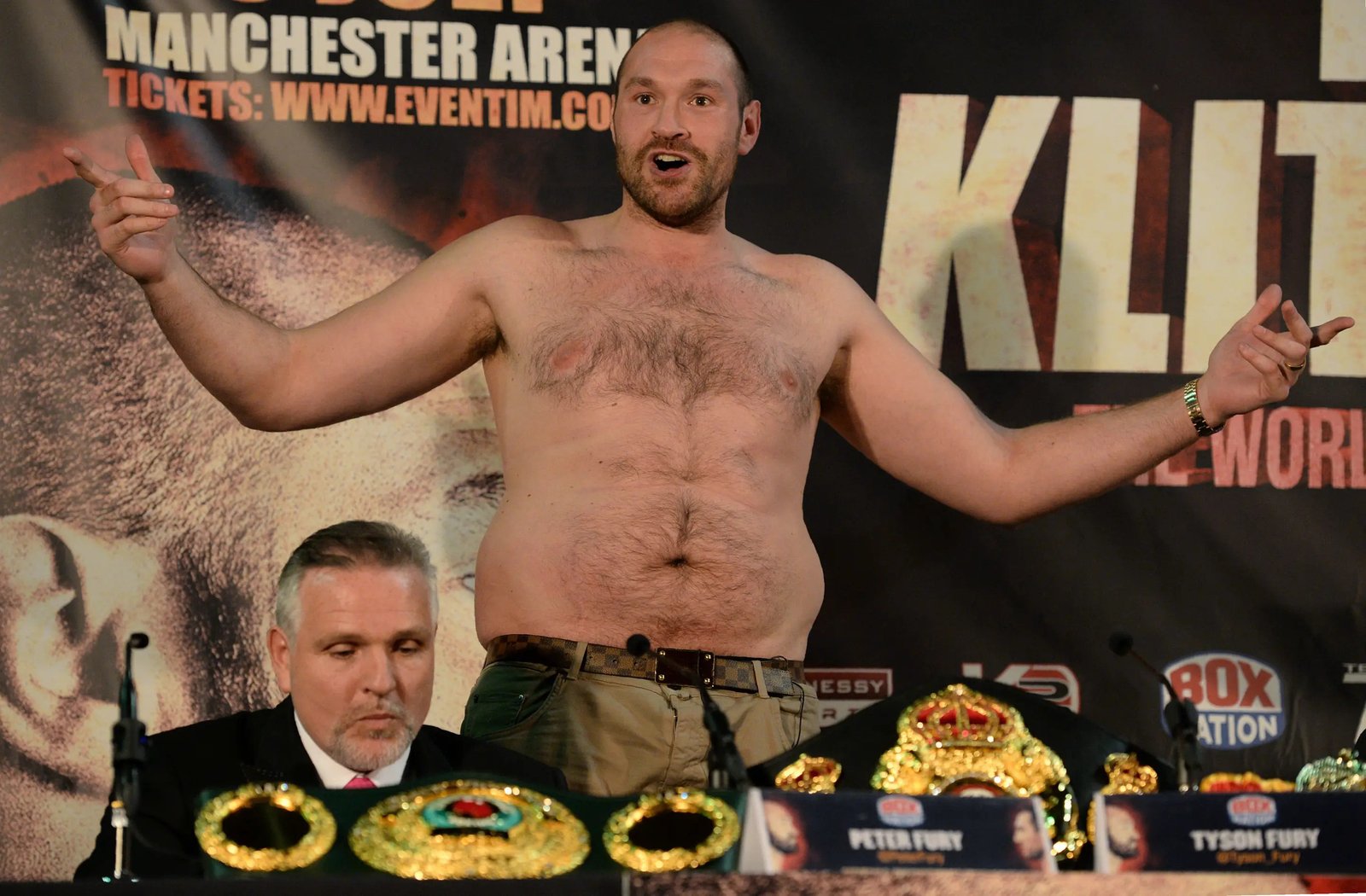
Not long after his infamous press conference performance for the failed Wladimir Klitschko rematch, Tyson Fury retired from boxing for the first time.
(OLI SCARFF via Getty Images)
First, we learned that Fury had failed a UK-Anti Doping (UKAD) urine test, conducted in February 2015, for elevated levels of nandrolone metabolites. That, quite naturally, cast an immediate shadow over his February 2015 victory against Christian Hammer and, despite Fury blaming the adverse finding on the consumption of an uncastrated wild boar, he accepted a backdated ban following a two-year fight with UKAD.
Advertisement
It was then during this period Fury also failed another UKAD test — this one in September 2016 — for cocaine, which he attributed to the depression brought on by his injuries and the ongoing dispute with UKAD. Relevant or not, perhaps the only thing more elusive than Fury that year was clarity.
How quickly things had changed. Just nine months prior, Fury had shocked the boxing world and realized a lifelong dream. Now he was on the brink of retirement, something he constantly threatened. He was, as if to accelerate it, gaining weight, partying with soccer fans at Euro 2016 and doing all he could to self-destruct in plain sight. Now he had gone from champion to “cheat”; troubled soul to damaged goods.
The next time Tyson Fury graced us with his presence, we were in Manchester and the opponent was a 39-year-old Albanian cruiserweight named Sefer Seferi. This, for Fury, was the first of many “comeback” fights and was designed, we were told, to have him turn the engine over before proper races in the future.
He and Seferi met on June 9, 2018, making it two and a half years since we had watched Fury dethrone Wladimir Klitschko in Düsseldorf. It was for that reason that certain allowances were made. The first was the choice of opponent, a man 66 pounds lighter and nearly a foot shorter than Fury. The second was Fury’s weight of 276 pounds, a career heaviest. He had, it’s true, come down from a much higher weight to fight Seferi, but he was still 29 pounds heavier than when he fought Klitschko and still, in every sense, carrying excess baggage.
Advertisement
“I made it very clear from the beginning that he wouldn’t be going in with any world-beater to start with,” said Fury’s new promoter, Frank Warren. “He’s got to get the ring rust out of his system.
“It’s not like when David Haye came back and was main event [against Mark de Mori in 2016]. We’ve not done any of that stuff. I’m not kidding the public. I’ve been very honest from the start about this.
“I want to keep him as active as possible. I think you suck it and see. You see what happens over the next few fights and then make a decision.”
Sure enough, having caused Seferi to stay seated between rounds four and five in Manchester, things soon picked up for Fury in this second phase of his heavyweight career. By the end of the year, in fact, he had produced one of his best performances in a fight with Deontay Wilder, who was unbeaten at 40-0 and considered by many to be a step too far for a once-retired fighter still on the comeback trail. Indeed, even on that night against Wilder, Fury momentarily said goodbye. He was doing well to tame Wilder through most of the rounds, boxing and moving, only to find himself in Round 12 suddenly “retired” by a Wilder right hand which left him flat on the canvas. It was then, to Wilder’s dismay, and ours, Fury somehow pulled himself upright before the count of 10; the gap between the retirement and the comeback his shortest to date.

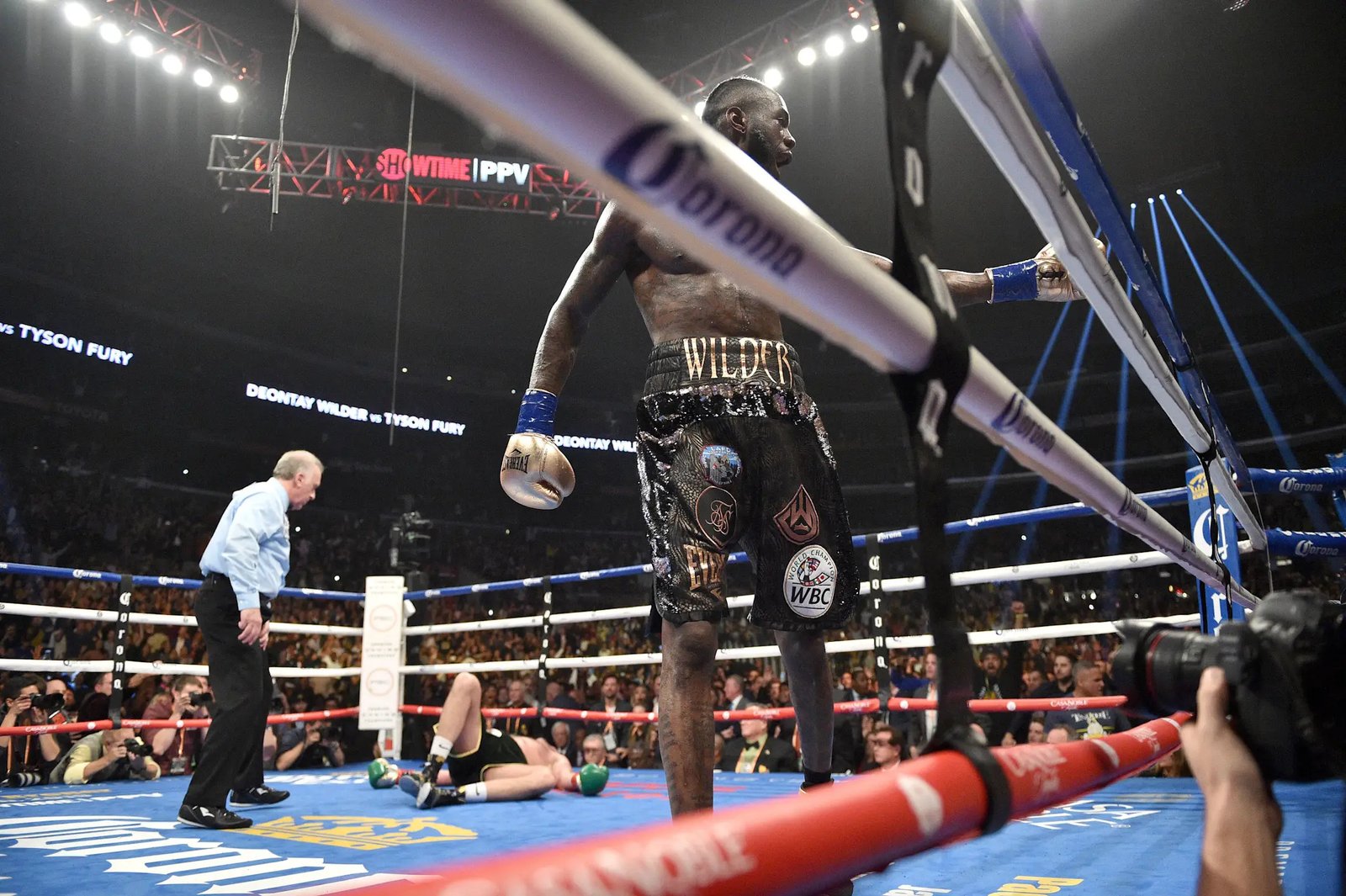
Tyson Fury’s 12th-round rally against Deontay Wilder in 2018 remains one of the most stunning moments of his career.
(Lionel Hahn – PA Images via Getty Images)
Had it not been for that final-round knockdown and the conflicting views of three ringside judges, Fury could even have fled Los Angeles with a win that night. As it was, he had to settle for a draw. That then gave rise to two additional fights with Wilder, both of which Fury won convincingly (by seventh-round stoppage and 11th-round stoppage).
Advertisement
Now, with Wilder’s WBC belt, he was champion again. Better yet, Fury would this time stick around and make a couple of defenses of the belt in 2022. The first came against Dillian Whyte, whom Fury stopped in the sixth round of a fight at Wembley Stadium. He did so with a right uppercut, perfectly timed. This was not only one of the best punches Fury had thrown in his professional career, but also the last, he said, though few of us believed him.
A mere eight months later, Fury was back, of course, now fighting Derek Chisora, his old mate, for a third time. It wasn’t a fight anybody asked for, or wanted, but it kept Fury engaged and it united two heavyweights happy to tease yet terrified of retirement.
“Let’s be honest, it’s hard,” said Chisora, speaking as much for Fury as himself. “If you come out of boxing and you don’t have anything else on the side going on, it’s so difficult. You know so many boxers who were amazing and then found themselves stuck in the gutter.”
Asked then if he was concerned about how the future — his future — would look, Chisora said, “Yes, I do worry about that. If I said I didn’t worry about it, I’d be a liar. When you’re fighting, everybody wants something off you. When you retire, different animals approach you. They bring with them ideas. Massage your ego. They want your money. But I don’t have any money.”
Advertisement
In pursuit of money, then, or just a distraction, Fury and Chisora carried on fighting. They fought each other in 2022, which was a fight Fury won in first gear, and they fought various other people, too. In the case of Fury, that meant a bizarre but lucrative “crossover” fight with Francis Ngannou, the former UFC champion, in 2023, which he almost lost, as well as a pair of fights with Oleksandr Usyk, both of which he did lose.
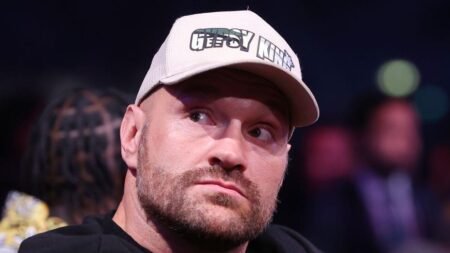
Following the second of those Usyk fights, he even said he’d had enough — again. Now Fury, 34-2-1 (24 KOs), had enough not only of boxing, he said, but of the injustice of it all, believing he had twice been “robbed” of victory against Usyk. He said, upon declaring his retirement, “I’m going to make this short and sweet. I’d like to announce my retirement from boxing. It has been a blast, I’ve loved every single minute of it, and I’m going to end with this: Dick Turpin wore a mask.”

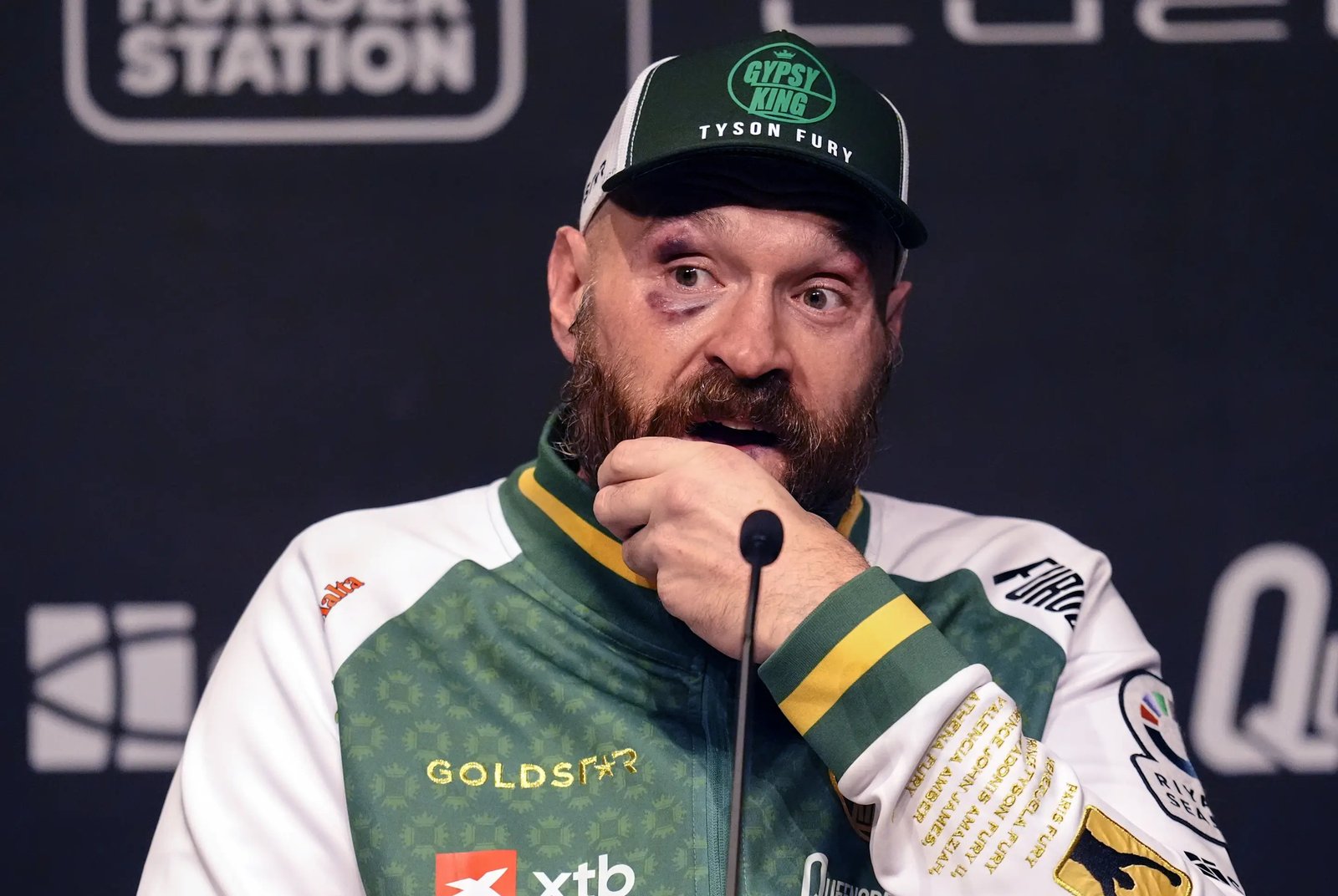
Tyson Fury at a press conference following his second defeat to Oleksandr Usyk in December 2024. Fury announced another retirement shortly afterward.
(Nick Potts – PA Images via Getty Images)
Like Fury’s statement, the retirement was short. It wasn’t as short as his previous one, when perhaps he was only kidding, but it was still short enough for nobody to miss him or take it seriously. Maybe that says as much about Fury as it does the passing of time, yet we know by now that Fury understands the power of retirement and the gullibility of the public. He knows as well as anyone that the only boxer more marketable than an active and winning one is an inactive one whose reputation has been enhanced during their absence. In that respect, retirement is as much a strategy as an ending. “My time is precious and has a price,” Fury had said to me after becoming world heavyweight champion, and not even in retirement, when title-less, did he ever veer from this stance. If anything, it only intensified with his feet up.
Advertisement
So far, that has been Fury’s special privilege, the quest abetted by social media and the ease with which he can transmit his thoughts and fibs to the public. There, online, Fury can be sure that whatever he says, or types, will be treated as news by engagement farmers and the clickbait-obsessed, and so explains the exhausting loop of retirements and comebacks and retirements and comebacks and retirements and …
His latest one — comeback, that is — takes place on Saturday at London’s Tottenham Hotspur Stadium, the same venue where Fury, now 37, beat Chisora in the last one. His opponent on this occasion will be Russia’s Arslanbek Makhmudov, a 36-year-old with a 21-2 (19 KOs) professional record. He, like the others before him, is merely a head, a body and a name. Just like the others, too, Makhmudov has been chosen — chosen by Fury, chosen for a reason.
It is an easy choice to make, finding a comeback opponent. It is certainly a lot easier to find a fall guy for a return than it is choosing the right time to retire, for instance. Because when it comes to that, most boxers seem to prefer having the decision taken out of their hands. At least then, even if it comes late, or is painful or sad, retirement is invariably signified by a full stop rather than an ellipsis. At least then the door is closed, not left ajar.
“Let us have the modesty of wounded animals, who withdraw into a corner and remain silent,” wrote Flaubert, not about retirement but of death. Perhaps, for some, those scared of silence, they are one and the same.
Read the full article here