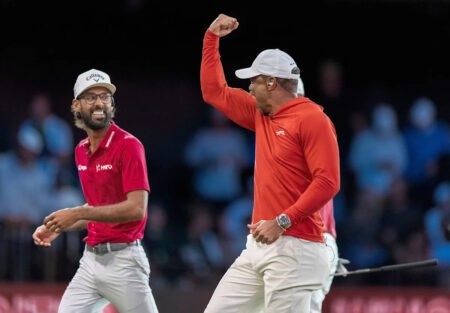




The 30-foot birdie putt that Rory McIlroy made on the last hole at the Genesis Invitational in February sums up the state of professional golf. In a playful exchange with reporters, Rory was asked if he knew how much it was worth, lifting him from a tie for third to a tie for second. He said, “Probably earned me another 400 or 500 grand, so it’s fine.” It actually meant another $600,000. To quote the old tour pro Chip Beck, “Some people have to work all year to make that kind of money.”
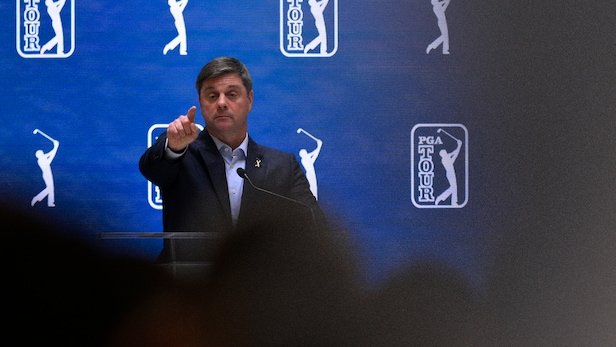
Pro golf has some problems, but money isn’t one of them. The man in charge is the PGA Tour’s new CEO, Brian Rolapp, who I witnessed speak to intimate groups at length four times and sat next to at dinner once in the span of a winter month. His message was consistent and strong, and I’m rooting for him, but I wish he played golf.
Advertisement
My first impression was that he should dress better, Armani-up a little bit, although I think he likes playing the role of the scrappy Everyman who will outwork you to the end zone. That was his reputation at the NFL, where he was known for his intelligence, strategic vision and relentless pursuit of ever higher media rights fees (topping $10 billion annually). He is analytical, patient and unemotional at the negotiating table, better at Q&A’s than prepared remarks—as opposed to Commissioner Jay Monahan, who always looked like he was wearing the wrong size sports coat and sitting in an exceptionally uncomfortable chair. Jay is well-liked up and down the org chart and across the aisle, but I have the sense that he never enjoyed his job.
In truth, it had become a miserable assignment dealing with Greg Norman and LIV and defecting players, not to mention the Patrick Cantlays left behind. The months since Rolapp has become the boss show Jay to be, as one TV executive put it, an extremely effective consigliere. He has slid to the side and graciously allowed Rolapp to assume tour leadership, all while relishing the role of second banana so much that some wonder if he ever really wanted the top job. While a gargantuan parachute awaits his retirement, Jay might stick around a little longer than people think.
2266700985
Cameron Young poses alongside PGA Tour CEO Brian Rolapp (left) and PGA Tour commissioner Jay Monahan after winning the Players Championship.
Advertisement
Kevin C. Cox
RELATED: Brian Rolapp has a plan. He just needs everyone to get out of his way
I always believed that his predecessor Tim Finchem’s superpower was his thick skin. He played the long game. Bad news and grudges would be forgotten in 48 hours, so it was all about the business. There’s no question he got lucky when, two years into his commissionership, that kid in the Nike commercial came along and said, “Hello, world: I’ve heard I’m not ready for you. Are you ready for me?”
Tiger is now the frontman for Rolapp’s reshaping of the PGA Tour. I’ve said it before: I wouldn’t be surprised if Tiger eventually becomes commissioner. He can command a room like nobody since Arnold Palmer, and so far his contributions have been tilting the power base toward player-directors on the Tour Policy Board, pushing purses, limited fields and equity participation for the stars, pacing the schedule to avoid player fatigue and discouraging further defections.
Advertisement
Rolapp has been smart in speaking about the direction he wants to take the tour rather than specific outcomes because, as one former tour official told me, “The more he talks to people, the more he realizes just how restricted his next steps are.” That’s the messy nature of golf with its checks and balances shared by all the organizations that run the majors. That’s why he’s now pointing to 2028 for changes in the schedule. His big concept is creating scarcity by reducing the number of top tier tournaments to about 21-26 (from 45), having full fields of 120-ish players with a Friday cut, opening the tour after the Super Bowl on the West Coast so that it finishes in prime time on the East Coast, playing in big markets (hasn’t anybody told him pro golf goes to die in metropolitan New York?) and building to a more impactful playoff season.
A reduction in the number of tournaments will risk abandoning mid-sized markets that have been loyal to the PGA Tour for decades. The tour’s new mantra is “The best players compete against each other more often,” but that takes away a lot of hours from network TV coverage. I remember Woody Allen once saying it’s the ordinary movies that keep theaters open between the big hits. We need week-to-week tournaments to keep pro golf going between the majors. An underlying challenge will be how Korn Ferry Tour and other young players can fight their way up the ladder. Tour partners I talk to—both media and tournament sponsors—are all skeptical that Rolapp can pull it off. The real test will be when the NFL renegotiates its TV and streaming contracts (it was Rolapp himself who gave them the early opt-out flexibility), and whatever’s left will be the scraps that all other sports will duke it out over.
In every appearance Rolapp makes, even in his prepared remarks, he neglects to mention the two C’s that have been the foundation of pro golf since the First World War—that is, community and charity. Oh, yeah, he says when asked, “No one should expect us to take a backward step in charitable causes.” But his heart is not in it when he says that, and it’s clearly not a priority in the new for-profit venture of the private-equity-invested PGA Tour. Thousands of volunteers show up for their communities and charities, and it’s a protective cover for America’s CEOs and publicly traded corporations to support a minor sport like golf. Sponsoring tournaments has always been justified not by how many watch but by who plays. Unlike the NFL, pro golf isn’t audience-driven; it’s B-to-B marketing. Pro golf does more than sell balls and shoes. It achieves business objectives through brand exposure, client engagement and measurable return on investment.
The PGA Tour’s commissioner when the tour began to grow in the 1970s, Deane Beman, understood this better than anyone. He invented golf’s non-profit status—“501(c)(6)” was his middle name—and coined the slogan, “Charity is the leading money-winner on tour.” (Beman’s end was hastened when he tried to usurp the USGA’s rules-making authority over square grooves, so it’s another word of caution for the CEO who gets too involved in the current golf ball rollback controversy.)
Advertisement
The other thing Rolapp needs to worry about is the DP World Tour. He owns a piece of it for now, but it’s costing the PGA Tour about $90 million a year to subsidize. The risk in walking away is that LIV will swoop right in—just as it might do in those U.S. middle markets he departs. I played in a pro-am recently with a top young player who told me Rolapp’s lack of golf knowledge is an advantage because the tour has traditionally been too beholden to golf’s old power structure, meaning the majors and the governing bodies. When Rolapp came in and cleared out the gray golf heads, replacing them with non-golf types, the players cheered. Ignorance gives you freedom, but it’s risk in disguise.
The PGA Tour seems to offer a lot of mutually exclusive alternatives. The players like being independent contractors, but they want guaranteed income. The tour needs to coddle its stars past their sell-by date but still offer a runway for up-and-coming young players. The pros claim a world tour, but they don’t want the hassle of traveling overseas.
The U.S. tour thinks it needs all the top players competing against each other every week for validation, but international tournaments need only five or six top players to satisfy sponsors and fans. This is why LIV is a roaring success in Australia but fails in America. Rolapp is looking at the months after the PGA Tour’s season wraps up—October through January—as a time for global golf. He’ll require all Beman’s marketing muscle, Finchem’s thick skin and Monahan’s good counsel to make that field goal.
There’s no doubt Rolapp will bring new ideas and more money to the pro game, but he needs to keep in mind the words of the late USGA iconoclast Frank Hannigan, who once told me, “If you don’t have at least three conflicts of interest, you’re not in the golf business.” It’s the messiness of golf that holds the game together. You just need to be a golfer to understand that.
Advertisement
More From Golf Digest

Players Championship Opening with a bang, a match-play postseason and a two-track system: 12 revelations about the PGA Tour’s (still uncertain) future
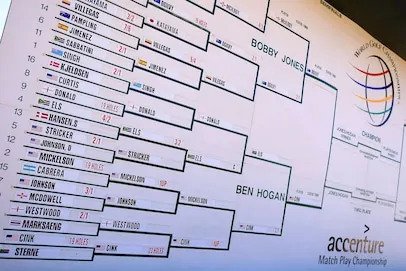
Players Championship This Easter Egg from Brian Rolapp will have a certain kind of golf fan rejoicing
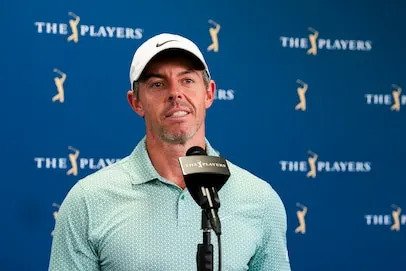
players championship Rory McIlroy had an interesting first take on Brian Rolapp’s plan to remake the PGA Tour
Read the full article here