

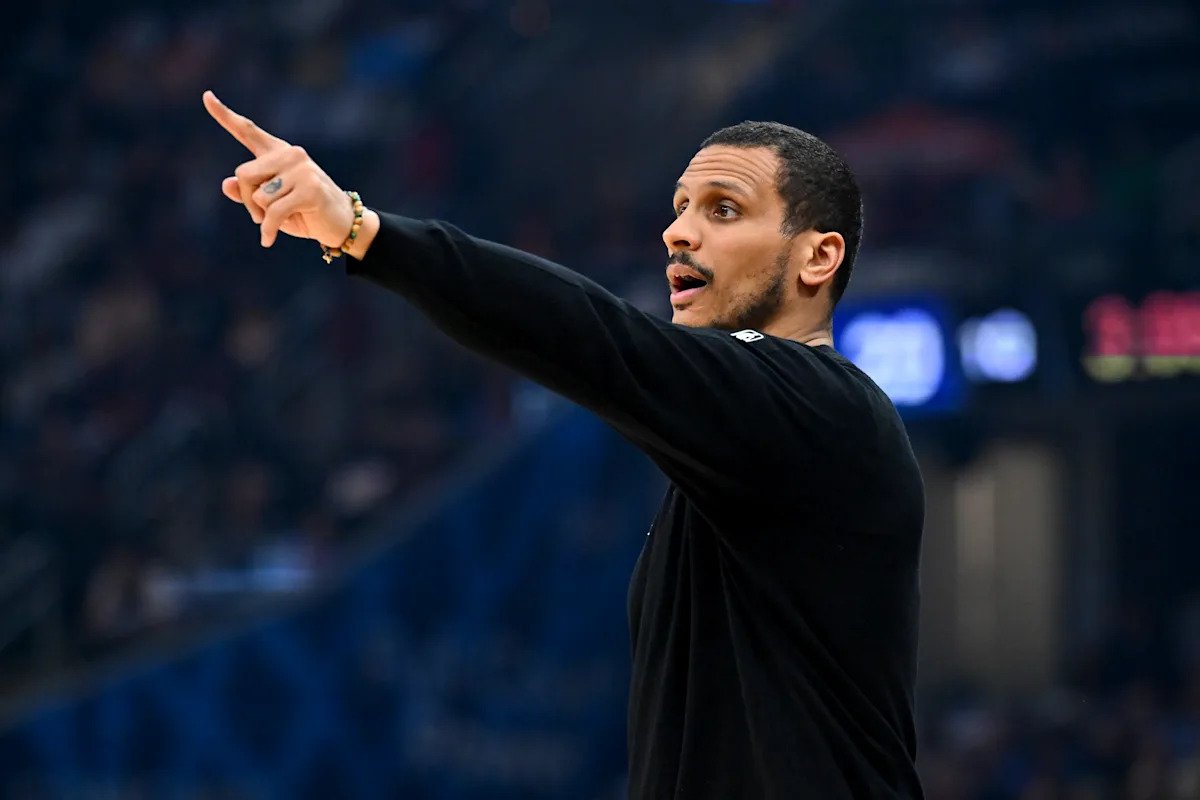
Joe Mazzulla wasn’t supposed to be the long-term answer.
A week before training camp in 2022, the Celtics’ future was clear and it was beautiful. They had just come off a Finals loss against the Warriors, the roster was intact, and the next few years of contention felt inevitable.
Advertisement
Then, the Ime Udoka situation forced everything sideways, and a 34-year-old assistant coach was suddenly running a contender with championship expectations and no runway to grow into the job.
That kind of transition usually leaves a scratch on an organization when you look back at their history. Even good teams wobble when the voice in the room changes overnight. Boston didn’t. In Mazzulla’s first year, they opened 18–4, carried over the same edge from the previous season, and kept stacking wins as if nothing had really changed. At the time, that steadiness felt temporary, like the roster was strong enough to carry the rookie coach while things settled.
A few years later, it’s clear that wasn’t what was happening.
An emergency replacement
Early on, the question followed Mazzulla everywhere: how much of the success was him, and how much of this was already built? It’s a fair question when you inherit a Finals team with two All-NBA wings entering their prime. Plenty of coaches could keep that group competitive. Far fewer can shape it into something more sustained and defined.
Advertisement
That’s where Mazzulla has separated himself. The Celtics play with a level of clarity that reflects a coach who knows exactly what he wants each game to look like. Offensively, the system is built on quick decisions and spacing that stretches defenses until something gives. The three-point volume gets a lot of the attention, but the real story is how those shots are created. The ball rarely sticks. Actions flow into each other. Role players are involved by design.
You see it in players like Payton Pritchard stepping into larger responsibilities, whether that’s as a starter or off the bench. You see it in how Jaylen Brown’s usage shifts depending on who’s available. The system holds up through the constant roster changes that come with an NBA season. When Jayson Tatum missed extended time, the Celtics stayed organized offensively and avoided drifting into isolation-heavy stretches. When he returned, the structure didn’t need to be rebuilt.
That kind of continuity points to a system that has been intentionally constructed. So how did he do it in such a short period of time?
“Give the game what it needs”
Defensively, the identity has always been deliberate, even if it shows up in less obvious ways. Boston prioritizes protecting the paint and controlling possessions, even if it means living with certain perimeter looks. The help is aggressive. Rotations are early and often. The goal is to shape the game into something predictable and repeatable over long stretches.
Advertisement
That approach requires discipline across the roster, especially when lineups change or when less experienced players are on the floor. It also requires buy-in. Players have to trust the tradeoffs possession after possession, even when the results don’t always look clean in the moment.
What’s interesting is how different this feels from the versions of the Celtics we’ve seen under previous coaches.
Under Brad Stevens, the emphasis was also on structure and execution, but maybe even more so than Mazzulla. Everything was precise, often methodical, and built to minimize mistakes. Under Ime Udoka, the identity shifted toward physicality and accountability. That group defended with force, leaned into toughness, and played with an edge that carried them to the Finals.
Boston Celtics Introduce Ime Udoka Press Conference
Mazzulla has taken pieces of both and made the team his own. The structure of Brad is still there, as is the defensive edge of Udoka, but the games (and results) are better than they’ve ever been. There’s more trust in players to make the next read, to take the next shot, to keep the possession moving without overthinking it.
Advertisement
That’s where “give the game what it needs” shows up. It’s not about running a perfect possession every time, but instead recognizing what’s available and acting on it quickly. Sometimes that means a quick three. Other times it means one more pass or trusting a role player to make the right play in a big moment (see Xavier Tillman in Game 3 of the 2024 NBA Finals).
Opposing coaches have pointed out how clearly Boston plays to its strengths and how consistent the approach is on both ends. That level of execution typically develops over time. In Boston’s case, it came from a coach stepping into a volatile situation and establishing structure quickly, then giving it room to breathe.
There’s also growth that’s easy to overlook. Mazzulla’s first playoff run had moments where things unraveled, and some of the criticism at the time was fair. Since then, the adjustments have improved. So while the learning curve has been steep, he’s handled it just about as well as you could have asked.
“Nobody cares”
At some point, the context around how Joe Mazzulla got here starts to fade into the background. What replaces it is the résumé, and it’s already difficult to wrap your head around. A championship. The highest winning percentage the league has ever seen. Year after year of 50-plus wins. A team that hasn’t drifted, hasn’t fractured, hasn’t taken a step back at a time when most contenders eventually do.
Advertisement
What’s almost as impressive as the results is the environment he’s maintained. Two superstars entering their primes, in a league where that usually comes with questions about timelines, pressure, and whether something else might be out there for them. Instead, the Celtics, top to bottom, have stayed aligned. The expectations have risen, and the response has been nothing but steadiness. That part doesn’t show up in a statistic, but it might be the most impressive thing he’s done to date.
All of that from a coach who, a few years ago, was an assistant from Rhode Island who had never held a head coaching job, outside of a stop at Fairmont State.
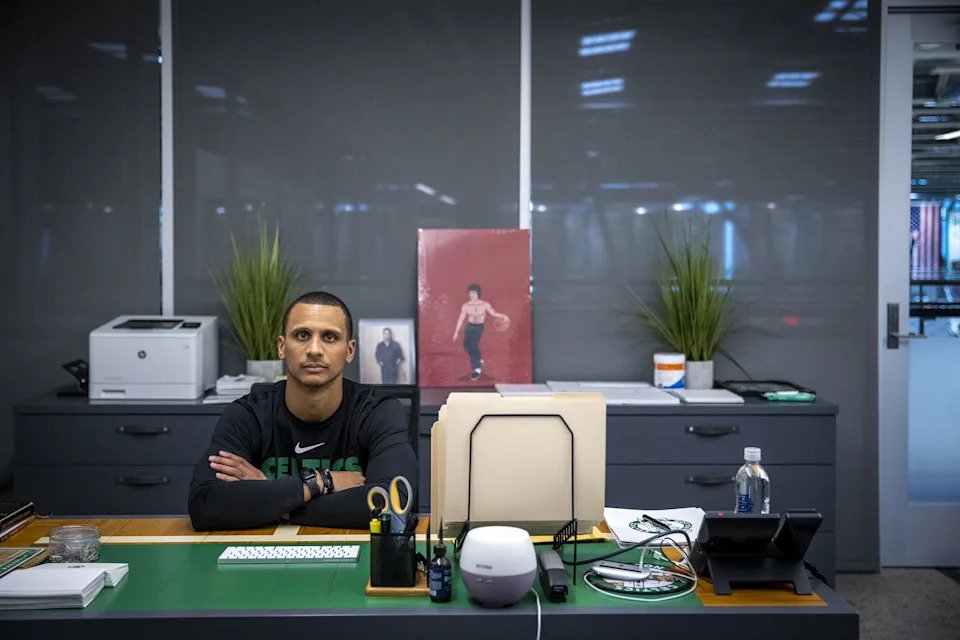
Boston Celtics Interim Head Coach Joe Mazzulla
And yet, if you asked him about any of this, you probably wouldn’t get much of a reaction. He’s already told you what he thinks of Coach of the Year. He’s told you how much he values awards. You know the answer will likely be some form of.
Advertisement
-
We’re all going to die anyway.
But the thing is that we, Celtics fans around the world, care. Deeply. Not about the award or the optics, though Celtics fans agree that his name should be on the shortlist for COTY candidates. It’s that the Celtics were thrown into massive uncertainty and ended up with a coach who has kept them at the center of the league, defined how they play, and helped push them over the line.
There wasn’t a plan for this. How could there have been? It was a moment that could have gone a lot of different ways, most of which you’d expect to go badly.
And just look at where we landed.
Read the full article here