



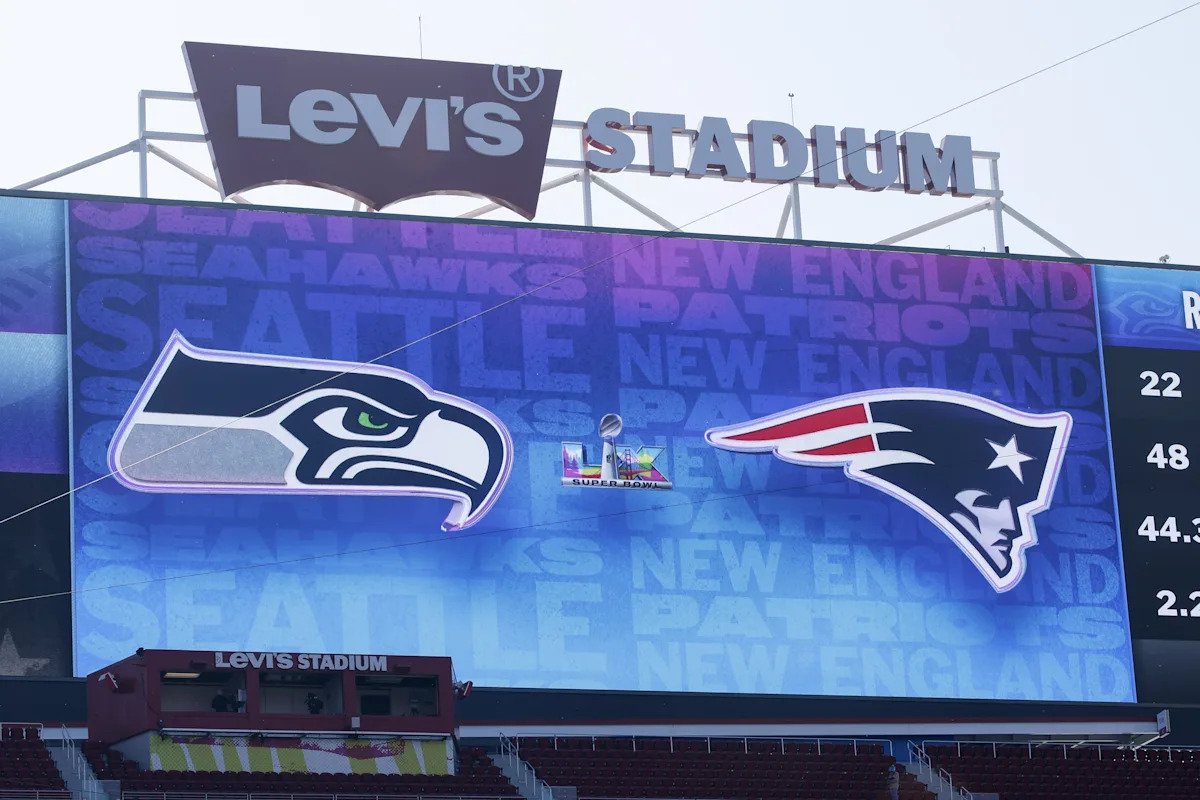
The Seattle Seahawks return to the Super Bowl to face the same opponent from their last appearance. Beyond the revenge angle, this game also represents a chance for Sam Darnold to defeat the New England Patriots for the first time in his career—and finally bury the old “seeing ghosts” narrative for good.
This should be an extremely balanced matchup. Both teams are highly efficient across all three phases, even if they get there in very different ways. Because of that, it’s easy to project a tight score throughout. Still, given Drake Maye’s talent and the way Klint Kubiak and Darnold have closed the postseason, it wouldn’t be shocking at all if this game turns into a shootout.
Advertisement
How Josh McDaniels and Drake Maye can attack the Seahawks defense
When you’re preparing for a defense as good as Seattle’s, the best starting point is to study the teams that have already had success against it. In the Seahawks’ case, the answer is clear: the Los Angeles Rams. You can safely assume Josh McDaniels will borrow heavily from those game plans.
The Rams stressed Seattle’s defense in two distinct ways. In the last regular-season matchup, they repeatedly leaned on Dagger concept and others to attack the Seahawks’ zone coverage. Those issues felt more structural than execution-based—voids opening behind linebackers and safeties struggling to pass routes cleanly.
In the NFC Championship Game, Mike Macdonald responded by dialing up far more man coverage to counter what had hurt them earlier. The problem: the Rams still won this matchup against Seahawks defense. Matt Stafford trusted his receivers in one-on-one situations, and his wideouts delivered. It was arguably the worst statistical game of the season for Seattle’s cornerbacks. Because of that, it wouldn’t be surprising to see the Seahawks lean back toward zone as their primary answer.
Advertisement
That creates a real problem, because the Patriots have solutions for both zone and man coverages. Drake Maye has the arm strength to challenge tight windows, the confidence to attempt those throws, and an offensive coordinator who consistently puts him in favorable situations. The efficiency has followed.
One particular throw illustrates this perfectly: an outstanding catch, yes—but it’s Maye’s ball placement that gives his receiver a chance to beat none other than Derek Stingley vertically.
Against zone, there’s a concept that has lived in McDaniels’ playbook since at least 2017 and should show up multiple times here. The double-dig concept puts two in-breaking routes at different depths, allowing the quarterback to stress zone spacing or attack outside leverage against man coverage.
Still versus zone, Stefon Diggs is a major weapon. He thrives on contested catches and has an elite feel for settling into soft spots between zones. New England is also perfectly comfortable taking short gains if that’s what the defense concedes. That patience helps Maye stay on schedule—and naturally mitigates pressure.
Advertisement
Pressure (and sacks) are the Seahawks’ defensive answer
There’s an old truth in football: the only truly reliable way to stop the pass is to disrupt it with pressure. Maye’s numbers under pressure are strong, but this is still the most exploitable area of his game.
In the postseason, he’s taken 15 sacks and fumbled the ball six times. Even with solid efficiency under duress, ball security has been an issue. At times, he slides laterally toward pressure instead of climbing the pocket—something New England will undoubtedly try to clean up next year, but something Seattle can target now.
Ideally, the Seahawks need to generate pressure with four rushers. That’s easier said than done. Seattle has struggled to consistently collapse the pocket in recent games. Against Brock Purdy, that was dangerous because of his mobility. Against the Rams, it was dangerous because of Matthew Stafford’s ability to punish any lapse in timing.
Drake Maye can do both. Discipline up front is non-negotiable.
One matchup to watch closely is against left tackle Will Campbell. He’s an excellent player, but he struggled at times this postseason, particularly against power rushes—most notably versus the Texans.
Seattle’s most credible edge threat is DeMarcus Lawrence, who can win with power and refined technique, including moves like the cross-chop. That matchup could quietly swing drives.
Advertisement
Containing the run game is essential
Rhamondre Stevenson and TreVeyon Henderson form a strong backfield duo, blending power and speed in a way that’s not unlike Zach Charbonnet and Kenneth Walker. The Patriots’ run game leans heavily on gap schemes, especially power concepts.
That’s the key point. The Rams were able to manipulate Seattle’s coverages because they consistently succeeded on the ground. New England isn’t as explosive as L.A., but they can’t be overlooked. Seattle’s run defense has often relied on Nick Emmanwori playing nickel, and while he may suit up, he almost certainly won’t be at full strength.
How much does that matter?
Advertisement
We’ll find out quickly.
The biggest concern for Seattle’s offense
Anthony Bradford versus Christian Barmore and Milton Williams is a potentially massive issue. To be fair, Bradford had solid stretches during the season, but he’s coming off arguably his worst performance of the year—allowing pressures, losing against blitzes and stunts, and even drawing a hold while working in a double-team. Barmore wins with first-step quickness and raw power, while Williams thrives on stunts and delayed penetration being a problem against the RG.
The Patriots are extremely intentional with interior pressure packages once they identify a weak point in protection. This is the clearest path to disrupting Seattle’s offense. And it’s not just standard blitzes—New England will bring heavy pressure, sometimes with six or even seven rushers.
On one snap, Bradford loses badly in a pure power one-on-one—supposedly his biggest strength.
On another, he completely misidentifies the blitz and finishes the play without blocking anyone at all.
Advertisement
Creating space for Kenneth Walker: scheme over strength
New England’s run defense is solid against downhill concepts but far less comfortable when forced to flow laterally and process misdirection. In theory, that plays directly into Kenneth Walker’s strengths—and it’s exactly where Kubiak found success over the last two games.
The Patriots will be prepared for that, especially given that Kubiak struggled to adjust against the Rams as that game wore on. Against the 49ers, he did a much better job mixing power, split zone, and inside runs to keep the defense guessing. He’ll need to do that again here. Robbie Ouzts would help in that regard, but the rookie is still recovering from a neck injury.
How to attack the Patriots defense
Christian Gonzalez and Carlton Davis form one of the league’s best cornerback duos. They’re physical, disciplined, and extremely effective in man coverage, particularly on the outside. When New England plays man, they’re comfortable leaving these corners isolated without constant safety help. That trust also shows up in man-match principles within their quarters coverage.
Kubiak did an excellent job attacking the Rams’ coverage rules. On one key play, the Rams effectively double Cooper Kupp and Jaxon Smith-Njigba, which isolates Rashid Shaheed downfield. That’s exactly where Shaheed’s speed can shine.
You can see a similar example against the Broncos: the safety stays locked to the trips side, leaving Gonzalez alone in pure man coverage. The Patriots are willing to do this because they trust their corner—and because it allows the safety to key the quarterback’s eyes, an approach that worked well for New England all season. On that play, the receiver beats Gonzalez vertically for a big gain. Don’t be surprised if we see something similar on Sunday—maybe even Shaheed’s first touchdown off this concept.
Advertisement
Final thoughts
Ultimately, Seattle’s success in this game—beyond all the schematic points above—comes down to No. 14: Sam Darnold, and discipline. He’s the same quarterback who once threw four interceptions in a game and lost the ball at critical moments. He’s also the quarterback who, even while banged up, dissected the Rams’ defense with a near-flawless performance.
Kubiak has consistently given Darnold quick answers, and the quarterback has executed those reads well—staying patient, not forcing throws, and playing within structure. That same discipline has to show up on defense: holding zone integrity against Maye, forcing him to operate from inside the pocket without escape lanes, and not biting on the misdirection Josh McDaniels undoubtedly has ready.
Discipline is what brought this team here. Now it has to be what finishes the job.
Go Hawks.
Read the full article here