The process of getting a ball back in play while taking a drop, either from a penalty area or from free relief, might seem a little silly to a casual golf fan. Rule 14.3 covers all the things that must be done.
First, the drop has to come from knee height—no higher or lower—and fall straight down. Second, the ball must land in the relief area without touching anything before it hits the ground. Third, it must stay in the relief area or it has to be re-dropped. Fourth, if it also doesn’t stay in the relief area on the second drop, then it has to be placed. Fail to correctly do any of the above and play another shot, it’s a penalty—one stroke if played from the relief area or the general penalty if played from outside of it.
Advertisement
Got all of that?
Now here comes an important thing to remember, especially if you are on a limited budget and would rather spend your money on a beer at the turn than a sleeve of golf balls. Say you have to take a drop on the bank of a creek, and the bank is so steep that if you don’t purposely stop the ball, it will roll into the water, sink to the bottom and be lost forever. Are you allowed, then, to stop it before it makes its plunge?
It’s a reasonable question, especially if you watch a lot of pro golf on TV. You’ll often see a tour player about to take a drop in a similar scenario have his or her caddie get down on the ground outside of the relief area and wait to catch the ball. Once the ball rolls out of the relief area, it wouldn’t be in play, so it’s perfectly legal to do what the caddie is doing.
True story: Back in 2018 at the WGC-HSBC Champions, Ian Finnis, caddie for Tommy Fleetwood, got in position to stop his player’s ball only to muff the assignment and let the ball roll into the water.
Advertisement
More From Golf Digest
Rules Review Rules Review: My opponent dug his feet in a bunker, then got another club and did it again. Isn’t that building a stance?

Rules Shane Lowry has to be wishing these two new rules were in place a year ago
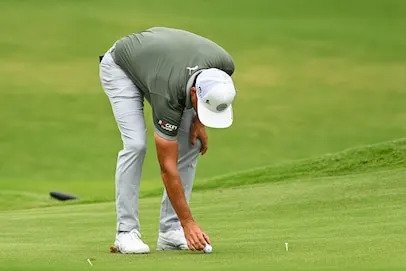
Rules The PGA Tour has changed one of its most controversial rules
Back to the situation in the headline of this article: Can you stop your own ball if you know it’s not going to stay dry? Furthermore, can you stop it before it leaves the relief area?
The answer is yes. An exception to Rule 14.3d tackles the topic. It states, “if a ball dropped in the right way is deliberately deflected or stopped (whether in the relief area or outside the relief area) when there is no reasonable chance it will come to rest in the relief area, there is no penalty, and the dropped ball is treated as having come to rest outside the relief area and counts as one of the two drops required before a ball must be placed.”
Advertisement
It’s understandable if you had concerns about the procedure or even having to sacrifice a golf ball just to avoid a penalty, but you’re within your rights to come to the rescue no matter where the ball is as long as you know there is no reasonable chance it will stay up.
MORE GOLF DIGEST RULES REVIEWS
What do I do if my ball just hit another ball on the green?
What happens if my three-minute search for a lost ball gets interrupted?
I hit myself with my own ball. Is that a penalty anymore?
What exactly is an embedded ball?
Touching the green to see if it’s wet: Penalty or no?
I hit a horrible shot. I’m way better off if I don’t find it. Can I just declare it lost?
Advertisement
Does a ball have to be unplayable to declare it unplayable?
I accidentally hit my ball with a practice stroke … does it count?
I’m on the green. My opponent is not. Who’s away?
I bent my putter and it actually works better. Can I still use it?
Somebody just picked up my golf ball! Now what?
Read the full article here