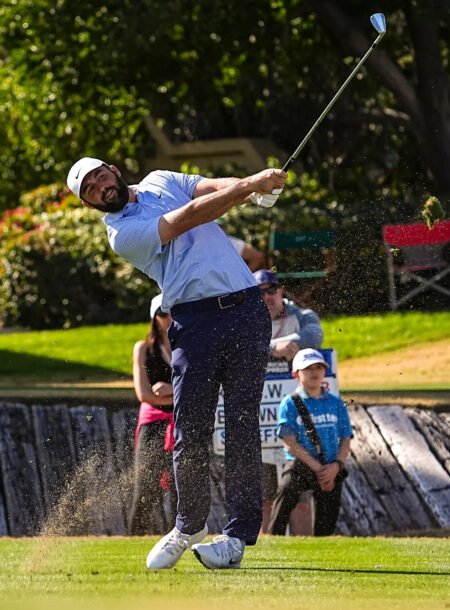


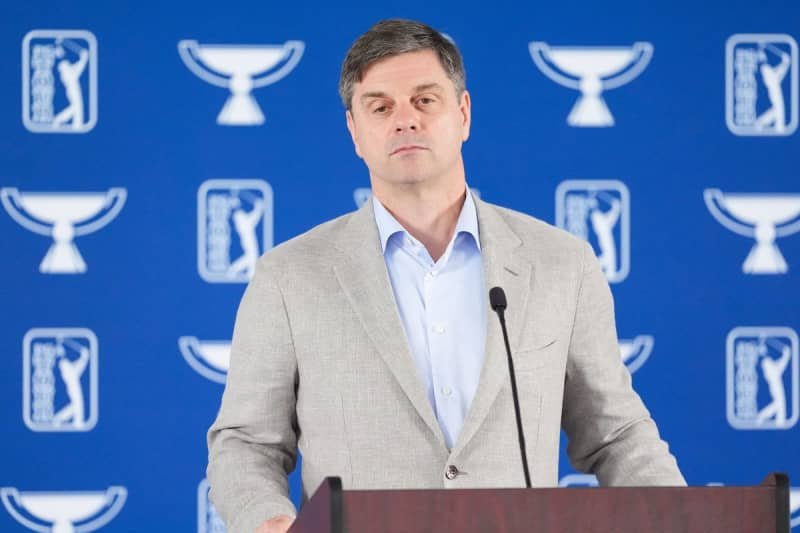
When the PGA Tour named Brian Rolapp new CEO, the ecosystem’s fragile future was in his hands. Six months in, Brooks Koepka‘s return to the ‘home’ can be called a win. And the way he came, by agreeing to pay $85 M as fines, impressed his critics and skeptics alike. Rolapp showed tactical discipline but this is not complete success, as Eamon Lynch warns of an upcoming fight. A real fight.
Writing in his regular column in GolfWeek, Lynch states the complexities the new CEO might face in dealing with the television broadcasters after reducing the field to 100-players only, as well as a plan to reduce the overall events from its calendar year.
Advertisement
“Good luck convincing media partners to pay more for a shrinking product,” writes Lynch. “A smaller Tour may turn out to be a better Tour in time, but the networks will likely start from a position that the price tag should be commensurately smaller too.”
The PGA Tour’s domestic television rights are held through 2030. Many of them, like CBS Sports and NBC Sports, pay approxiamately $700 M annually. ESPN+ adds $75 M for its part. And while this deal is set to go on for the next four years, it can change in the middle through renegotiation. Networks have the right to trigger changes in clauses if the PGA Tours fail to provide the product they promised.
That’s the challenge Lynch points to. These networks will demand a price reduction for a materially smaller product.
Advertisement
The chances of such a renegotiation are more likely. Not because these networks are profit-hungry, but because they face their own sets of pressure. Television is seeing fewer viewers right as we speak. From 72.2% in 2020 to just 56.5 by the end of 2024, linear television has seen a steep decline. So if the PGA Tour reduces from 50 events to, let’s say, 20-25 events, the broadcast hours will decline proportionally. Revenues, in turn, will be reduced, something the networks would simply not want.
But Brian Rolapp might not be thinking through that window. His logic lies in the concept of scarcity. A smaller field will most likely see higher-ranked players competing with each other. This, in turn, should produce more compelling television. At the same time, people would want to tune in because fewer events make the existing ones consequential. Like how the FIFA World Cup generates massive viewership on its broadcast once every four years.
While this does make sense, networks will not think like this. For them, fewer events would mean fewer advertisements, which would result in less revenue, regardless of the quality of the event.
For example, let’s say the PGA Tour gives 50 events annually, which generate 2 million viewers. Each event lasts for 4 hours, which results in 200 hours annually. All this works out to around 3.2 billion total viewer-hours annually. That’s a lot of airtime to sell commercials. Now, if the Tour cuts the schedule to 25 events, and even if each event suddenly attracts more viewers, networks are still left with only half as many hours to monetize. It could possibly face 35% or more reduction in advertisement inventory.
Advertisement
In simple terms, fewer tournaments mean fewer commercial breaks. Hence, Rolapp needs to come up with a new idea to save the PGA Tour’s viewership collapse along with his tenure.
The answer to that might be closer than he thinks.
LIV’s failure might help Brian Rolapp save his tenure
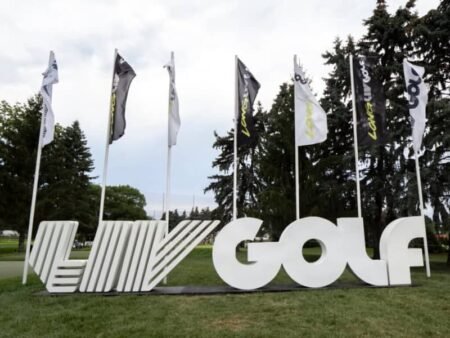
For all the “breakaway” LIV Golf once promised, its television data made it fall flat on its face. Through May 2025, a final-round Sunday broadcast on the PGA Tour saw roughly 3.1 million viewers across CBS and NBC. For LIV, the events averaged at 175k viewers across FOX, FS1, and FS2. That is a massive 17.8-to-1 advantage for the PGA Tour.
Advertisement
This collapse was most visible in February 2025 during LIV Riyadh. The event aired on Fox Sports and drew around 12k to 54k viewers, depending on the round. That same weekend, the PGA Tour conducted its Phoenix Open, which saw a massive 2.87 million viewers during Sunday’s final rounds. Interestingly, LIV stopped publicly releasing its ratings altogether. Hence, it is safe to say that as a rival product, LIV has faded.
And that is how it can be used as a strategic distraction.
At this juncture, Rolapp must convince CBS, NBC, and ESPN to maintain or ideally even increase their $700 M annual investment. Why? Because if not the PGA Tour, they can surely not profit from LIV Golf. While Golf may not have the same number of fans as the NFL and NBA, it is still a lucrative sport endorsed by the higher echelons of society. Surely, these networks wouldn’t want to miss out on that.
“Golf viewers are creatures of habit and find comfort in familiarity,” Eamon Lynch writes. “If you’re going to mess with any or all of that, you’d best be able to explain why.”
Advertisement
The post PGA Tour Hit With Early Warning Amid Growing Uncertainty Over Viewership Future appeared first on EssentiallySports.
Read the full article here