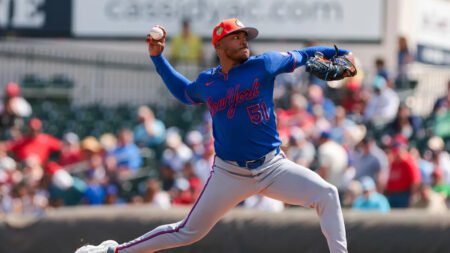


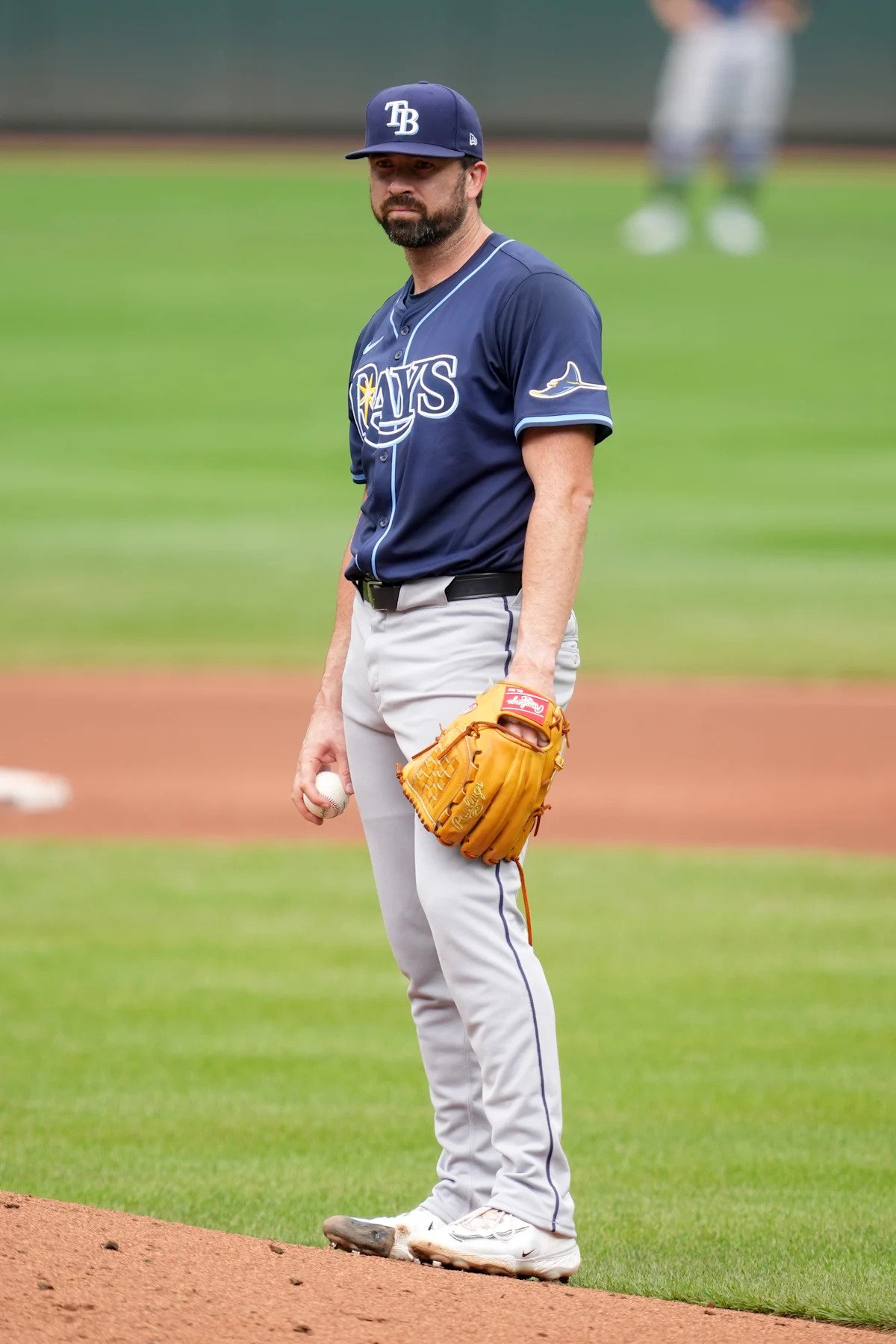
A few Rays pitchers have debuted new pitch shapes this spring — and they all have one thing in common: they’re offspeed pitches. That’s not a coincidence.
The Rays are quietly building a pitching optimization template: preserve the fastball traits, kill lift on the offspeed, widen the vertical angle of approach (VAA) gap, and let hitters make bad swing decisions. A wider VAA gap between fastball and offspeed correlates with higher chase rates. Add meaningful velocity separation, and you get more in-zone whiffs.
Advertisement
There are two ways to increase VAA separation: change vertical movement on the fasball or the offspeed, or change location. Lowering the “induced vertical break” (IVB, or how much the pitch rises due to backspin) on the offspeed pitch is usually the easier lever, and doing so naturally drives the pitch lower in the zone. Shape and location aren’t independent variables.
We have limited video in Spring Training, so we won’t be able to analyze all the grip changes at the moment, and the Hawkeye data can wobble in small samples, so exact numbers matter less than trends. But pitch-shape trends stabilize relatively quickly. What we’re seeing looks intentional.
Joe Boyle
There’s been some excitement surrounding Boyle bringing back his old breaking ball shape, but maybe the more interesting thing to follow will be his splitter. It was a new pitch for him in 2025, but you wouldn’t know it based on the results. Boyle threw his offspeed offering over 15% of the time to each side of the plate. It was a fine taste-breaker to RHB (.282 wOBA against, 26.9% whiff rate), but it really shined against LHB (.080 wOBA against, 34.3% whiff rate). He zoned it at a surprisingly average rate, but its location consistency graded well below average.
Advertisement
As Boyle develops more feel for the new pitch, his splitter’s ceiling rises. The shape has already taken a leap forward as he’s now killing some more vertical movement on the pitch (nearly 3 IVB last season, now showing -2 IVB so far this spring) – leading to more optimal VAA separation from his fastball and likely more consistent locations down in and below the zone. The wider IVB gap should push what was average VAA separation into plus territory.
Assuming this new shape holds, improved chase rates will follow. Boyle has the highest ceiling of any Rays pitcher not named Shane McClanahan or Brody Hopkins. His command and control gains coupled with his refined arsenal could make him a front-of-the-rotation starter.
Yoendrys Gomez, Jesse Scholtens, and Ian Seymour
YoGo is also the beneficiary of improved IVB separation between his fastball and offspeed pitch. The vertical movement on the pitch has gone from nearly 7 inches to approximately 2. Again, exact numbers are less important than the trends here given the sample size.
Advertisement
Another former White Sox pitcher, Scholtens joined the Rays late last season and has since held on to a 40-man spot despite the significant turnover this offseason.
Scholtens didn’t pitch in 2024 due to TJS and didn’t pitch a ton in 2025 as he was just coming back. However, his offspeed pitch is noticeably different in Spring Training right now — he has gone from roughly 3 inches of vert on the pitch to it flirting with negative IVB (meaning that it drops more than can be attributed to the force of gravity), and also running over 12 inches armside (up from 4).
Seymour had average VAA separation between his fastball and changeup last season with above average velocity separation. So far this spring, his changeup is coming in with about 5.5 IVB – down from roughly 9 last season – so we can expect even better results from what’s already a plus pitch.
Jake Woodford
I’ve already written about how weird Woodford’s changeup is. There aren’t many other offspeed pitches that we can compare it to, and one of the best things a pitcher can be is unique.
Advertisement
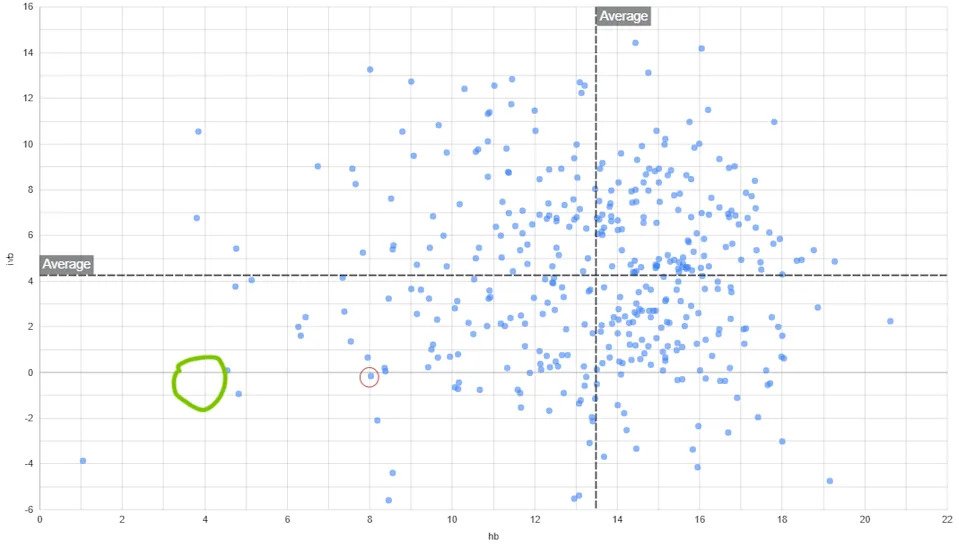
But that didn’t stop the Rays from helping Woodford tinker with his changeup; he’s leaning into his strengths and making it an even weirder pitch by cutting off even more horizontal break. The graphs of offspeed (changeups and splitters) below show just how extreme that shape is. The red circle is his shape sat last season when it was already an outlier, and the green circle is an approximate range of where it’s sitting now in Spring Training:
That’s an outlier, but for good measure, this is how it compares to offspeed pitches from a similar arm angle bucket:
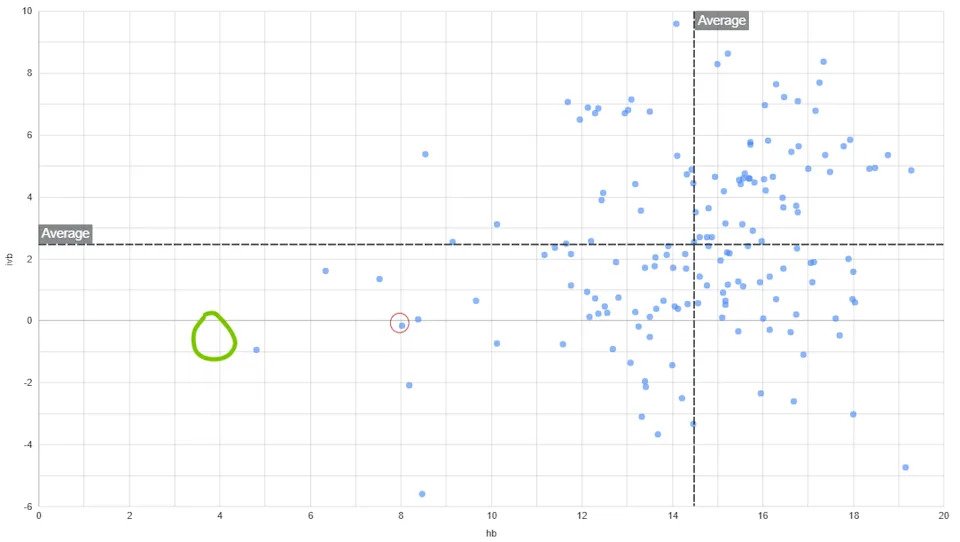
The single dot near his new pitch location is Logan Gilbert, who still throws from a significantly higher slot than does Woodford.
Advertisement
Good luck programming that into Trajekt.
Take-Aways
The Rays used to identify outlier offspeed pitches, but now they’re manufacturing them. Trading for Jeffrey Springs, Zack Littell, Edwin Uceta, and Ryan Pepiot was largely about identifying pitchers with desireable offspeed pitches and then optimizing that usage. But this spring we’re seeing something different: the shapes on offspeed pitches are changing throughout the organization, not just the usage rates.
This mirrors something that’s been going on throughout baseball. As Lance Brozdowski has pointed out, changeups across the league are getting better, or at least more optimized for vertical separation from the fastball.
This is because, over the past few years, teams have gotten a lot smarter about how pitch grip and seam orientation affect the release characteristics and the path of the ball in flight, and have become adept at using their pitching labs to help pitches make small adjustments for meaningful results. The Yankees have gotten a lot of attention for their work with seam orientation throughout their org, most saliently with Luke Weaver.
Advertisement
But the initial Spring Training numbers make clear that similar work with on offspeed shape optimization is happening in Tampa Bay as well.
Read the full article here