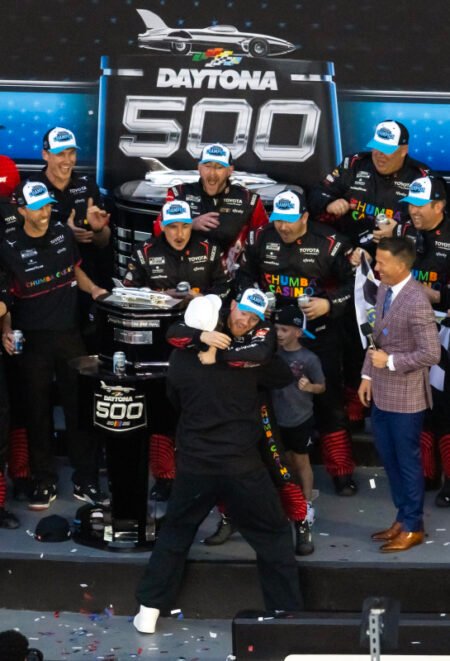



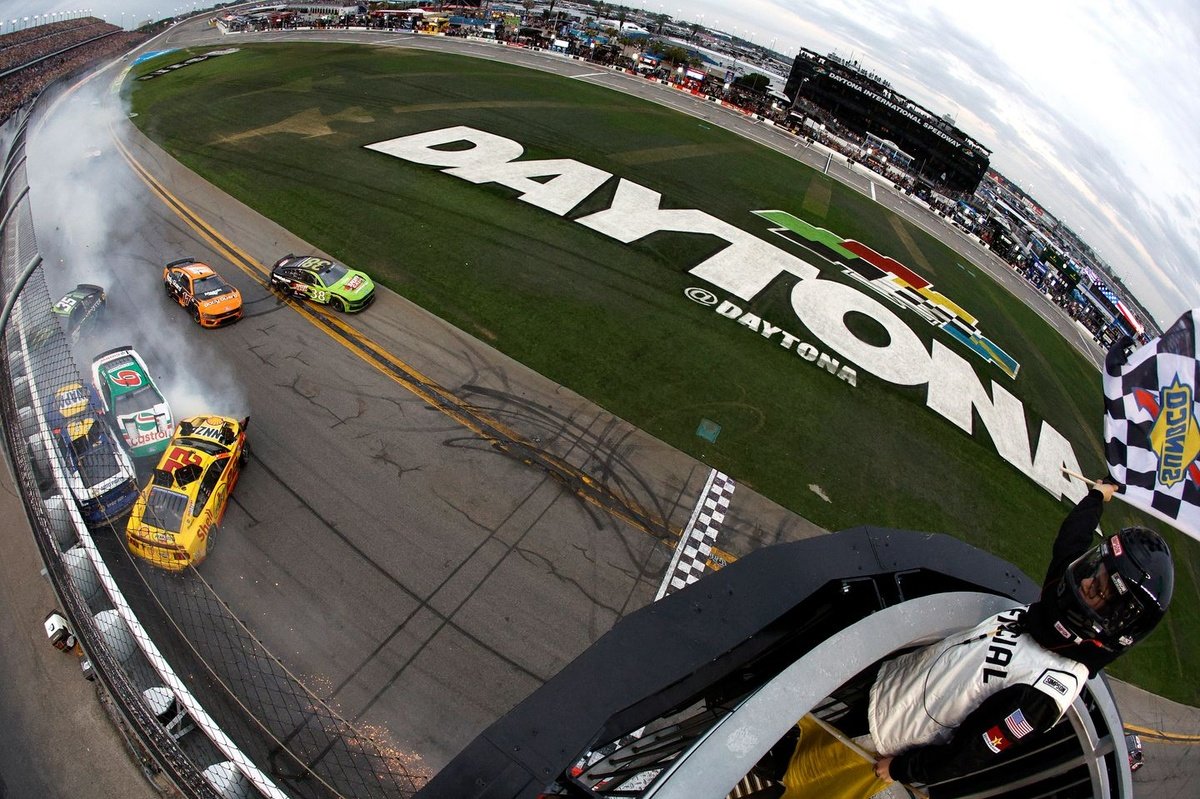
It appeared over the weekend that NASCAR implemented a new policy that made an extra effort to not reasonably throw a caution on the final lap of a superspeedway race.
It appeared that way because NASCAR evenly applied that stance in both the Truck and Cup race across two different race directors. But also, throughout the weekend, solo car spins without any additional contact that unevenly drew cautions prior to this weekend did not.
Advertisement
There looked like a concerted effort to be more cautious with the caution.
Cup Series managing director Brad Moran was on SiriusXM NASCAR Radio on Wednesday morning and said the Sanctioning Body was more fortunate that the incidents under this particular microscope didn’t result in a yellow flag, circumstantially.
Watch: Race Rewind: Chaotic final laps lead to epic finish in Daytona 500
“The race directors did a great, great job this weekend,” Moran said. “Chase Brashears called the Truck and the O’Reilly Race and Tim Bermann called the Cup Race. The Cup race was a little more challenging but we have a lot of resources. We have turn spotters, cameras and replay, a lot of folks in the tower. We have remote race control.
Advertisement
“We have all these resources that communicate to us, and we felt there was nothing that we had to immediately go out … we were still monitoring the situation in (Turn 1) and we were able to let that one play out to the start-finish line.
“Obviously, the caution came out when the leaders got together right at start-finish line. They crossed over it under green and then the caution flew. That’s all within a split second. So we definitely held it as long as we could but we would try to do that last year, the year before and nothing changed. It just laid out that we could do it at this particular race.”
On NASCAR’s Hauler Talk podcast, league managing director of communications Mike Forde says they were bailed out by Daytona’s significant run-off area and that this may not play out the same on the last lap this weekend at Atlanta.
Advertisement
“We may see a hit that looks hard, a nose-into-the-wall collision that bent the front clip, and we need to get safety trucks out there as soon as possible,” Forde said. “We did not see that in Daytona.
“Or that same type of wreck could happen, but the runoff area in Atlanta is nonexistent. There is a ton of runoff area in Daytona. And so because of that, they were able to get out of harm’s way. In Atlanta, that probably won’t be the case, so there may be a flag. We are going to do our best to maintain consistency. That is the ultimate goal, but every wreck is a snowflake. No two wrecks are the same, and because we’re at a different track, it changes the game.”
The only recent change, says Forde, is that NASCAR will be more diligent about throwing a caution if drivers would need to traverse at speed through a debris field, which came up after the Daytona 500 last year.
Advertisement
“That was kind of a line in the sand of moving forward, this is the philosophy,” Forde said.
And those evolving decisions are based on communication with the Driver Advisory Council through consultant Jeff Burton.
“They’re making sure that the drivers feel that what we did (at Daytona) was correct,” Forde said. “And if they have any feedback, we’ll absolutely take it. … We want to make sure that the drivers feel comfortable, and that’s why we changed on the debris field philosophy. That was direct driver feedback from the likes of Denny Hamlin, Christopher Bell and others who said, ‘Don’t put us in a situation where we’ve just got to go 100 percent throttle and hope for the best.’ You can’t have that.”
Advertisement
Denny Hamlin endorsed the approach this weekend as long as there is continued consistency.
“Well, I think everyone is okay with whatever it is, as long as it’s consistent,” Hamlin said. “Somebody said, as long as it’s the same for all races, and this weekend, they were very consistent. So I don’t think anyone should have any gripes about that.
“We saw they set the tone really on Friday, and so they let those guys race it out.
“I was on the other end of the track. I can tell you that I didn’t think I was in any danger or the cars — the ones that did wreck in Turn 1, they ended up all in the apron of the grass so they were off the racing surface. There might have been one kind of running the apron or limping home, but there was no more traffic to go through there.
Advertisement
“It seems like how they’re calling this now is that if you have to drive back through it, if there’s multiple cars that’s got to drive through it and somebody is on the racetrack, they’re going to call the caution. But it seemed like to me when I drove through there 30 seconds later, nobody on the racetrack had any — was in any danger. I was fine with it.”
Read Also:

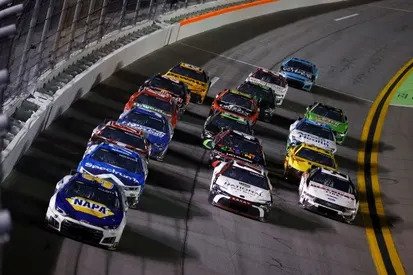
Denny Hamlin has a Daytona 500 fuel saving pitch that involves The Clash
Advertisement
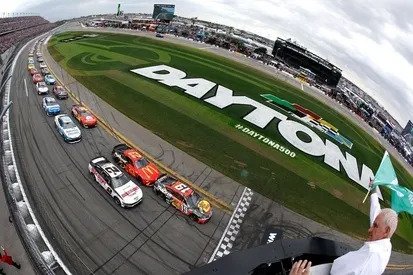
NASCAR on superspeedway fuel saving: ‘What are we trying to fix?’
NASCAR also continues to listen to fans and consider what changes could be made after another Daytona 500 featured large portions of the race asking drivers to ride in a pack at 50-60 percent throttle.
They do this to spend less time taking fuel on pit road so they can try to pick up track position that way with passing so challenging in the pack.
Moran says they’re not oblivious to fan sentiment.
Advertisement
“Yeah sure,” Moran said on Sirius. “We have a lot of fan councils and we listen. We listen to the fans and the industry. But, I don’t know when the last time you went 165 or whatever miles per hour, three-wide down the highway and it’s quite entertaining when they’re doing it.
“But we understand what folks are saying. It’s not an easy fix but we’ve had meeting with industry members and crew chiefs have told us this is a tool in their tool box that they’ve learned over the years. This group is best at taking advantage of any situation and that’s how they win races.
“Telling them to stop that isn’t really going to work. It is on our radar and we’re certainly looking into it. But there isn’t really one thing that we can flip the switch and change it. This is being discussed within the industry.”
Advertisement
Forde echoed that sentiment on his podcast too.
“Getting rid of that entirely is probably not going to happen, but that doesn’t mean that we’re not going to try and work at it,” Forde said. “It’s something on the docket. Fans wanted change in the playoffs, we did that. Fans wanted more horsepower, we did that. Fans wanted to change the (Charlotte) Roval to the oval, we did that. So this is also on the list of fan feedback, so we’ll see. TBD and no real answers yet, but it’s something that’s on the list.”
Read Also:
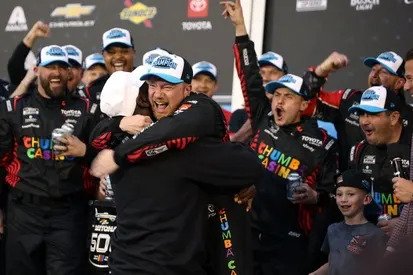
All the reasons why the Daytona 500 meant so much to Tyler Reddick
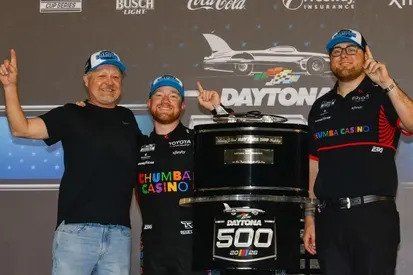
Daytona 500 win special for Tyler Reddick spotter Nick Payne
To read more Motorsport.com articles visit our website.
Read the full article here