

When pitchers and catchers began reporting to Florida and Arizona this week, it marked the official start of spring training and the unofficial end of the MLB offseason. That means that even though a few free agents remain unsigned, it’s time to grade the offseasons of every team in baseball, looking at which players they lost, which players they added and whether they got better heading into Opening Day 2026.
Let’s get to it.
Advertisement
Jump to a team by clicking on the links below:
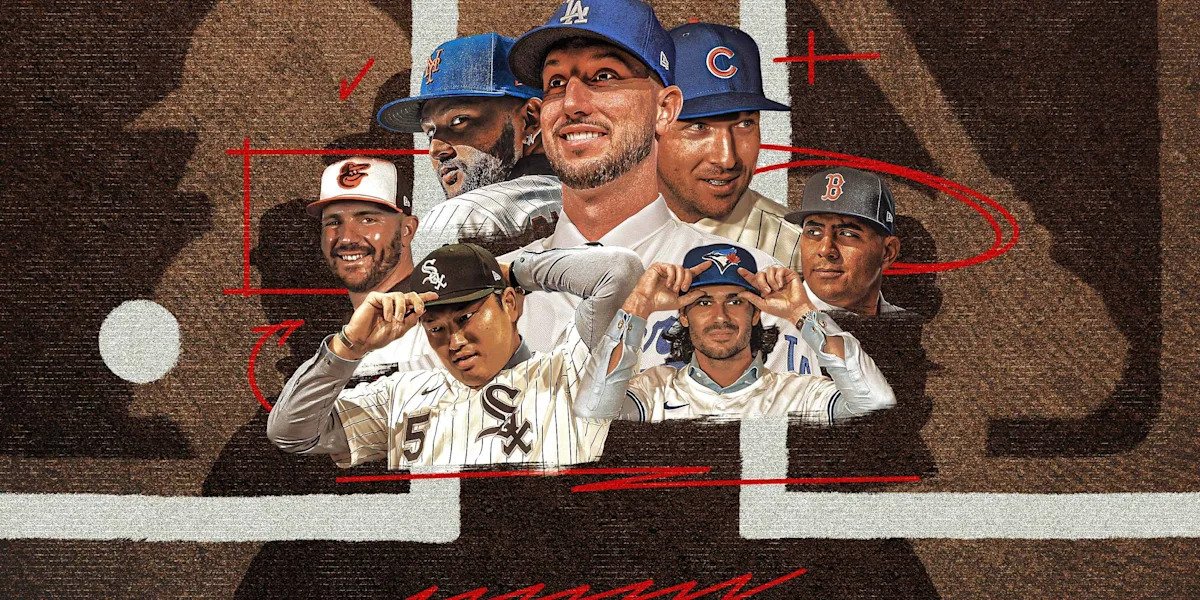
Bo Bichette’s three-year, $126 million deal with the Mets represents the flashiest addition to the NL East in 2026.
(Grant Thomas/Yahoo Sports)
Philadelphia Phillies: C
Philadelphia’s offseason will likely be remembered, fairly or not, by the move it failed to make. Bo Bichette and the Phils were at the 1-yard line on a long-term deal when the Mets, jilted by Kyle Tucker, swooped in from the treetops to poach the free-agent infielder. Rarely does a baseball executive publicly express frustration over a missed target the way president of baseball operations Dave Dombrowski did after losing out on Bichette, referring to the result as a “gut punch.”
The Phillies didn’t enter the winter expecting to pursue Bichette, but when a contract standoff emerged with catcher J.T. Realmuto, the club saw an opportunity. So when all things Bichette fell to pieces, Dombrowski and Co. simply reverted to their original plan and paid Realmuto what he wanted. It was a sequence that concluded a reasonable and rational, if overly safe, offseason.
Advertisement
That’s by no means a knock on Schwarber, whose return to Philadelphia should have hoagie-mouthers climbing light poles. Reuniting with the stout slugger was priority No. 1, 2 and 3 for the club at winter’s outset. To get it done, the Phillies paid a hefty price — five years and $150 million is a sturdy sum for a 33-year-old DH — but Schwarber was simply too important to the entire operation, both between the lines and in the clubhouse.
Dombrowski’s decision to let Suárez waltz up to Boston was curious. The pudgy southpaw was a rotation stalwart the past few seasons and left a void on the staff that the Phillies have yet to fill externally. That route puts a world of pressure on (1) injured ace Zack Wheeler to return swiftly and effectively, (2) yet-to-debut top prospect Andrew Painter, who struggled in Triple-A last season and (3) back-end hurler Taijuan Walker. For all its offensive star power, this era of Phillies baseball has been made possible by impact starting pitching. Will the team have enough of it in 2026?
With all due respect to García ($10 million is a lot for a bounce-back candidate) and Brad Keller (his arrival and Strahm’s departure effectively cancel each other out), the Phillies have clearly opted to stay the course. Handing top prospect Justin Crawford the every-day center-field job and jettisoning Nick Castellanos to Narnia qualify as something of a new path, for sure, but the 2026 Phillies are primed to look a lot like the 2022-25 Phillies.
Advertisement
New York Mets: B+
*Exhale*
We could sit here and debate the merits of the Mets’ offseason until the sun explodes and our memories become memories. Undeniably, it was a dramatic, bold course of action by POBO David Stearns, who ripped up the club’s core in the wake of a historically calamitous 2025. Four cornerstones — Alonso, Díaz, McNeil, Nimmo — left via free agency or trade. While manager Carlos Mendoza survived the purge, most of his coaching staff was overhauled.
But this is certainly not a rebuild, nor should it have been with Juan Soto and Francisco Lindor purring at their peaks. Instead, Stearns assembled a golden stopgap, a short-term solution that makes the Mets better in 2026 without sacrificing the future. Few of the players added this winter are under contract for the long haul. Most are on one- or two-year deals. Bichette, the flashiest new name, can opt-out next winter if he has a strong 2026. Peralta, the team’s new ace, will hit free agency after the season. It’s a strategy that allows New York to leave a handful of opportunities open for the slew of talented prospects funneling up from the farm.
Advertisement
Stearns was honest from the jump about wanting to improve his team’s run-prevention unit. Peralta will help that cause, as will Semien’s and Robert’s defensive chops in the middle of the diamond. Teaching Polanco and Bichette to play new positions won’t be a breeze, but both former shortstops are more than capable.
Díaz, who signed with those plucky Los Angeles Dodgers, was probably the one that got away, the only regret of an otherwise prudent offseason. The Mets should have matched what L.A. paid (3 years, $69 million). Díaz wasn’t blocking anybody else from pitching in the ninth, he’s still an elite closer, and his return would’ve been a reasonable bit of fan service.
And besides, money to Steve Cohen is just a concept. But at least this Mets team should make the playoffs, right?
Advertisement
Miami Marlins: C-
The 2025 Marlins were much, much better than expected. But instead of amplifying that momentum with a flurry of offseason moves, the Fish spent this winter treading winter. Miami’s projected $69 million payroll is an utter embarrassment, the lowest in baseball. Of the $15 million the Marlins committed this winter, $13 million belongs to Pete Fairbanks, who will be dealt at the deadline if the Marlins are out of it. Of course, not every club needs to or can spend $60 million per year on Kyle Tucker, but Miami’s passivity in free agency was nonetheless disappointing.
Trading away Cabrera and Weathers was rational, considering the organization’s surplus of highly regarded arms in the upper minors. But the returns on both were somewhat underwhelming. Caissie, the best player acquired this winter, is a boom-or-bust type with big whiff issues. Nobody else who was added this winter seems primed to help the club in the short term.
Somewhere, a timeline exists in which the Marlins acted aggressively this offseason to reinforce a compelling core of young pieces and enter 2026 as a cheeky wild-card pick. Unfortunately for the hardball lovers of South Florida, that’s not the reality we’re living in.
Advertisement
Atlanta Braves: B-
Solid, if unspectacular. Reassuring, if uninspiring. Generally speaking, this was a good winter for the Atlanta Braves — that is, except for the $20 million Korean ice tumble.
None of Atlanta’s moves was a franchise-altering wowzer, but considered together, they represent a doubling down on the club’s current core. The Braves crashed and burned in 2025, in part because their stars underperformed and in part because the supporting cast didn’t rise to the occasion. So instead of shaking things up, POBO Alex Anthopoulos sought to enhance Atlanta’s secondary pieces.
Yastrzemski and Dubón will become valuable bench bats and occasional starters, the type of depth a competitive team like the Braves should have. Kim would’ve represented a nice upgrade at shortstop had the perils of winter not consumed him. Letting longtime DH Marcell Ozuna walk in free agency — Ozuna is still out there, but a reunion seems unlikely — will allow for greater roster flexibility. And unlike many MLB execs, Anthopoulos has always been willing to spend on relievers. Keeping Iglesias and snatching Suárez should help a bullpen that was bottom-10 in ERA last season, though committing to three years with the 34-year-old Suárez is definitely a gamble.
Advertisement
In the end, none of these supplementary transactions will matter one iota if Atlanta’s franchise players don’t stay healthy and produce. The Braves will live and die on the exploits of Ronald Acuña Jr., Austin Riley, Ozzie Albies, Spencer Strider, Chris Sale and Spencer Schwellenbach. Anthopoulos’ winter was a bet on that core bouncing back.
Washington Nationals: B+
A new day has dawned in the district.
After 16 seasons with GM Mike Rizzo — the last few an aimless slog — the Nationals finally changed course and cleared house. In is former Red Sox exec Paul Toboni as president of baseball operations, whose hiring is more significant than any single transaction this club has made since the Juan Soto trade. Toboni, just 35 years old, spent most of the winter infusing the club’s baseball operations department with some much-needed youth.
Advertisement
In the span of a few months, Toboni brought in 33-year-old Blake Butera as manager, 30-year-old Simon Mathews as pitching coach, 32-year-old Anirudh Kilambi as GM and 31-year-old Devin Pearson and 34-year-old Justin Horowitz as assistant GMs. It’s a bold direction, a fresh start and a fascinating science experiment about the limits of modern baseball thinking.
It’s also a sign that the Nationals don’t expect to compete for a World Series title in 2026, and their moves this winter told the same story. Dealing Gore, a flawed but effective pitcher two years from free agency, for a quintet of prospects does not scream “win-now.” And that was to be expected. Toboni inherited an operation well behind the times. Modernizing the club’s processes, principles and priorities is the right place to start, frustrating as it might be for Nats fans.
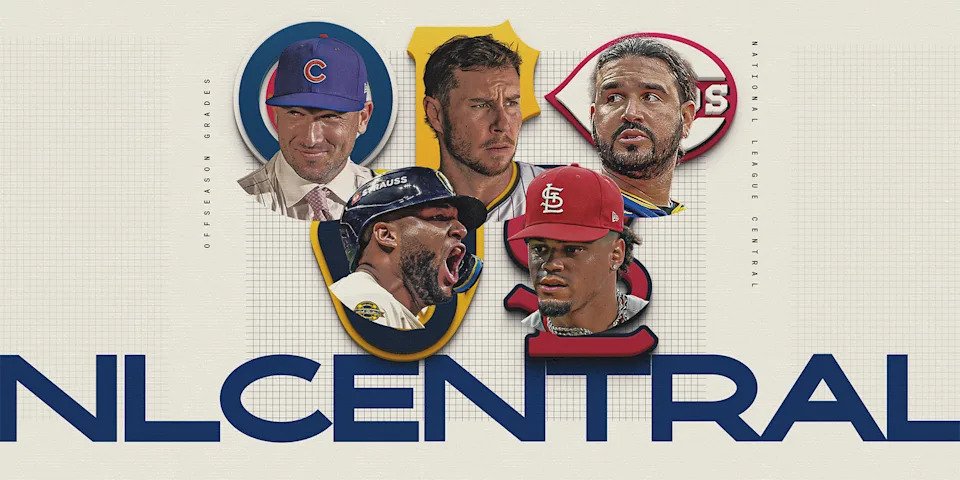
With Alex Bregman now leading the offense, the Cubs earned the best offseason grade in the NL Central.
(Grant Thomas/Yahoo Sports)
Milwaukee Brewers: C+
Doubting Milwaukee’s operation might be naive at this point. But for a franchise that’s still looking to break through for its first World Series appearance in decades, it is simply disappointing to see the roster in an objectively lesser state than it was when last season concluded.
Advertisement
That’s not to say the three fascinating swaps won’t yield any positive returns. Zerpa, Sproat, Harrison and even Drohan could all impact the major-league club in some form in 2026, and the Brewers often do well to get the most out of pitchers arriving from other orgs. It’s also reasonable to suggest the Brewers might have sold high on Collins and Durbin after their surprising contributions as rookies. But it’s also fair to say that no matter what president of baseball operations Matt Arnold says, third base is an enormous question in the short term, and replacing a legit ace in Peralta is no small task.
Regardless of Milwaukee’s strategy on the trade market, its complete disregard for free agency is discouraging. Excluding the retention of Woodruff via the qualifying offer, the Brewers have handed out zero guaranteed major-league deals this winter, and they are the only team with that designation (Baddoo received a split deal that does not guarantee him a 26-man roster spot). Splurging in free agency doesn’t always equate to getting better, but Milwaukee’s complete lack of spending stands out this winter, particularly when several other small-market teams spent real dollars.
Tagging Milwaukee with a less-than-stellar hot stove grade doesn’t mean I’m dooming them to a regular season of assured failure, nor will I rule out the possibility of another move or two to round out the roster before Opening Day. The Brewers are still quite good on paper, and there’s reason for optimism on both sides of the ball. But if we’re strictly grading offseason moves, it has been an underwhelming and perplexing winter for the Brew Crew.
Chicago Cubs: A-
In signing Alex Bregman to a heavily deferred, five-year, $175 million deal, the Cubs finally flexed the financial might typically associated with a big-market club of their ilk. It’s the kind of addition that carries more weight than just the projected WAR the player brings, as Bregman’s unrivaled baseball IQ and leadership qualities can positively impact the entire roster. Plus, the Cubs finally landing Bregman after a failed pursuit a year ago is a massive organizational victory — and a crucial one in the wake of Kyle Tucker’s departure.
Advertisement
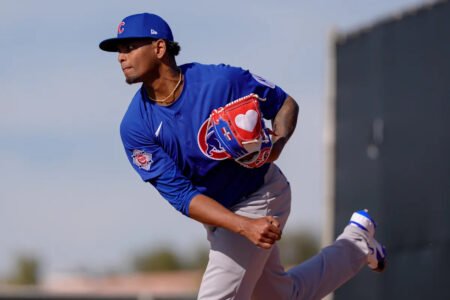
Chicago’s moves on the mound this winter were less straightforward. The offseason started with Chicago retaining left-hander Shota Imanaga via the qualifying offer after declining the three years and $57.75 million remaining on his previous deal, ensuring some short-term rotation stability albeit for a hefty 2026 salary. Rather than spend further in free agency on another starter, the Cubs spent prospect capital to acquire right-hander Edward Cabrera from the Marlins.
Cabrera arrives with an array of promising pros (three years of team control, huge stuff) and troubling cons (lengthy injury history, limited track record of throwing strikes), and the cost to acquire him notably included outfielder Owen Caissie, who appeared to be in line to replace Tucker in right field as soon as this year. That — in tandem with Bregman taking over third base – has led to a lack of clarity regarding the positional plans for sophomore infielder Matt Shaw and Seiya Suzuki, whom the Cubs seemed to prefer in a DH role last year rather than as an every-day outfielder.
However the position player group shakes out — Austin is another intriguing addition after a prolific half-decade in Japan — manager Craig Counsell should be able to roll out one of the best lineups in baseball. The question is whether adding Cabrera and redesigning the bullpen with a new crop of solid if unspectacular veterans is enough of an upgrade on the mound to vault Chicago into a higher tier of contention in the National League.
Advertisement
Cincinnati Reds: B
The Reds gradually improved their lineup, defense and bullpen over the course of the offseason — no small feat for a team coming off a postseason berth, but also a reminder that Cincinnati’s roster was notably worse than the rest of last year’s playoff field. After unsurprisingly coming up short in its long-shot, free-agent pursuit of local native Kyle Schwarber, Cincinnati pivoted to a collection of smaller transactions to improve its roster in the aggregate, rather than making one humongous splash.
Adding power was paramount for a club that finished 21st in home runs last season — a particularly paltry output when playing half their games at MLB’s second-most homer-friendly ballpark. Credit to Cincinnati for pouncing when the market didn’t materialize for old friend Eugenio Suarez, who rejoins the Reds coming off a 49-homer season, strengthening a lineup that sorely needed more over-the-fence pop. Concerns about Suarez’s defense will be less relevant for the Reds with Ke’Bryan Hayes entrenched at third base; Suarez can focus on mashing, primarily at DH with the occasional infield cameo.
Hayes’ acquisition at last year’s deadline is still a bit of a head-scratcher. His contract (guaranteed $30 million over next four seasons) in tandem with his meek offensive output (63 wRC+ the past two seasons) could be cumbersome for a team on a limited budget, but at the very least, he provides elite defense at the hot corner. New outfielder Dane Myers also brings a plus glove with a weak bat, though his defensive impact will be felt less frequently in a part-time role. Exactly how much playing time Myers and fellow new outfielder JJ Bleday will get remains to be seen, but each should help if deployed selectively.
Advertisement
On the mound, Cincinnati had a ton of innings depart in free agency (Martinez, Littell, Suter, Barlow) and decided to focus its rebuilding of the pitching staff on bolstering the bullpen. That began with retaining Pagan as the closer, and adding Johnson, Burke and Ferguson provided manager Terry Francona with a trio of veteran options to call on late in games. Trading Brady Singer, scheduled to make $12.75 million in his final season before free agency, was rumored as a possibility to ease payroll, but the Reds opted to hold on to the right-hander (their 2025 innings leader), ensuring some stability in a rotation that will be counting on several young arms to step up.
On the whole, the Reds achieved modest upgrades across the roster, even if some major questions remain about how the position-player group will fit together. Solid work.
St. Louis Cardinals: B
The rebuild is on. New president of baseball operations Chaim Bloom did not take any half-measures in his efforts to dramatically turn the page on an era of Cardinals baseball that flamed out into unsustainable mediocrity. The quality of the returns netted in St. Louis’ four major trades ranged wildly in terms of the players and contracts involved, but St. Louis broadly accomplished its goal of flipping its accomplished (and expensive) veterans for future assets.
Advertisement
Considering how far behind the Cardinals have fallen on the mound in recent years, it’s no surprise the four deals focused on adding arms; seven of the nine acquired players are pitchers. The two picks acquired in the Donovan deal should also enhance St. Louis’ ability to reel in a major haul in this summer’s draft, which should add further to a farm system that rates as one of the strongest in baseball.
Grading offseasons for rebuilding clubs is a tricky task, and it feels fair to judge them based on only how well they achieved their organizational goals; evaluating a team in the Cardinals’ position based on how much they improved their major-league roster doesn’t make much sense. As such, this grade is awarded to St. Louis based on its successful unloading of its most glaring trade candidates in exchange for an intriguing assortment of upside and depth. Rather than slow-playing the painful part of the rebuilding process, executing all of these deals in one winter makes the organizational direction clear. Competing in 2026 might be off the table for the Cards, but there’s enough exciting, young talent in the upper levels that a leap back into relevance in 2027 is not out of the question.
Pittsburgh Pirates: B-
The Pirates unquestionably got better, dealing from their wealth of pitching depth to upgrade the lineup while pushing their payroll above $100 million via multiple free-agent additions. Pittsburgh finished 30th in home runs by a mile last year — its 117 homers were the second-lowest team total of the past decade (excluding 2020) — and responded by adding a trio of former All-Stars with track records of power production: second-base slugger Brandon Lowe, the late-blooming Ryan O’Hearn and veteran designated hitter Marcell Ozuna. Add an outfield prospect with real pop in Jhostynxon Garcia and a switch-hitting speedster in Jake Mangum, and it’s not hard to envision this group of new personnel driving a meaningful step forward offensively. And while the Pirates subtracted from their rotation depth via trade, they added two of the hardest-throwing lefty relievers on the planet in Soto and Montgomery to enhance the bullpen’s ultimate potential.
Advertisement
The “minus” component of Pittsburgh’s offseason grade is rooted in concerns about how all the new pieces fit together, particularly defensively. Lowe’s glove rated as the worst among every-day second basemen last season. O’Hearn is solid at first base, but incumbent Spencer Horwitz is a better fit there, and the addition of Ozuna — who hasn’t played in the outfield since 2023, when he did it just twice — removes the DH spot as a regular option for him. That would seem to push O’Hearn to a less-favorable role as a regular in the corner outfield, where he would join another poor defender in Bryan Reynolds and a wild card in Oneil Cruz, who became a full-time center fielder just last year. The current depth chart also features Nick Gonzales as the starting shortstop, despite the bulk of his reps as a pro coming at second; presumably he’s a placeholder until top prospect Konnor Griffin is ready.
If all the new guys rake in support of what should be a terrific pitching staff led by Paul Skenes, perhaps the defensive deficiencies go unnoticed. But a lot is riding on the new bats to produce in a big way, particularly in the pitcher-friendly confines of PNC Park. And if this ill-fitting collection of hitters is how the Pirates want to unceremoniously move on from Andrew McCutchen — perhaps another reunion is in store, but it’s tough to see after the Ozuna addition — that’s fine, but it better work.
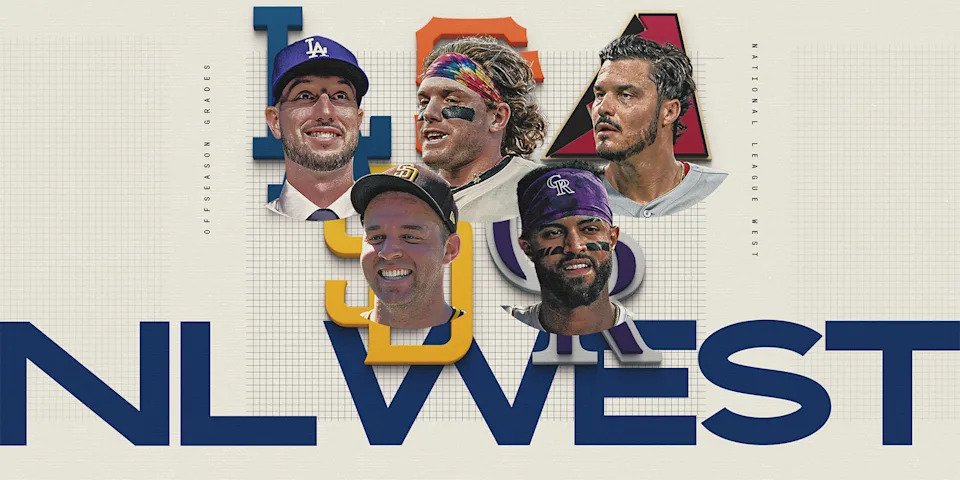
Will the Dodgers three-peat in 2026? Will the Rockies rebound from being the worst team in the sport?
(Grant Thomas/Yahoo Sports)
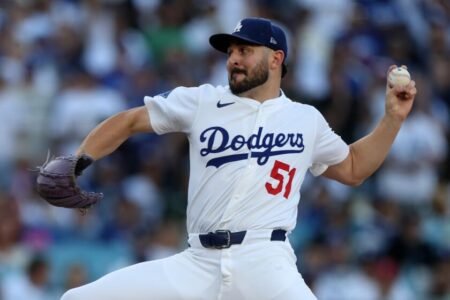
Los Angeles Dodgers: A+
After the Dodgers became the first team in a quarter-century to win back-to-back World Series titles, the baseball world waited to see what Los Angeles had in store this offseason. Like any team, the Dodgers came into the winter with some roster holes. But with an already loaded lineup, stacked rotation and overwhelming payroll, the idea of more significant additions seemed far-fetched. No matter. Early in the winter, the Dodgers shocked the industry by landing arguably the best closer in baseball, Edwin Díaz, on a three-year, $69 million deal. Díaz gives L.A. something it hasn’t had even in its recent run of dominance: a shutdown closer.
Advertisement
It would have been an A+ offseason for the reigning World Series champions if they only landed the three-time All-Star closer and brought back the majority of their championship roster. But as the Dodgers are known to do, they went above and beyond. After waiting in the shadows, they pounced and signed the offseason’s top free agent, Kyle Tucker … drawing the ire of rival baseball fans and executives everywhere.
The Dodgers have a superstar-studded roster and have made themselves as close to infallible as any team in recent history. They go into 2026 as the overwhelming favorites to win another title.
San Diego Padres: C
The Padres, like the Dodgers, have an extremely top-heavy roster when it comes to their talent. And with the combination of Manny Machado, Fernando Tatís Jr. and Jackson Merrill, San Diego has the foundational pieces in the lineup. That’s something many teams around baseball would covet.
Advertisement
But unlike with L.A., the money tied up in several of the Padres’ stars — combined with the uncertainty surrounding their ownership situation — has handcuffed the team from making other big moves via free agency. And as great as general manager A.J. Preller is at making trades, even he has had a tough time this winter finding creative ways to add to his roster.
Losing Dylan Cease to the Toronto Blue Jays was huge, as it increases San Diego’s need for starting pitching — which they didn’t address prior to the start of spring training. But the Padres were able to re-sign Michael King, who when healthy is one of the better pitchers in the National League. And they were able to add outfielder Miguel Andujar, giving them another solid bat behind Tatis, Machado and Merrill.
San Francisco Giants: C-
It has been an interesting offseason in the Bay, as the Giants have tried to find their way out of the doldrums of mediocrity (321-327 the past four seasons). Given that this is one of the teams in baseball with the resources to make a huge splash, there was reason to believe president of baseball operations Buster Posey would make the most of this offseason. But that’s not exactly what happened.
Advertisement
The two biggest moves of the Giants’ offseason have come in the past few weeks. The team brought in Harrison Bader to play center fielder, allowing Jung-Hoo Lee to shift to right. The Giants then signed Luis Arraez to a one-year deal to play second base, giving them a table-setter atop the lineup. They also signed right-handers Tyler Mahle and Adrian Houser, who should provide quality innings and rotation depth.
In totality, none of these are bad moves, and all are likely to help the Giants be a better team in 2026 than they were in 2025. But in a division with as much high-end talent as the Dodgers and Padres have, you have to wonder if it’ll be enough.
Not to be forgotten, the Giants’ biggest acquisition of the winter might be first-year manager Tony Vitello, who is beginning his first season in professional baseball after serving as the head baseball coach at a highly successful Tennessee program from 2018 to 2025.
Advertisement
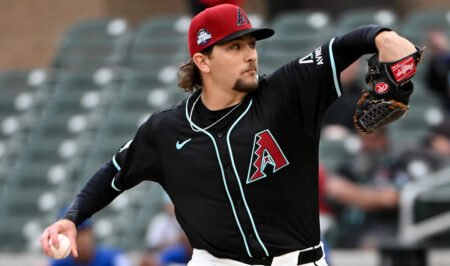
Arizona Diamondbacks: D+
For the Arizona Diamondbacks, this offseason can probably be characterized by what they didn’t do, as opposed to what they did do. For months this winter, rumors swirled about the possibility that the team would trade All-Star second baseman Ketel Marte. And while other teams called and made their pitches to GM Mike Hazen, in the end, Marte stayed put.
But with so much energy focused on Marte, the D-backs hardly made any significant improvements to the rest of their roster. The biggest splash was probably their trade to acquire eight-time All-Star third baseman Nolan Arenado, though given Arenado’s decline the past few seasons, it was largely a salary dump for the Cardinals. The D-backs’ other two major moves this winter were bringing back right-hander Merrill Kelly after trading him at last summer’s deadline and signing 39-year-old DH/1B Carlos Santana.
Arizona could still reunite with frontline starter Zac Gallen and will be getting former NL Cy Young Award winner Corbin Burnes back after the All-Star break, which will provide a significant boost to the rotation. But in the meantime, will the D-backs be able to score enough runs? That question is especially worrisome with outfielder Corbin Carroll requiring surgery for a broken hamate bone and projected to miss the start of the season.
Advertisement
Colorado Rockies: D
An “incomplete” might be a better grade to give the Rockies, considering they didn’t do much to improve their major-league roster or farm system. They did sign utility man Willi Castro to a one-year deal and just this week brought in Tomoyuki Sugano and José Quintana to be innings-eaters, but that’s about it. Not exactly needle-moving acquisitions, but … it’s something, right?
Perhaps the Rockies‘ biggest move of the offseason was bringing in longtime baseball (and football) executive Paul DePodesta to be the team‘s new president of baseball operations. That marks the organization’s first major front-office shakeup since the team’s inception in 1993, as Colorado finally brought in someone from outside the organization. That in and of itself is a huge win for the Rockies, but only time will tell if it works.
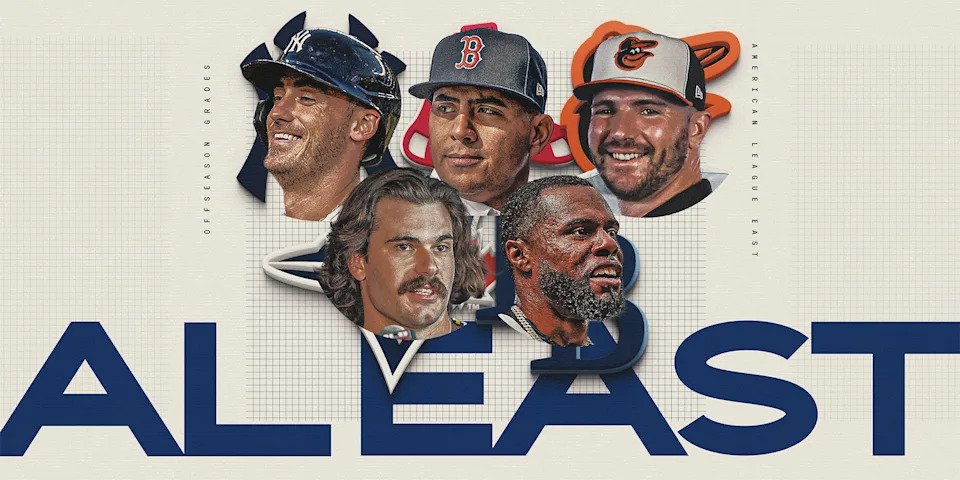
Can the Yankees and Blue Jays repeat as the American League’s top two teams? Can the Red Sox and Orioles bounce back into the mix?
(Grant Thomas/Yahoo Sports)
Toronto Blue Jays: B
Toronto kicked off the winter with a bang, jumping the market to sign Cease on the largest deal for a pitcher in franchise history. They followed that by inking Ponce and Rogers to bolster their pitching depth. It was a show of force, a sign of intent, a celebratory continuation of Toronto’s historic October run. Their hot pursuit of Kyle Tucker, the market’s consensus top player, only served to reinforce the franchise’s rise to behemoth status.
Advertisement
Ultimately, Tucker chose the Dodgers, leaving the Jays second-best once again. That development, alongside the departure of Bichette, makes this lineup definitively worse than the one that took the field for World Series Game 7. That’s not a slight toward Okamoto — he could well be an impact bat while providing Toronto the international stardom it’s been wanting for years — as much as a reminder of Bichette’s legacy up north.
The club’s complete disinterest in retaining the franchise icon, whose Game 7 homer was two outs away from immortality, was fascinating. Perhaps the singular focus on Tucker played a factor. Perhaps both parties were ready to move on. Either way, the Jays will enter 2026 with a worse lineup and an improved infield defense, with Okamoto at third, Ernie Clement at second and Andrés Giménez at short.
Had they landed Tucker, this would be an easy A, but Toronto failed to land a top-tier offensive partner for Vladimir Guerrero Jr.
New York Yankees: B
The epitome of running it back, New York’s offseason was the transactional equivalent of reheating leftovers. That’s not an egregious strategy, considering how good the 2025 Yankees were, but the sheer scale of the continuity here is striking. In all, the Yankees retained six (!!) free agents from last year’s club and made just one significant external addition.
Keeping Bellinger in pinstripes was downright massive. He’s a perfect fit for the current roster, with his stellar outfield defense a real asset in Yankee Stadium’s spacious left field. Bellinger’s bat isn’t what it once was, but he finished second in WAR among Yankees last year, behind only Aaron Judge, for a reason. He’s a valuable player, one who helps give the 2026 Yankees one of the best lineups in baseball.
Beyond that, it was a generally underwhelming winter in the Bronx. GM Brian Cashman is clearly comfortable banking on another strong year from his offense to go with a returning-from-injury Gerrit Cole and a full season of young flamethrower Cam Schlittler. But it’s hard to give a team with only one new face anything higher than a B. Besides, this bullpen still feels … under-addressed, with Williams and Weaver leaving via free agency.
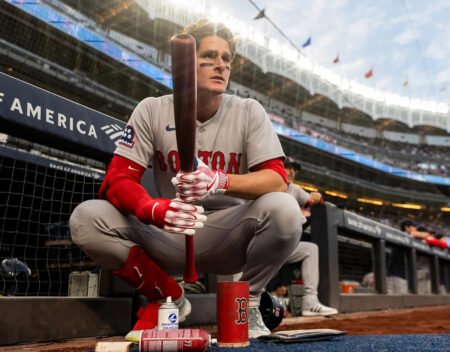
Boston Red Sox: B
The rotation is better, the lineup is worse, and we are tired. Boston’s winter was exhausting to follow. I can only imagine how chief baseball officer Craig Breslow feels.
Opting to let Alex Bregman walk after spending all of 2025 lauding his leadership qualities and offensive reliability was a questionable choice. The immediate pivot to Ranger Suárez was odd but should push this rotation from good to excellent. The same is true for the additions of Sonny Gray and Johan Oviedo.
But the Red Sox didn’t exit October prematurely last season because they couldn’t prevent runs. No, they fell to the Yankees in the wild-card round because the offense lacked a difference-maker. Roman Anthony, who was hurt for the playoffs, might end up blossoming into that character, but that’s quite a lot to put on the shoulders of a 21-year-old. Willson Contreras is a proven commodity, but he’s closer to good than great. This corner outfield kitchen still has too many cooks between Anthony, Jarren Duran and Wilyer Abreu. Acquiring Caleb Durbin was a cheeky way to upgrade the infield, but he’s unlikely to compete for MVP votes.
This winter also served to put a bow on last year’s Rafael Devers blockbuster, as two more pieces from that move, Jordan Hicks and Kyle Harrison, were traded away. Jose Bello, a 20-year-old with seven appearances in Low-A, is the only player left in Boston’s organization who was acquired in the Devers deal. It’s yet another reminder that the decision to trade the star was effectively a salary dump and little more. Some of the money saved will go into the pockets of Contreras, Gray, Suárez and others, but it’s difficult to look at this roster and not wonder how much better it would be with Devers in it.
Tampa Bay Rays: B-
Tampa Bay’s carousel to nowhere continues. This franchise, renowned for both its penny-pinching ways and its ability to uncover hidden value, appears to be taking a small step back entering 2026. Thankfully, the Rays went about it in a fun way, inserting themselves into three different three-way deals.
Quite a bit of talent left town among Baz, Montgomery and both Lowes, with mostly prospects arriving in return. Mullins, Martinez and Matz are all worthwhile additions — a sign that even though the Rays are doubtful to contend, the door is still open just in case.
In the main, this franchise is in something of a holding pattern until its stadium situation is resolved. That has been the case for some time now, though the new ownership group should help push the process forward. Until then, it’ll be more nibbling at the margins and hoping the farm system produces another star to pair with Junior Caminero.
Baltimore Orioles: A-
After years of frugality, the Orioles finally broke out the checkbook for a top-tier free agent, inking Alonso to a paradigm-shifting, five-year deal. He’ll provide the type of dependable offensive production Baltimore desperately lacked throughout its immensely disappointing 2025. More importantly, his signing was a signal of a new day in Charm City; new owner David Rubenstein is willing to spend at levels the previous leadership group was not.
The two biggest trades of Baltimore’s winter were also significant departures in strategy for president of baseball operations Mike Elias, who has helmed the club since the 2018-19 offseason. Dealing Rodriguez and his four years of control for an impending free agent in Ward was an uncharacteristically aggressive maneuver for the typically calculating Elias. The same is true of the Baz trade, in which Baltimore parted with a cornucopia of prospects to land a potential frontline arm.
This was not a perfect offseason for the O’s — the bullpen could have used another boost, the rotation didn’t get a true ace — but it was a massive step forward. There’s an argument that no team in baseball improved as much as the one in Baltimore.
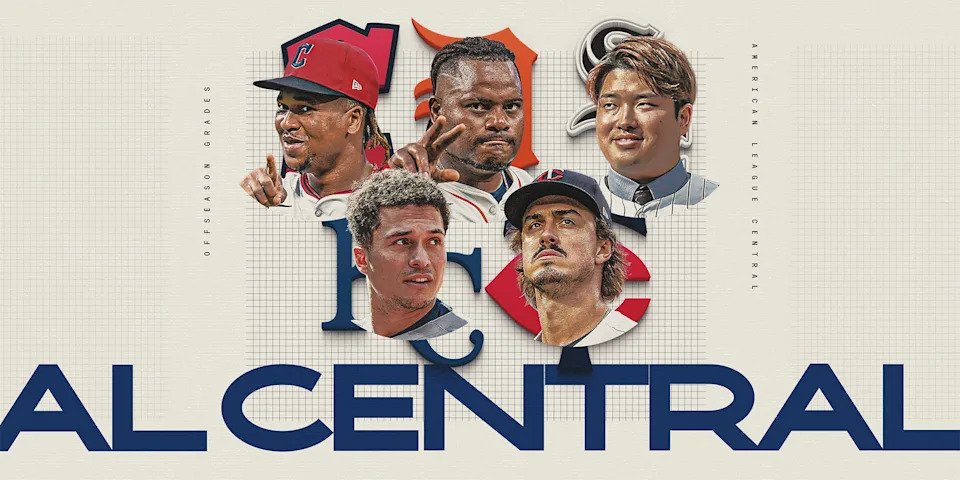
Can the Royals or White Sox surprise in the low-spending AL Central?
(Grant Thomas/Yahoo Sports)
Cleveland Guardians: D+
Division champs in three of the past four seasons and postseason participants in seven of the past 10 campaigns, the Guardians have proven to be one of the most reliably competitive teams in baseball. But the offseason is decidedly not when this franchise shines, and this winter was another glaring example of Cleveland’s unwillingness to raise its payroll beyond the absolute basement of the league — the Guardians’ current payroll ranks 29th ahead of only the Marlins — or be aggressive on the trade market in search of more cost-efficient upgrades.
While the club’s decision to extend the face of the franchise, José Ramírez, was a commendable effort to ensure their best player will be a Guardian for life, paying someone who was already under contract for three more seasons did not make the 2026 club any better. It’s a move that can and should be celebrated in the context of Ramírez’s commitment to the organization and the team’s investment in Ramírez in return. But it did little to advance the club’s stated goals of returning to the World Series and ending the longest active championship drought in MLB.
Cleveland’s list of external additions consists primarily of new bullpen pieces on one-year deals, with veteran righty Shawn Armstrong’s $5.5 million pact the most prominent of the bunch. Adding relief depth makes sense as the organization continues to ponder life without closer Emmanuel Clase, but none of the newcomers jumps off the page. As for meaningful upgrades to an offense that ranked 28th in wRC+ last season, there weren’t any, with respect to the minor-league deals with Stuart Fairchild and Carter Kieboom. Given an overflow of young position players either at or nearing the major-league level, the Guardians decided not to block any of them with more proven pieces and are instead banking on internal steps forward to fuel an improved offensive unit.
Of course, pessimism surrounding Cleveland’s offseason inactivity does not preclude optimism that the Guardians can once again be relevant characters in the AL Central race; counting them out prematurely would be foolish. But Ramírez will be an MVP candidate for only so long, and with limited reinforcements joining from the outside, there’s substantial pressure on the inexperienced in-house personnel to form a worthwhile supporting cast around Ramírez sooner rather than later.
Detroit Tigers: B-
For the first three months of the offseason, the Tigers were awfully quiet. A major bit of business was taken care of quickly when second baseman Gleyber Torres accepted the qualifying offer in November, and Detroit bolstered its pitching staff with some modest moves in early December, re-signing Kyle Finnegan, adding veteran closer Kenley Jansen and bringing in rotation candidate Drew Anderson after a stellar stint overseas.
All the while, it was clear that Detroit’s winter would revolve around super-ace Tarik Skubal, first with trade speculation and then with the potentially historic arbitration hearing to determine his salary in the final year of his contract. Detroit’s inactivity through the month of January suggested a preference to gain clarity on Skubal’s salary before making any other moves. Then, the night before it was announced that Skubal won the hearing to secure a $32 million salary for 2026, the Tigers reportedly agreed to a humongous, three-year, $115 million deal with free-agent lefty Framber Valdez, exploding from the shadows to give themselves one heck of a one-two punch atop the rotation. Less than a week later, a reunion with old friend and future Hall of Famer Justin Verlander strengthened the starting staff further.
Suddenly, the Tigers boast an outstanding rotation and a payroll well above $200 million, leaps and bounds above their AL Central peers. Both are undeniably encouraging for a franchise that hasn’t claimed a division title since 2014. But without any upgrades whatsoever to a lineup that was roughly average in the 2025 regular season and sputtered badly in October, it’s tough to give Detroit too favorable a grade for its winter activity. Like the rival Guardians, Detroit is counting on the hitters already on the roster — and the ultra-talented prospects on the way — to take the necessary steps forward to enable a more productive offense in 2026. Whether such a strategy will work remains to be seen, but completely neglecting the opportunity to add better bats this winter deserves a demerit on an otherwise solid grade.
Kansas City Royals: B-
Are you sensing an AL Central theme? Here’s another club with some contender-like qualities, but an offensive unit that severely lacks the depth to warrant a bullish forecast. The Royals’ outfield in particular has been problematically awful in recent seasons, even as Kansas City has returned to relevance in the AL. It’s no surprise then that the team made multiple moves this winter to try to address that shortcoming, signing bounce-back candidate Lane Thomas and acquiring unlikely rookie breakout Isaac Collins in a swap with Milwaukee.
Thomas is coming off a completely lost season due to injury but has a solid track record of offensive output. Conversely, Milwaukee’s trade of Collins could be interpreted as a sell-high maneuver, suggesting some regression could be in store for him as a sophomore. Perhaps Thomas and Collins can solidify the Royals’ outfield in supporting roles behind the stars at the top of the lineup, but there are questions with both.
Otherwise, the Royals didn’t do much. Extensions for breakout third baseman Maikel Garcia and franchise anchor Salvador Perez were both nice to see, but they don’t overshadow the complete lack of free-agent spending. Only the Nationals gave out less guaranteed money to major-league free agents this winter than Kansas City’s $6.15 million to Thomas and reliever Alex Lange. That’s disappointing considering the Royals’ recent willingness to occasionally splurge in the middle tier of free agency for guys such as Seth Lugo and Michael Wacha.
But the Royals did get better this winter. The outfield additions, plus a reliable lefty reliever in Strahm to backfill the loss of Zerpa, put this roster in position to compete in this mediocre division. It was an uninspiring but respectable winter for Kansas City.
Minnesota Twins: D
Yikes. Despite heavy rumors that the dramatic deadline teardown would continue this winter with the offloading of star veterans such as Joe Ryan, Pablo López or perhaps even Byron Buxton, Minnesota held on to all of its main pieces. That would be fine if the team had decided that July’s roster overhaul was a temporary measure and that this winter would be spent reinforcing the parts of the roster that were diminished with those trades. Instead, the Twins did next to nothing to backfill the depleted bullpen and failed to make other additions that would inspire confidence while payroll sank to troubling lows. To top it off, the club parted ways with longtime front office head Derek Falvey at the end of January, extremely unusual timing for a transition of power to take place in baseball operations.
The lack of cohesion or direction appears to be the result of what’s going on at the ownership level. The Pohlad family’s decision not to sell the franchise after initially announcing their intention to do so has led to a change in leadership structure involving Tom taking the reins from his younger brother, Joe. That turbulence at the top has left the roster and the fan base in a state of unease entering 2026, as there’s just enough talent in place to squint and see a competitive team but such an unstable infrastructure that it’s difficult to feel certain this team will be good enough to avoid another painful sell-off in July. There are some really good players on this roster, but few teams, if any, had a more concerning winter than the Twins.
Chicago White Sox: B+
We conclude this AL Central offseason wrap-up with some shockingly good vibes on the South Side. While the rest of the division largely lay dormant this winter, the White Sox were busy making a series of moves focused on building for the future but also raising the floor of the present-day club. By surrounding its promising position-player core with reliable veterans on both sides of the ball, Chicago has put itself in position to put a far more respectable product on the field in 2026 than the abysmal displays of the past two seasons.
Let’s be real, though: this winter was all about landing Munetaka Murakami. That his market collapsed to such a degree that the White Sox were involved is obviously a red flag, but the monumental upside remains for the 26-year-old slugger. His arrival will single-handedly bring to spring training a level of anticipation that few other camps will feature, and his transition to the majors will be one of the biggest stories of the season. He has enormous questions to answer at the plate, but credit to Chicago for jumping at the unexpected opportunity to add a rare talent capable of energizing a fan base, even with the concerns attached.
That said, let’s not celebrate this winter of wheeling and dealing too much. This team still projects to be one of the worst in baseball, and no team playing in Chicago should have a payroll that ranks 28th in the sport, no matter where the club is in its competitive window. Still, for the first time in a while, there are things to look forward to with this team, and this offseason featured a more cogent and intentional roster-building strategy. The squad on the South Side is noticeably more compelling because of it.
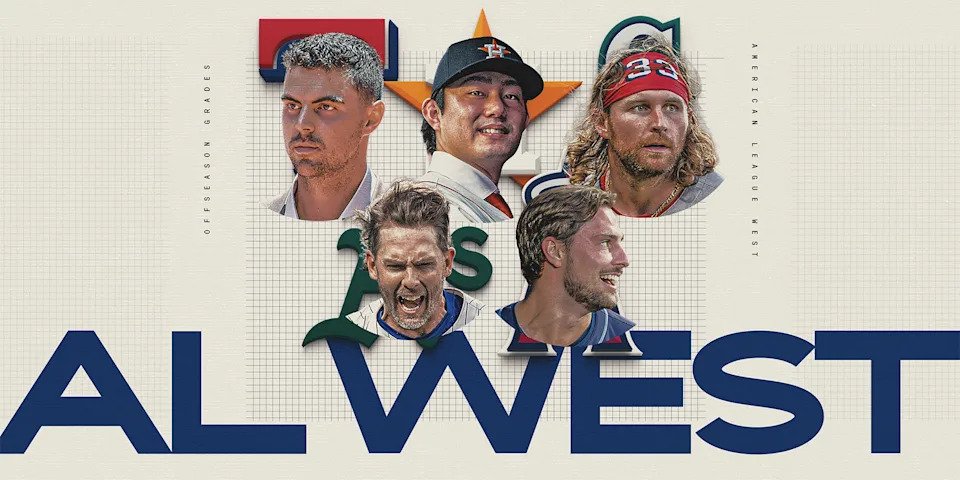
Will the Mariners repeat as AL West champions? Can the Astros or Rangers challenge them?
(Grant Thomas/Yahoo Sports)
Seattle Mariners: A-
After falling a few outs short of reaching the World Series for the first time in franchise history, the Mariners attacked the offseason with a refreshing sense of urgency. They acted swiftly to re-sign Naylor, agreeing to terms with the pugnacious slugger just two weeks after the World Series concluded. The 28-year-old isn’t a perfect player, and he provides less home run juice than you’d like from a first baseman, yet Naylor ranks seventh in fWAR at the position over the past two seasons.
Donovan was the other major bookend to Seattle’s productive winter. The utility man was a heavily rumored target for long stretches of the offseason because of how well he fit into the Mariners’ position-player mix. Donovan’s ability to play second and third should allow for two highly touted youngsters, Cole Young and Colt Emerson, to find playing time in Seattle. And despite all their success in 2025, the Mariners struck out a lot. Donovan’s high-contact approach should help on that front.
Seattle’s other moves were more supplementary. Ferrer is a flamethrowing lefty who should slot into the back of the pen. Refsnyder obliterates left-handed pitching and should form quite a formidable platoon at DH with righty-killer Dominic Canzone. Knizner will hold the cushiest job in baseball as Cal Raleigh’s backup. Perhaps the Mariners could’ve used another reliever, but that’s nitpicking. This was a pretty darn good offseason.
Houston Astros: D+
This position-player group still doesn’t make sense. Bringing Carlos Correa back at last year’s deadline made sense in the short term. That shocking reunion energized the fan base and gave Houston dependability at third base after All-Star Isaac Paredes hit the IL. But it also put too many cooks in the kitchen. With Yordan Alvarez at DH, Correa at third, Jeremy Peña at short, José Altuve at second and Christian Walker — last winter’s big free agent — at first, Paredes simply has nowhere to play.
Entering the season with Paredes as a bench bat makes little sense, particularly in the context of Houston’s underwhelming outfield group. Maybe a trade is still in the cards, but if it isn’t, well, this is a very weird dynamic and a questionable offseason for the Stros.
These pitching acquisitions are interesting, though. Imai entered the winter as a potential $100 million guy, and Houston landed him on a nice, short-term deal. They paid a pretty prospect penny for Burrows — people really like Melton — but he’s a reliable mid-rotation arm. But altogether, this was a bizarre offseason for an organization that should be doing everything in its power to keep its window of contention propped open.
Texas Rangers: B-
Since winning the World Series in 2023, Texas’ offense has slogged aimlessly through the void. That surely motivated president of baseball operations Chris Young to part ways with Semien, García and Heim, all of whom were integral in the franchise’s first title. A change in direction makes sense, but none of the incoming offensive pieces is particularly electrifying. Jansen is a professional, capable every-day catcher, and Nimmo is a defensively declining corner outfielder whose on-base skills took a step back last year. Whether the 2026 Rangers rake will likely depend on the health of Corey Seager, Josh Jung and Evan Carter.
The Gore trade reinforces what was, statistically, the best rotation in baseball a year ago. He’ll pair wonderfully with Jacob deGrom and Nathan Eovaldi to make one of the most imposing top threes in the sport. Evaluators across the game believe there’s still growth to be had for Gore, who suffered greatly under the Nationals’ formerly outdated pitching development structure.
Did this team get better? Maybe a bit. Did the Rangers push themselves into no-doubt contender status? Absolutely not.
Athletics: D
Everything about this franchise is in a weird state, with the abandoning of Oakland and all. But as the A’s ready themselves to move to Vegas in 2028, they’ve assembled quite an enviable assortment of talented young hitters. Unfortunately, the front office has done little to give the current roster anything resembling reinforcements to the pitching staff.
In some ways, that makes sense. Why spend money to make the current team better in front of 10,000 people in Sacramento when you could secure core pieces on extensions to sell out a big-league stadium in a few years? It’s ruthless but also shortsighted. Because contention windows rarely play out as expected.
This lineup, with Soderstrom, Wilson, Nick Kurtz, Shea Langeliers and Brent Rooker, has a chance to compete right now. This pitching staff does not. Had Athletics brass dished out just a little bit of dough for a few veteran starters, this team could’ve been a fun wild-card dark horse in 2026. Instead, they’ll probably be a weird historical footnote.
Los Angeles Angels: D
Hiring a manager for just one season, as the Angels did with Suzuki, is incredibly rare and makes little sense. For an organization as directionless as this, though, it’s par for the course. Anaheim’s attempt to leverage a personal services contract with former first baseman Albert Pujols to get him to be the manager for free failed brilliantly. That’s when leadership pivoted to Suzuki, who will get a short leash to lead this team back to contention.
Transactionally, none of these player additions moves the needle for the Angels, who have wallowed in mediocrity for more than a decade now. Rodriguez is the best of the bunch, exactly the type of high-upside, controllable arm the Angels should be targeting. But this is still a team with myriad holes and no real plan to fill them. The veteran bullpen reinforcements should help raise the floor, but this roster needs a lot of help that it did not get this winter.
Read the full article here