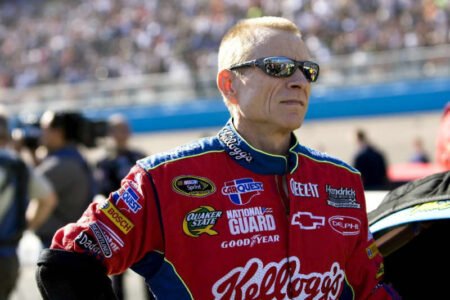




Mark Martin was the first driver Roush Racing had in 1988 when the team started racing in the Cup Series. Their early success made Roush prominent; however, as the years passed, the team began underperforming. More than the veterans, it was due to the newer drivers joining the force. Jack Roush was careful with his driver selection, but even the best of them lacked technological efficiency, and the team slowly slipped into decline. But among other things, Mark Martin recently highlighted the one major reason for this.
Mark Martin reflects on Jack Roush’s management
Although the team was excellent in the initial years, much had changed by the time Johnny Benson and Chad Little signed with the team in the mid-1990s.
Advertisement
They were excellent drivers, but Roush could not provide them with the technical upper hand that the likes of Mark Martin had. Lacking the resources, those drivers could not tune the cars in their favor.
“They [the newer drivers] couldn’t come in and say, ‘Put this, this, this, this in that car’ and then go drive it and then come in and say, ‘make this change to it.’ Nothing against them, they were all incredible drivers,” he added. “They needed someone who could really listen to them and make magic. We weren’t able to give those guys that.”
Andrew Weber – USA Today Sports
As a racing driver, it is extremely important to understand your car’s setup and to be able to explain it to others. Races can be won or lost based on how efficient a car’s setup is for a particular driver. Jack Roush had the best picks for his team. Drivers like Benson, Little, and even Ted Musgrave had proven to be strong and consistent before they moved to Roush Racing.
Advertisement
But unfortunately, they could not replicate what Jeff Burton and Matt Kenseth previously did. The veteran drivers seemed to be one with the car. They knew the issues they faced and exactly how they wanted to tune the cars. As Mark Martin recalled, Robbie Reiser along with Kenseth were familiar with every single aspect of the cars, and as mentioned, the right setup is a major key to winning in NASCAR.
“Jack let us determine our own fate. Robbie Reiser and Matt Kenseth, they were the architect of their cars. Jeff Burton, I’ve said over and over again, was an absolute master architect of his cars and team,” Martin said on the Mark Martin Archive podcast.
So Roush’s decline wasn’t due to a lack of driving talent, but in how the team supported its drivers technically. The newer drivers didn’t get that same level of influence or backing as the older folks.
Ultimately, with time, the drivers who once made a fortune for Jack Roush and his team couldn’t keep racing forever. Slowly, the team witnessed a complete revamp of its crew, and it only headed further into a slow erosion.
Advertisement
Analyzing Roush Racing’s downfall
At its peak, Roush Racing thrived on driver-centric engineering, as Mark Martin claimed. Jack Roush had some of the most technically sound drivers around him, which made the team a huge success in its early Cup Series years. Martin, in particular, remained in winning contention throughout his tenure with the team, consistently extracting performance through feedback and technical understanding. That approach led the team to great success at the time.
However, as NASCAR entered the 2000s, the racing landscape began to shift. Newer technologies emerged, but more importantly, the newer teams redefined how performance was achieved. They relied more on simulation tools and data integration rather than just the driver input.
But Roush Racing had been going through issues of its own for years at this point with the new drivers, who didn’t have a technical upper hand, as mentioned. The team’s methods slowly became outdated, and its on-track performance dipped with each passing season.
Advertisement
With the likes of Robbie Reiser departing, the team further lost personnel who were instrumental in the team’s early years. Without the same consistency in their leadership, Roush Racing reached a stage where even contending for a single race win became a challenge instead of an expectation.
Danny Hansen/Motorsport Images
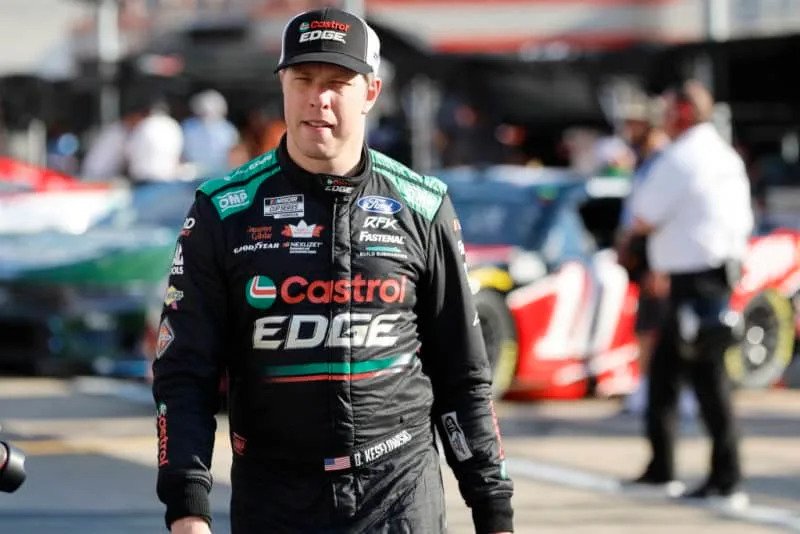
Despite the years of experience Roush had under its belt, the team never managed to emerge from the downfall. In 2022, the team welcomed Brad Keselowski in a co-owner/driver capacity, piloting the iconic #6, which was once driven by Mark Martin. This was understood to be a major step towards their revival.
His addition to the team meant better leadership with ample experience; however, it has been difficult for him so far. Although he has shown the team improved performance relative to where they were earlier, even Keselowski finds it hard to win races. His only victory in the last four years was at Darlington in 2024.
Advertisement
The team is in a difficult position currently, and it is quite apparent where their downfall began. If only their drivers in the 90s had a technical upper hand, Roush Racing would have been in a different position today.
The post Mark Martin Cites One Main Reason Behind Roush Racing’s Iconic NASCAR Failure appeared first on EssentiallySports.
Read the full article here