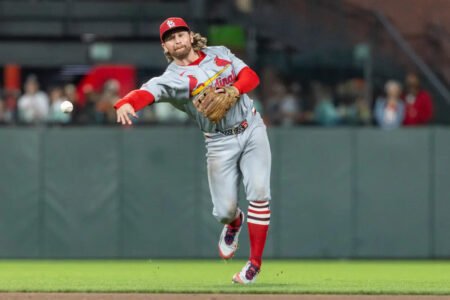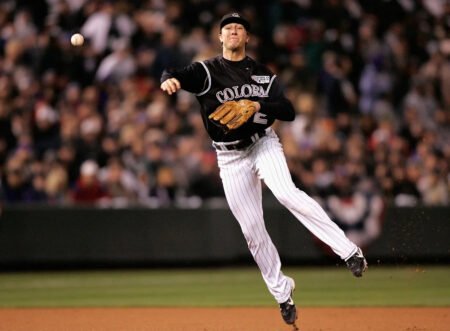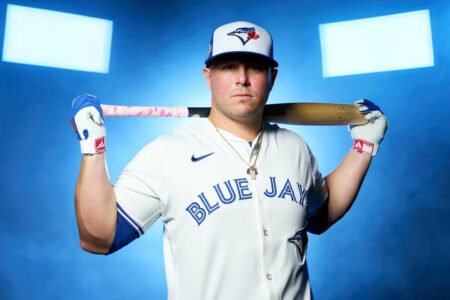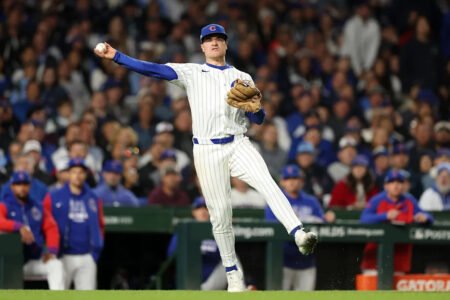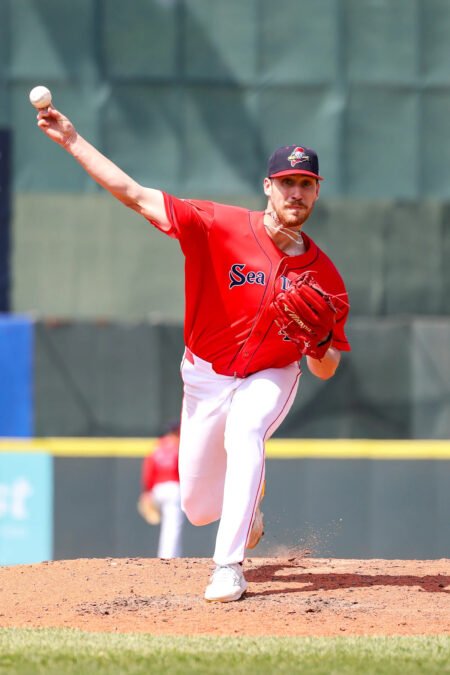



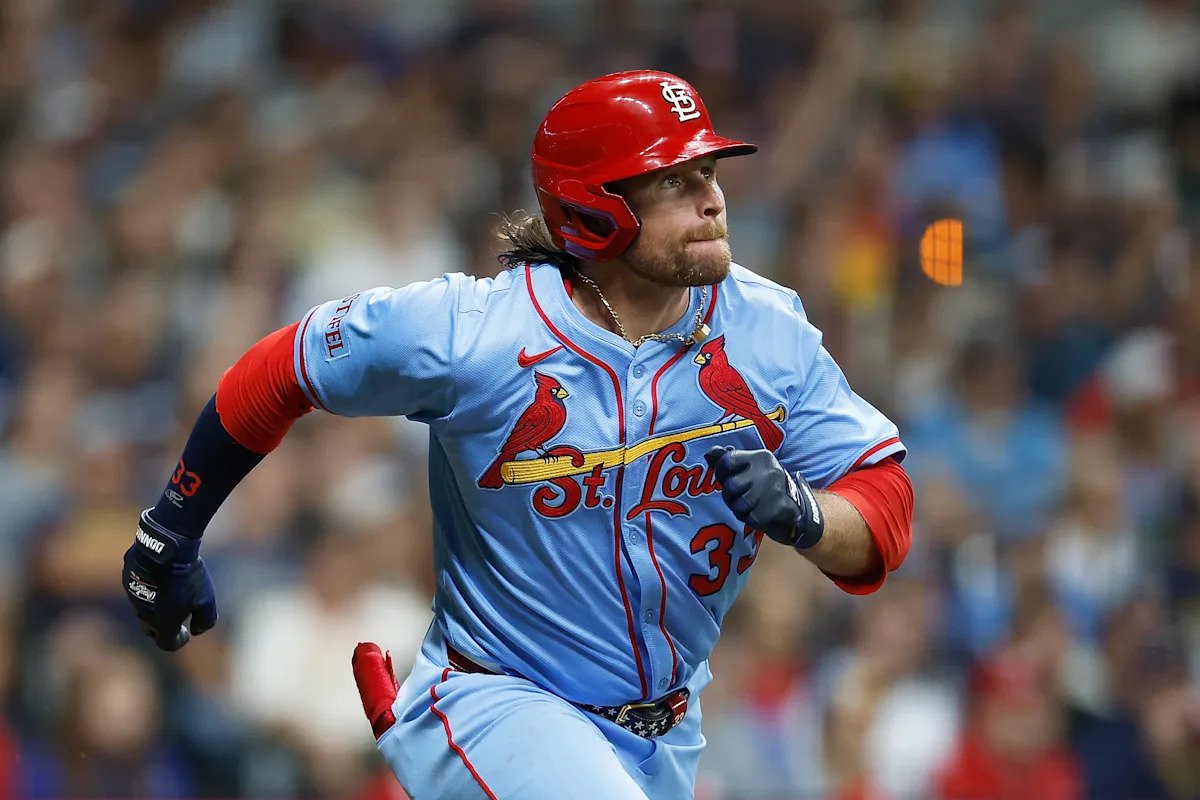
With a little help from a familiar facilitator, the Seattle Mariners finally executed the deal they’d been pursuing all winter on Monday, acquiring Brendan Donovan from the St. Louis Cardinals. The deal is a three-way swap including the Tampa Bay Rays, Seattle’s most frequent trade partner during president of baseball operations Jerry Dipoto’s decade-long tenure leading the front office. After months of reports indicating Seattle’s interest in Donovan — and uncertainty about whether the Cardinals would actually part with him as part of their dramatic offseason of offloading — it’s fitting that the Rays’ surprise involvement helped push this deal across the finish line.
Here’s the breakdown:
Advertisement
-
Mariners receive: INF/OF Brendan Donovan (from Cardinals)
-
Cardinals receive: RHP Jurrangelo Cijntje (from Mariners), OF Tai Peete (from Mariners), OF Colton Ledbetter (from Rays), Competitive Balance Round B Pick (currently No. 68, from Mariners), Competitive Balance Round B Pick (currently No. 72, from Rays)
-
Rays receive: INF Ben Williamson (from Mariners)
All offseason, Donovan was heavily rumored to be at the top of the Mariners’ wish list as they sought to replenish both their infield and their lineup in the wake of Jorge Polanco and Eugenio Suarez both departing in free agency. Re-signing Josh Naylor in November to a five-year deal solidified first base and provided a middle-of-the-order bat, but enough uncertainty remained at second and third base that another infield addition felt necessary. Given Donovan’s experience at both positions, his above-average, left-handed bat and his two years of team control remaining, the 29-year-old surfaced as the ideal candidate for the Mariners, especially considering their excellent farm system to deal from. Still, Seattle had been awfully, uncharacteristically quiet in the months since retaining Naylor, with their only major additions a trade for lefty reliever Jose A. Ferrer and a one-year deal for platoon slugger Rob Refsnyder.
With spring training approaching, it seemed increasingly likely that Seattle would entrust its talented yet unproven young players — Cole Young, Ben Williamson, top prospect Colt Emerson — with multiple infield spots, a risky strategy for a team with World Series ambitions. Then Dipoto explicitly stated at the team’s fan fest over the weekend that the club was hoping to add one more piece to the major-league roster. There’s always risk in front office officials publicly promising such additions, if even vaguely, but evidently Dipoto was confident enough about a Donovan deal to give an obvious hint to the fan base.
[Get more Seattle news: Mariners team feed]
Sure enough, Donovan now joins the Mariners after eight years in the Cardinals organization. Born in Germany while his father, a colonel in the U.S. Army, was stationed overseas, Donovan bounced around a lot growing up but eventually settled in Alabama, where he played in high school and at the University of South Alabama. He was relatively unheralded as an amateur but played his way onto the prospect radar after joining the Cardinals as a seventh-round draft pick in 2018. In 2021, he hit .304/.399/.455 across three levels, reaching Triple-A to put himself in position for an early call-up the following season. He rode that momentum to a terrific debut campaign in 2022, bursting on the scene as a crucial cog for the 93-win, NL Central champion Cardinals. His .394 on-base percentage was the fifth-highest mark by a rookie with at least 450 plate appearances this century — behind only the Cooperstown-bound quartet of Aaron Judge, Juan Soto, Albert Pujols and Mike Trout — and he finished third in NL Rookie of the Year voting.
Advertisement
In the three years since then, although he hasn’t replicated the lofty OBP of his debut campaign, Donovan has continued to reach base at an above-average clip, thanks to his advanced plate discipline and outstanding contact skills: Among 103 hitters with at least 1,500 plate appearances the past three seasons, Donovan’s .351 OBP ranks 24th, and his 13.1% strikeout rate ranks seventh-lowest. That skill set makes him an intriguing candidate to lead off for Seattle, at least against right-handers, as a logical table-setter ahead of sluggers Cal Raleigh, Julio Rodriguez, Naylor and Randy Arozarena.
To be fair, Donovan also has his limitations with the bat. His modest raw power has translated to just 40 home runs in 492 career games, and his hard-hit rates are unremarkable. He has also consistently struggled against southpaws, with a .651 OPS against lefties compared to a .812 mark vs. right-handers. On the whole, Donovan’s below-average pop and sharp platoon splits have capped his offensive ceiling at more good than great.
But that steady output at the plate has shined in tandem with his varied defensive versatility, which has defined Donovan for essentially his entire career. After starting nearly every game in left field as a freshman at South Alabama in 2016, Donovan has spent the past decade moving around the diamond and proving proficient at multiple spots. As a rookie, he started games at every position except catcher and center field, earning the first-ever utility Gold Glove in the NL.
Advertisement
More recently, the vast majority of Donovan’s playing time has come at second base and left field. In Seattle, the focus will be on second and third, a position Donovan hasn’t played as much due to Nolan Arenado’s presence in St. Louis. But assuming the Mariners are still confident in Donovan’s ability to man the hot corner, a new genre of questions emerge regarding the other infielders on the Mariners’ depth chart. Williamson’s inclusion in this deal removes one name from the equation, but adding Donovan sets up a competition in spring training between the 22-year-old Young and the 20-year-old Emerson for the other starting infield spot, with Naylor at first base and J.P. Crawford at shortstop.
Having made his major-league debut last summer, Young would seem to have a leg up in such a contest, and the Mariners think highly of his ability to become an above-average starter at the keystone. But Emerson — a natural shortstop who has also seen time at third on his meteoric rise through the minors — is a consensus top-10 prospect in all of MLB and might have the kind of talent to force the issue. If he explodes in spring and wins the third-base job, that would likely send Young to Triple-A to keep getting every-day at-bats while Donovan stays at second. Alternatively, Emerson looks like the heir apparent to Crawford at shortstop, with Crawford slated to hit free agency after this season. So while the Mariners are likely hoping Emerson and Young will contribute in 2026, bringing in Donovan dramatically lessens the urgency for both of them to do so right away.
Williamson, meanwhile, departs Seattle’s crowded infield picture to join a new-look Rays roster that has added plenty of fresh faces this offseason. Tampa Bay appears to be in a transition of sorts. If not a full-blown rebuild, it’s at least an acknowledgment that the four other AL East teams are loading up in a way that makes competing in the short-term unlikely for the Rays, leading them to prioritize long-term assets.
Advertisement
While Williamson’s bat is still a work in progress after being rushed to the majors to fill Seattle’s third-base need, he has garnered a reputation as a fantastic infield defender. Interestingly, that has mostly been earned at third base, a position that would seem to be blocked in Tampa by Junior Caminero. Instead, Williamson will likely see time at second base as a right-handed complement to the recently acquired Gavin Lux. While the acquisition cost wasn’t outlandish, the Rays must have had a favorable view of Williamson to have even bothered wiggling their way into this deal. As such, his development in Tampa will be worth monitoring.
For the Cardinals, adding a third team to the deal was a nifty way to maximize the return for a player they weren’t necessarily intent on dealing before Opening Day. Slated to make just $5.8 million this season and under team control for 2027 as well, Donovan represented a much more valuable trade chip than high-paid veterans such as Sonny Gray, Willson Contreras and Nolan Arenado, all of whom were moved for more middling returns as St. Louis prioritized clearing their salaries and opening playing time for young players. Donovan, meanwhile, could’ve stayed put until the deadline if the Cardinals were unsatisfied with offers. But ultimately, Seattle and Tampa Bay combined to form a worthwhile package, culminating in the latest future-focused transaction from new Cardinals president of baseball operations Chaim Bloom.
In the return for St. Louis, Cijtnje is the prize — and a fascinating one at that. Not turning 23 until May, Cijtnje has been playing in front of big audiences for years, having starred for Team Curacao at the 2016 Little League World Series. It was in Williamsport that he first demonstrated his special skill of switch-pitching, a remarkable display of ambidextrousness that gained notoriety as he got older and thrived at the high school and collegiate levels. The Mariners selected him with the 15th pick in 2024 out of Mississippi State University and allowed him to keep switch-pitching during his first full professional season in 2025. But Cijtnje has always projected far more favorably from the right side, and when Seattle announced Cijtnje as a non-roster invite to spring training last week, he was labeled as a right-hander only. The Cardinals also tabbed him as such when announcing the trade on Monday.
Advertisement
With his days as a switch-pitcher sadly behind him, Cijtnje can now focus on his development without worrying about solving how to incorporate his weaker side. At just 5-foot-11, he doesn’t have the typical frame of a rotation workhorse, but he’s strong and sturdy, and his stuff resembles that of an impact starter, with high-90s velocity and an excellent slider to go with a rapidly improving changeup. He pitched well in Double-A last season, so it’s not out of the question that Cijtnje could pitch his way to the majors at some point in 2026 if things continue to click.
Peete and Ledbetter are two outfielders with enticing pedigrees and a lot to prove in 2026. Peete was the 30th pick in 2023 as one of the youngest players in his high school class. He’s a tremendous athlete who has transitioned to the outfield after being drafted as a shortstop and could develop into a center fielder with plus power, but his hit tool needs serious refining for that outcome to manifest at the highest level. Ledbetter was also drafted early in 2023 (55th overall) after starring at Mississippi State, where he was Cijtnje’s teammate. What was lauded as an advanced hit-power combination as an amateur has yet to fully translate to pro ball, but he reached Double-A last year and could find a new gear with a change of scenery.
Finally, adding not one but two picks in this summer’s draft is a great way for St. Louis to continue restocking its ascendent farm system. As the draft order stands now — and it might change slightly once the final two free agents with qualifying offers attached (Framber Valdez and Zac Gallen) sign — the Cardinals own six picks in the top-100: Nos. 13, 32, 50, 68, 72 and 86. That haul will equate to one of the largest bonus pools of any team, which will afford St. Louis’ amateur scouting department the flexibility to reel in another loaded wave of exciting young talent this summer.
Read the full article here