
It was early December back in 2013 when the Los Angeles Lakers’ Facebook page posted a two-minute video of a jersey floating in the wind. Tens of thousands of captivated fans couldn’t wait to reshare and comment as dramatic music played over the social media post.
The No. 24 jersey hung in the sky as sunshine pierced through some clouds. Then, over the course of the next 120 seconds, a thunderous storm battered the jersey until it tore in half.
Advertisement
Finally, after a beam of light, the jersey was made whole.
The symbolism relayed the message: Kobe Bryant was back. “Seasons of Legend. The Lakers announce Kobe’s return,” the post’s caption read. The then 35-year-old Bryant, who had torn his Achilles less than eight months prior, was returning in near-record time, missing just 21 Lakers regular-season games with an injury that infamously had ended NBA careers.
Unfortunately, Bryant’s comeback season lasted only six games. Just nine days after his return, Bryant suffered a serious knee injury in the same leg of his torn Achilles, quickly dimming all the excitement over his fast return. His season was over and Bryant’s playing abilities were never the same.
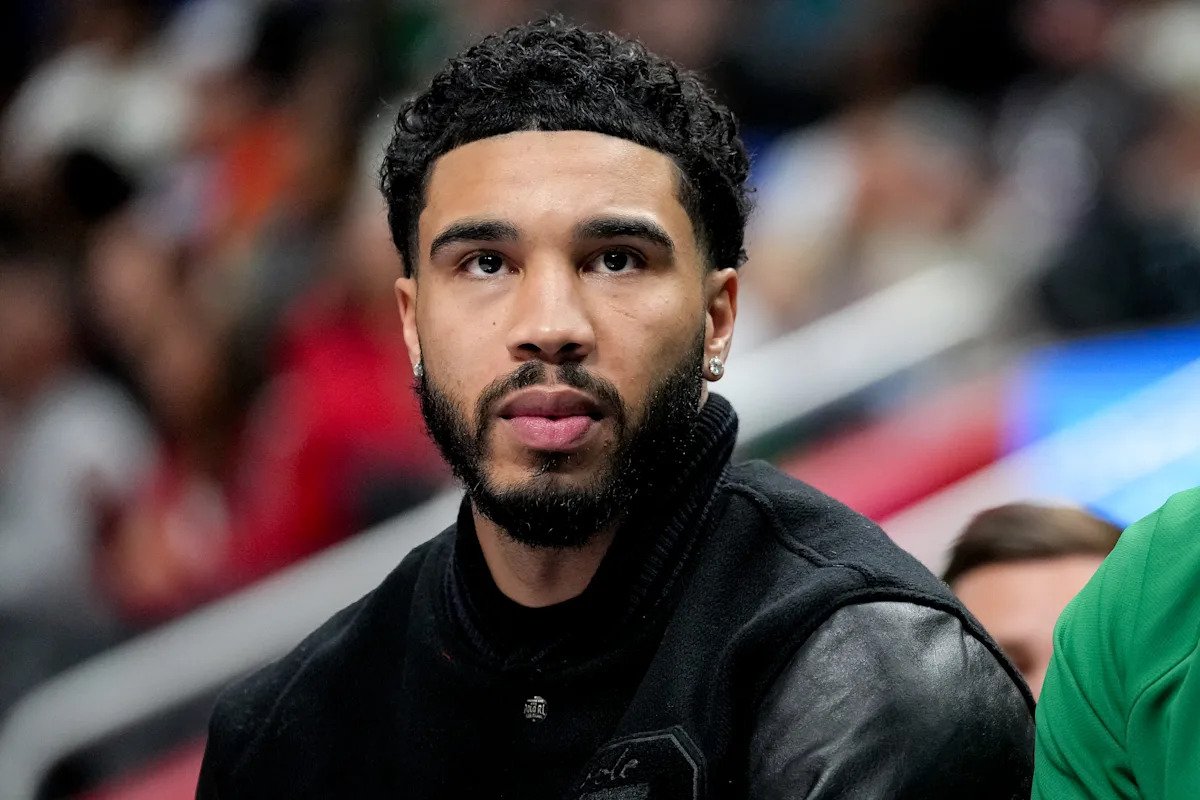
The NBA world is watching and waiting for Jayson Tatum’s return. (Photo by Nic Antaya/Getty Images)
(Nic Antaya via Getty Images)
Boston Celtics star Jayson Tatum has idolized Bryant and his Mamba Mentality ever since Tatum was a child. The 28-year-old has said Bryant’s story has driven him to become the NBA player he is today. As Tatum nears his own return from an Achilles tear, he should continue to take lessons from Bryant’s career. The Lakers star’s historic 2013 return offers a cautionary tale about what could happen in a highly anticipated and quick midseason return.
Advertisement
Tatum should also take heed of the rehab schedule of another NBA legend, one that tells the greatest Achilles tear story of all time: Kevin Durant.
Kobe vs. KD: A contrast in Achilles recoveries
Watching Kevin Durant dominate in the year 2026, an uninformed observer would never guess the Houston Rockets All-Star tore his Achilles tendon just as he entered his thirties. Durant’s injury occurred in the 2019 NBA Finals while playing for the Golden State Warriors and he took the next season off as he joined his new team, the Brooklyn Nets.
While Bryant struggled to return to his pre-Achilles form, Durant’s superstar status hasn’t wavered. The 37-year-old is averaging an unthinkable 27.6 points with white-hot efficiency in the six seasons since the longest tendon in the human body snapped in his leg. His post-Achilles-tear résumé, consisting of six All-Star appearances and two All-NBA nominations, shines brighter than most players’ entire careers.
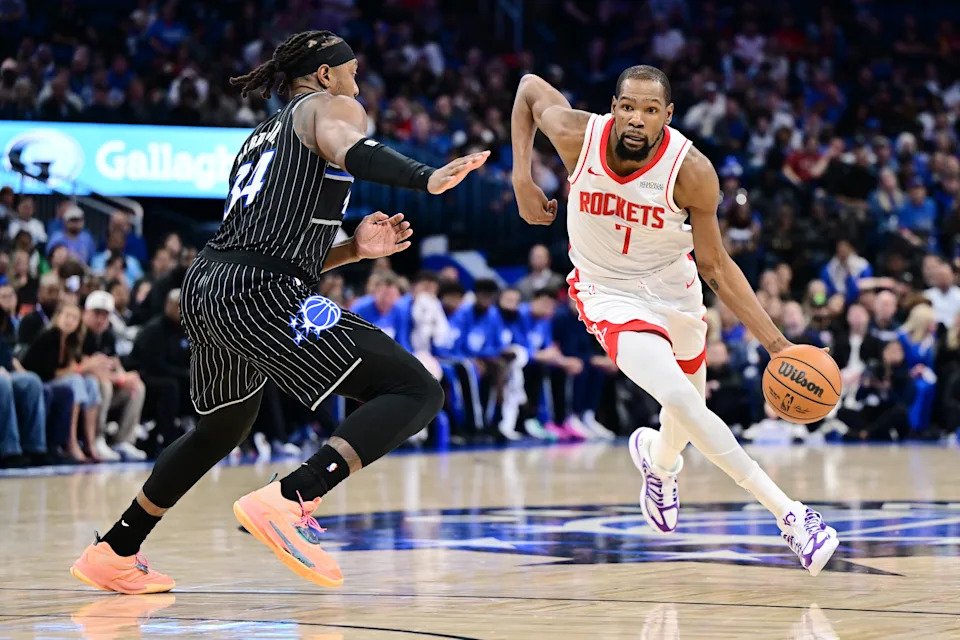
Kevin Durant’s recovery from his Achilles tear has been remarkable. (Photo by Julio Aguilar/Getty Images)
(Julio Aguilar via Getty Images)
To be clear, no two Achilles tears are the same. Different mechanisms of injury, different bodies and all that. Beyond the difference in age between Bryant and Durant at the time of their injuries — Bryant was 34, Durant was 30 — the most interesting dynamic is a contrast of time in another dimension: recovery time.
Advertisement
Durant’s absence from NBA games lasted 18 months, more than twice that of Bryant’s eight months.
We will never know if Durant would have fared as well in the back nine of his career if he returned midseason in 2019-20. Complicating matters was the COVID-19 pandemic that disrupted everything in March of that season, including Durant’s injury rehab process with the Nets. Durant decided not to pursue a comeback in The Bubble when the Nets resumed the season in late July. Instead, he took extra time to get himself ready for the following season, which would begin in December of 2020.
In an interview with Andscape’s Marc J. Spears, Durant said the decision to not play in the 2019-20 season was made well before the pandemic hit.
“My season is over,” Durant said in June of 2020. “I don’t plan on playing at all. We decided last summer when it first happened that I was just going to wait until the following season. I had no plans of playing at all this season. It’s just best for me to wait. I don’t think I’m ready to play that type of intensity right now in the next month. It gives me more time to get ready for next season and the rest of my career.”
Advertisement
Though Durant missed some time in 2020-21 dealing with various injuries, his play on the floor didn’t seem to suffer at all. Leading the Nets in the postseason, the long layoff may have paid dividends. He scored a scorching 34.3 points per game in the playoffs, the most of any player who suited up at least 10 games during that postseason.
Plenty of speculation has surrounded Tatum about when he may return this season, if at all. If Tatum decided to sit out the season, he would give himself about 17 and a half months of a layoff before next season kicks off in mid-October — basically the Durant timeline.
Should Tatum suit up for the Celtics this week, though, he’d be returning about 10 months after he went down in the closing minutes of Game 4 of last year’s Eastern Conference semifinals against the New York Knicks. In this sense, he’s given himself two months of a buffer behind Bryant’s timeline when the Laker legend got back on the floor in December following his April injury. But it still would be a remarkably quick timetable in the modern era. A 10-month return would mark the shortest post-Achilles absence for a starting player since the 2015-16 season when Rudy Gay came back in under nine months with the Sacramento Kings.
Advertisement
For another comparison, Tatum can look at fellow former All-Star Dejounte Murray.
Achilles recovery timelines are getting longer lately
Last Tuesday, the New Orleans Pelicans guard scored 13 points in a home win over the Warriors, making his return from his Achilles tear suffered in January of the 2024-25 season. Thirteen is also a notable number because it represents the number of months that it took for the former All-Star to get back on the floor.
Murray’s timeline is increasingly becoming the norm. According to Yahoo Sports research supported by injury expert Jeff Stotts of Instreetclothes.com, Murray marks the 30th player since 2005-06 to return to playing NBA games after suffering an Achilles tear in the league. The Pelicans guard headlines a growing number of players who are taking longer than a year to return from the major tendon rupture.
Advertisement
In the decade between the 2005-06 and 2014-15 seasons, there were 12 instances of an NBA player returning from an Achilles injury and, on average, those players spent 10.4 months away from the game. Bryant took only eight months. Same went for Elton Brand and Mehmet Okur, who barely took eight months to hit the hardwood again following their Achilles tears. In 2015, Wes Matthews took 7.7 months to return from his Achilles tear and still enjoyed an impactful nine-year post-Achilles run in the NBA while playing for several playoff teams until he was 37 years old.
At the time of Brandon Jennings’ Achilles tear, he was averaging 15.4 points as a 25-year-old with the Detroit Pistons. As one of the more talented young players in the game, Jennings took a little over 11 months to return, getting back on the floor in December. The Pistons moved him later that season and, after bouncing around the league for three years, he never averaged double-digit points again.
.png)
Lately, the timelines have gotten longer. In the Achilles ruptures from 2015-16 to 2024-25, the timeline stretched from 10.4 months on average to 13.6 months. In that sample, only two players of the 18 players (Rudy Gay and Dru Smith) returned well ahead of the 10-month mark, something that happened with regularity in the previous decade.
Advertisement
Klay Thompson spent nearly 14 months away from the NBA floor after he tore his Achilles in November of 2020, perhaps delayed because of his earlier ACL injury. More recently, Brandon Clarke and Thanasis Antetokounmpo also saw more than 12 months pass before they took the floor again.
It’s not as simple as to say that longer is always better. DeMarcus Cousins, who was a four-time All-Star before he tore his Achilles in January of 2018 with the Pelicans, came back the following January with the Warriors. He needed 12 months to get back onto the court, but never regained his All-Star status and was out of the league by 2022.
Recovery timelines don’t always lend themselves to perfect apples-to-apples comparisons. Nothing about injury data is squeaky clean. Return to play could be artificially delayed because the player is waiting for the start of the season. COVID and lockout-shortened seasons could also affect an NBA player’s recovery time in ways out of his control. But in general, as we await Tatum’s return, it does seem that players are taking longer to get back onto the court.
Tatum and Boston’s ticking clock
For Tatum, there are positive signs that he’s on track to a full recovery. Because his surgeon Dr. Martin O’Malley was in New York at the time of the injury in a game that happened to be at Madison Square Garden, Tatum was able to have his Achilles stitched in quick order. According to Tatum’s documentary series aired on NBC, O’Malley had an opening in his calendar at 3 p.m. the next day and made time for Tatum.
Advertisement
“There’s pretty strong data,” O’Malley said, “that if you do (Achilles surgery) within 24 hours (of injury), patients have better outcomes.”
In O’Malley’s view, Tatum’s recovery was headed in the right direction early on. “I don’t think I’ve seen a person’s calf look as strong as his,” he said in September. “At six or eight weeks he was doing double heel rises. He worked his calf so hard that the side effect of loss of strength, I don’t think he’s going to have any.”
The Celtics have been tight-lipped about possible return dates. The team confirmed he has been practicing with the team and the G League Maine Red Claws when the opportunity arises.
Advertisement
While other players could decide to return in 12 or 13 months, Tatum may not have that luxury. The Celtics’ season could be over by then. There are 21 games left in Boston’s regular season, which ends in a little over a month on April 12. That would mark 11 months since the injury. As the No. 2 seed in the East, the Celtics are expected to make a deep playoff run that could reach the NBA Finals in June. But if they’re a first-round out, a 12-month timetable for Tatum goes out the window, with his return rolling over to October. It’s worth noting that of the 30 Achilles returns to play since 2005, none came during the playoffs where gradual ramp-ups aren’t as easy.
If the Durant plan is in place, Tatum would eye next season for his debut. But if Tatum and his medical team believe he’s ready to go now, he wouldn’t be copying KD. Or Kobe. He’d be writing his own story.
Read the full article here