


Who doesn’t love a good return, am I right? Your favorite artist making new music, a superhero saving the day, a TV couple finally answering the “Will they or won’t they get back together?” question. There’s a joy that comes with it. It’s like anything is possible. Jon Snow rose from the dead, Snooki went back to the Jersey Shore house, order has been restored.
Basketball, of course, has had its fair share too. From “Here comes Willis!” to Magic Johnson at the 1992 All-Star Game to “I’m back,” etc., etc.
Advertisement
Draft your Yahoo Fantasy Baseball team for the 2026 MLB Season
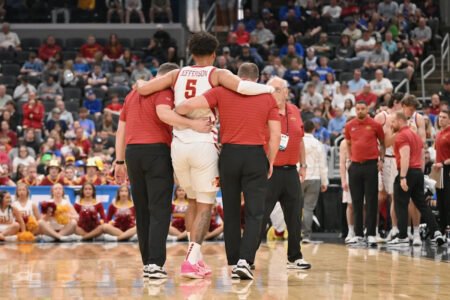
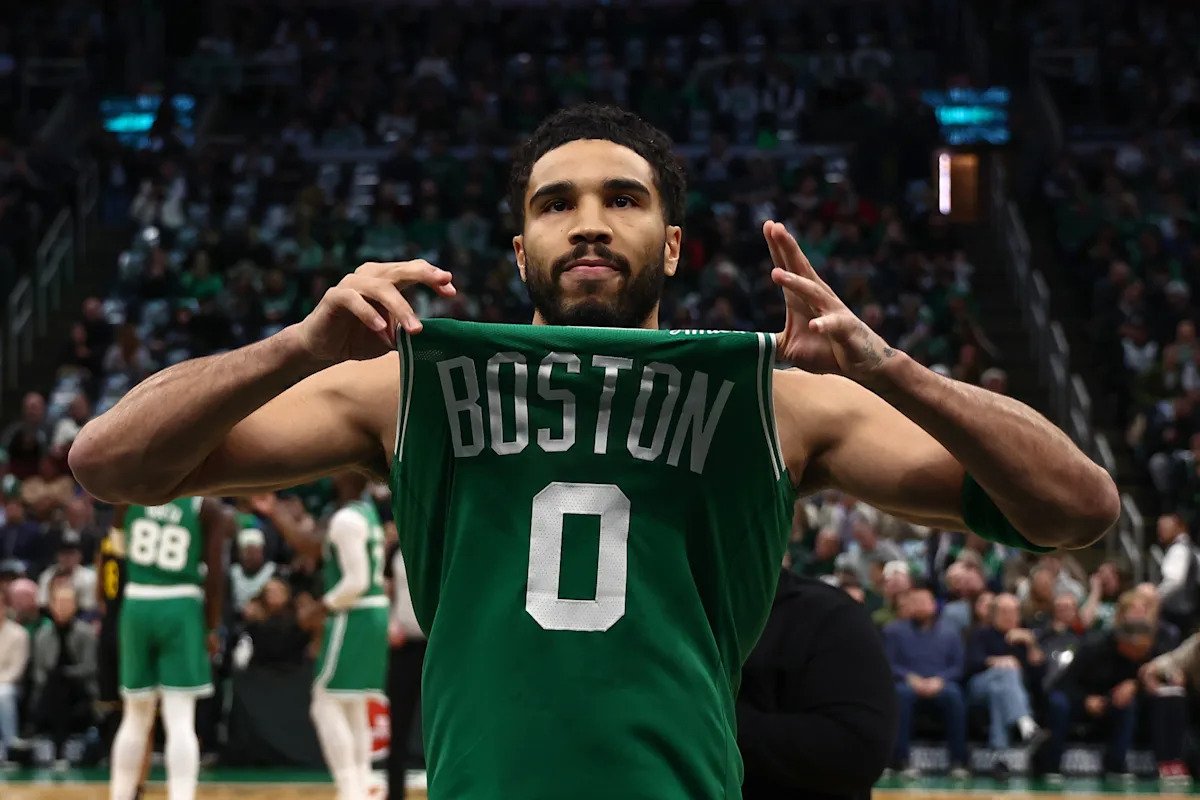
The latest entry is, of course, Jayson Tatum, who went from a ruptured Achilles in May 2025 to playing NBA basketball in March 2026. That feat alone should be applauded, the effort and determination to make it happen should be celebrated.
The thing about a return, though, is the second that moment sticks there is a harsh reality of: “What’s next?” The games stack and that adrenaline is replaced with a reminder of expectations. Those expectations could be accelerated by the Boston Celtics being the No. 2 seed in the Eastern Conference, or because of the All-NBA form Tatum was in pre-injury. With a (small) sample size, how do we evaluate a player who wasn’t likely to return, on a team that wasn’t expected to do all of this?
The reintegration of Jayson Tatum
The Celtics are 6-2 in games that Tatum has played in, so hopefully we can throw a bow on the Jaylen Brown/Tatum discourse for a beat. There’s a familiarity that exists, but also reintegration that must take place.
Advertisement
All season long the Celtics’ roster has understood the assignment. Offensively, without Tatum, we saw ball movement in the half-court, an effort to get to drive-and-kick, off-ball movement and (of course) a lot of 3s. Very little of that has to go away with Tatum returning, and to a degree it gives Tatum more margin for error. As he works to find his rhythm and confidence, it could help not having to make every single play.
Something that flies under the radar is what the Celtics’ offense can do as far as opening up shots and opportunities for Tatum.
Jaylen Brown has had an incredible season, but notice the decision defenses have to make when Brown looks to attack. A wing iso with Tatum one pass away opens doors. You’re either opening up a driving lane (that Brown is more than willing to attack) or committing to help and opening a kick to Tatum for a shot. This can make the — checks shooting splits — misses from Tatum feel a little louder, but that type of shot quality and pressure feels like something Boston would live with day in and day out.
Using Brown and Tatum in action together also has value, but we can be honest, most defenses are going to switch. Since Tatum’s return, I’ve been watching the “wave effect.” Stick with me.
Advertisement
The added pressure point is when a defense has to be concerned with one of them on one side of the floor and that flows into the other attacking on the other side. A quick dribble-handoff to Brown is going to draw nail help, leading to an advance pass to Tatum, who now can attack a tilted defense. It’s a subtle way for Boston to find a blend and get the best of both worlds.
Flashes of the ‘Old Tatum’
According to the tracking data from NBA.com, Tatum averaged 10.3 drives per game last year. He’s at 9.7 per game since he’s returned. Why is this important? One, it points to him being a similar type of player as when he left. Two, whenever a player returns from injury, I’m looking at how much they want to drive the basketball. It’s an indicator of how they are feeling in that moment.
Advertisement
Tatum has been willing and it feels important because of how much of a rhythm player he is. One of my favorite basketball riddles is, does the shot set up the drive or does the drive set up the shot? The easiest ways to see flashes of the “Old Tatum” is when he’s had his strongest drives. The patience is still there, the craft is still there, but it can sometimes be a fight between the mind and the body.
There are moments where you can see Tatum revving up for a drive and trying to find the footwork to set up a finish or work through contact. There are also moments where the footwork is on point, the grace returns and rhythm is a dancer. The willingness to drive speaks volume and the flashes of confidence feel just as important as the result.
Boston has tried to help Tatum by setting higher screens for him to get downhill and get some momentum to get to a pull-up 3 or get downhill into the paint. The Celtics have worked to flow into an action when Tatum trails in transition and a big is positioned ready to screen for him. If the ball advances to him, it’s a pick-and-roll with him on the move. If it doesn’t, it’s flare screen with him moving into space. It appears intentional to allow him to rev up in a natural flow.
One thing that has also stood out on tape has been the passing from Tatum since he’s returned. He grew as a playmaker pre-injury, but to return and get right back to reading defenses is impressive. He’s been quick, decisive and on-target once he sees how defenses are helping.
What Tatum adds to the Celtics
Tatum’s return has brought an added bonus to the Celtics: a pressure point. Boston has used Tatum as a screener (or has had someone screen for him) to try to create an advantage. This is not a new tactic for the Celtics, but it does carry a little more weight if an initial action fails or if they can get to it within the flow of the offense. Tatum as a screener has been most impactful in matchups where a team doesn’t want to switch a specific defender onto him. One moment of hesitation can open up a shot for Tatum or others.
Tatum has shown he still has a knack for doing the little things as an on-ball screener. Sometimes he’s screening wide, getting enough of a push so the defense can’t get under, and working toward the elbow.
Advertisement
Other times, he’s slipping in the path of a defender before they can complete the switch, opening a roll to the rim.
Boston will still have people screen for Tatum to attack matchups in a more “traditional” way. The key again is to keep pressure on a defense.
A little thing that Tatum does is work to make a quick decision to secure a coverage. You can see below against Phoenix, Sam Hauser screens for him to get Collin Gillespie in action. He takes one dribble right and then immediately goes back left. That combined with Hauser working to roll the other way secures the switch. Tatum is able to get in the paint, force more help and open up a kick to Derrick White.
It can be easy at times to think of screening to attack matchups as just an “on ball” type of action, but it can be just as powerful off ball. Boston has worked to go to elbow action to get Tatum involved as a screener, a disguise to get defenses to potentially give a switch without giving away what it truly wants to attack.
Advertisement
Tatum will set a back screen and immediately look to slip and dive toward the post. It’s a test of what a defense wants to do and how it will react. It’s another leverage play on Tatum as a pressure point, a hope that a defense either is not clean at the first level, or that the weakside reacts to Tatum closer to the basket.
What can get lost in the reintegration process is the impact a player can still have without stuffing every single part of the box score. Boston has to continue to work to figure out how to best use Tatum. He adds layers to the offensive attack and the Celtics can get to those without changing what they’ve done.
Joe Mazzulla was recently quoted as saying Tatum is “giving the game what it needs,” and I think that speaks volumes. Tatum’s presence can impact their formula and winning without altering much of the attention to detail they’ve shown throughout the year.
How Tatum has looked on defense
Lastly, I do want to mention Tatum’s defense because it was one of the bigger question marks I had upon his return. Not in a pure 1v1 type of way, but how would he fit into the Celtics’ defensive context. The way they guard requires multiple efforts, working to help and recover to yours, closing back out to the perimeter and containing.
Advertisement
One of my favorite parts of watching the Celtics’ defense this year has been the different ways they show help and collapse on drives. Sometimes it’s sudden. Sometimes it’s subtle. Sometimes it’s sneaky; the closer you get to the basket, the more jerseys you see.
For the most part, Tatum has fit in and done his job. What that lacks in neon lights, it makes up for in honest work. Just because a seasoning isn’t bold doesn’t mean it’s not getting the job done. Tatum has had good reps on the weakside, has worked to get to the right spot, has been ready to switch and work to contain dribble penetration.
What will get interesting is seeing how and when teams look to attack him. It’s not so much that the Celtics (or Tatum) have worked to hide him, more so human nature. Tatum has been willing to switch, but do teams try to up the ante? I’m curious about teams making Tatum make multiple efforts, getting him to guard multiple actions or guard on the move. Is that something teams will poke at while there is still some rust? Would that benefit Tatum going into the playoffs?
Advertisement
At the end of the day, the most important thing basketball-wise is piecing all of this together. There is a mental aspect that we as observers, analysts, fans can’t grasp. And that mental aspect can loom around the corner, or linger in the present and bring doubt about the future. It’s hard to imagine a world where Jayson Tatum came back and didn’t want to get right back to being Jayson Tatum.
The trick is balancing that, but also understanding that coming back is still impacting success in winning. Progress over perfection, giving your best and understanding that may look different each day. For Tatum it has to be about building on the flashes, stacking the moments on top of each other and moving forward.
The Celtics and Tatum are both better off having each other to rely on. The question may be how far that will take them, but there is no doubt they have a chance to make a louder noise together.
Read the full article here