



It was another year of crowded aisles and sustained enthusiasm for the golf industry at this week’s annual PGA Show in Orlando. The game’s business leaders and those hopeful to cash in on the golf’s consistently buzzy momentum gathered on the heels of the latest National Golf Foundation report that highlighted an unprecedented eighth straight year of growth in new golfers, along with another all-time high in rounds played.
As NGF executive director Greg Nathan put it, “Today’s momentum is not a temporary post-pandemic spike, but rather a recalibrated baseline built on broader access, diversified entry points, and a more inclusive, multi-channel ecosystem.”
Advertisement
The numbers indicate a distinct robustness to the game’s immediate future:
• Total golfer participation (on- and off-course) reached a new high at 48.1 million, a 41-percent increase since 2019.
• There were new highs for youth, seniors, women and people of color.
• Rounds played reached nearly 550 million, the fourth time in the last five years that a new record was set, with 63 of the past 66 months outperforming their pre-pandemic equivalent in rounds played.
• U.S. golf equipment wholesale sales were up 3 percent over last year and nearly 50 percent higher than in 2019.
Of course, golf has seen boom times often in the past 40 years, so it is worth wondering where the game might go from here. It is especially telling that golf’s growth is even stronger off-course than on-course. Participation in golf entertainment venues like TopGolf and simulators rose to 37.9 million, eclipsing on-course play in each of the past four years, and more than doubling since 2014.
Advertisement
But there are always troubling signs for those whose very livelihoods depend on continued success. Those private-equity investors who’ve seized on golf’s popularity in recent years like to think of the game’s upwardly mobile demographics as a cause for perennial optimism. However, as multiple CEOs in golf like to say, “The game isn’t recession-proof, though it might be recession resistant.” Golf does have its foundational burdens, not the least of which is the fact that it’s not bowling. It’s more than moderately difficult to become reasonably competent at on-course golf, and while driving ranges and indoor simulator entertainment venues might ease the initial entry to the game, staying with it requires a commitment that goes beyond the financial.
Speaking of money, average selling prices have surged in the post-pandemic surge. Ten years ago, the top price for a new driver was $500, this year it’s 40 percent higher. Rounds played continue to surge, but green fees are almost 30 percent higher than they were a decade ago, and while new course construction has once again become a net positive, the majority of those courses are closer to high-end daily fee than the muny down the street.
To understand the game’s present and future state, Golf Digest sat down with the leaders of the four biggest equipment companies to get their reading of the tea leaves. Their answers were bullish and hopeful, with a careful eye on the pending decisions from golf’s governing bodies on a distance rollback.
Here are the responses of David Maher, CEO of Acushnet (parent company of Titleist and FootJoy); Chip Brewer, CEO of Callaway; John K. Solheim, CEO of Ping; and David Abeles, CEO of TaylorMade and Sun Day Red.
Advertisement
Golf has had strong economic growth periods many times in the past. What makes this moment different?
Brewer: The cultural importance and the cultural relevance of golf has never in my lifetime been where it is now. The amount of cool people playing golf, LeBron James and Steph Curry and Saquon Barkley and all the quarterbacks and musicians. Even compared to the Tiger era, it feels different because it’s almost more unilateral interest.
Chip Brewer.jpg
Chip Brewer, Callaway CEO
Maher: I don’t know that I can recall an eight-year window where the number of golfers has grown every year. And we know it’s growing differently. Juniors are jumping in at a faster rate. Women are jumping in at a faster rate, So, I think that’s the main difference is that the number of golfers and the construct or makeup of the golfer base is different than past cycles. It’s broader and it’s more diverse, and we see a lot of this happening around the world, too.
Advertisement
Abeles: When you think about where the business is being done and the revenue is being driven, the core golfer really is similar today to where they were 20 years ago. What’s different is this peripheral generation of golfers that’s driving investment and interest and participation that, ultimately, I think is going to enable us to lever into this population as they grow. It’s like the complexion of golf has almost pivoted 180 degrees overnight, and yet not lost its nucleus.
Solheim: I’m not fully convinced it’s totally different. I would say we seem a little smarter because I think a lot of us have seen it in the past and kind of realized that we kind of didn’t maintain it. The industry has learned from the hard falls it’s taken in the past and not to make those mistakes again.
What might be some of the potential roadblocks to future sustained growth of the game?
Solheim: I feel like we’re good at understanding the past roadblocks of excess inventory, golf courses not being welcoming to new golfers. We’ve gotten better at that. However, something will come up, and we’ll have to think faster on our feet of how to deal with that.
John K. Solheim.jpg
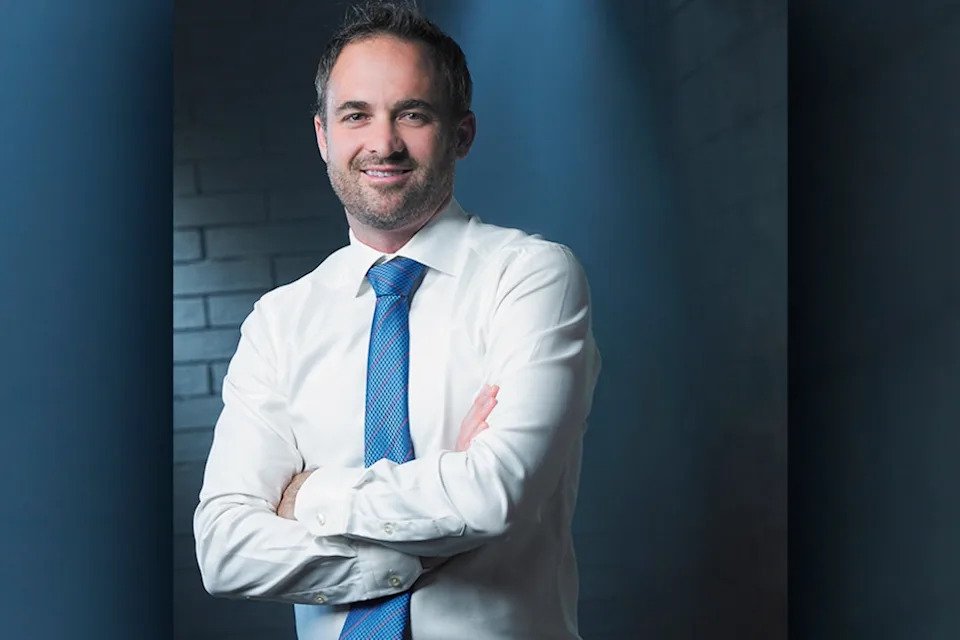
John K. Solheim, CEO of Ping
Advertisement
Brewer: We’re going to eventually hit capacity in green grass golf courses in urban environments or in and around population centers. I don’t know whether that puts a governor on some of the growth eventually, but we’re not there yet. We look at short-term issues and risks, and we look at long term. The long term looks all pretty good.
Maher: The biggest issue is it’s a hard game, so we’ve got to find ways to make sure new golfers have access and are taking lessons. Step two is the obvious, and it’s cost, right? The game is costly. We’ve seen corrections happen before. Will there be a recession at some point? Of course there will be. What might it mean for golf? Don’t know. But I would say the biggest concern I would have about all these new people who are jumping in is, “Gosh, I hope they’re getting lessons because if not, they’re going to hit the eject button.”
Abeles: While there’s a decent balance today, we probably can use a few more access points, distribution, and golf course development. We have a history in this industry of jumping on an S-curve and overbuilding our infrastructure. I think we’re in a pretty good place with a pretty good balance right now, but it’s important that business leaders make decisions around the data sets that are enabling them to determine what they build and how quickly they build it.
How do you feel about the interest shown by the USGA and R&A at possibly pushing back the implementation date for the ball rollback?
Maher: There are two parts to the feedback we’ll provide. One is the pragmatic of what would it mean for the Acushnet Company to replace every golf ball in the line in one year. Never done that before. There’s a reason we launch Pro V1 one year and all the rest the next year because we can’t do it all at once. It’s just the way manufacturing works. So they’re going to get a very technical, manufacturing-based response from us on that topic.
/content/dam/images/golfdigest/fullset/2026/1/david-maher.jpeg
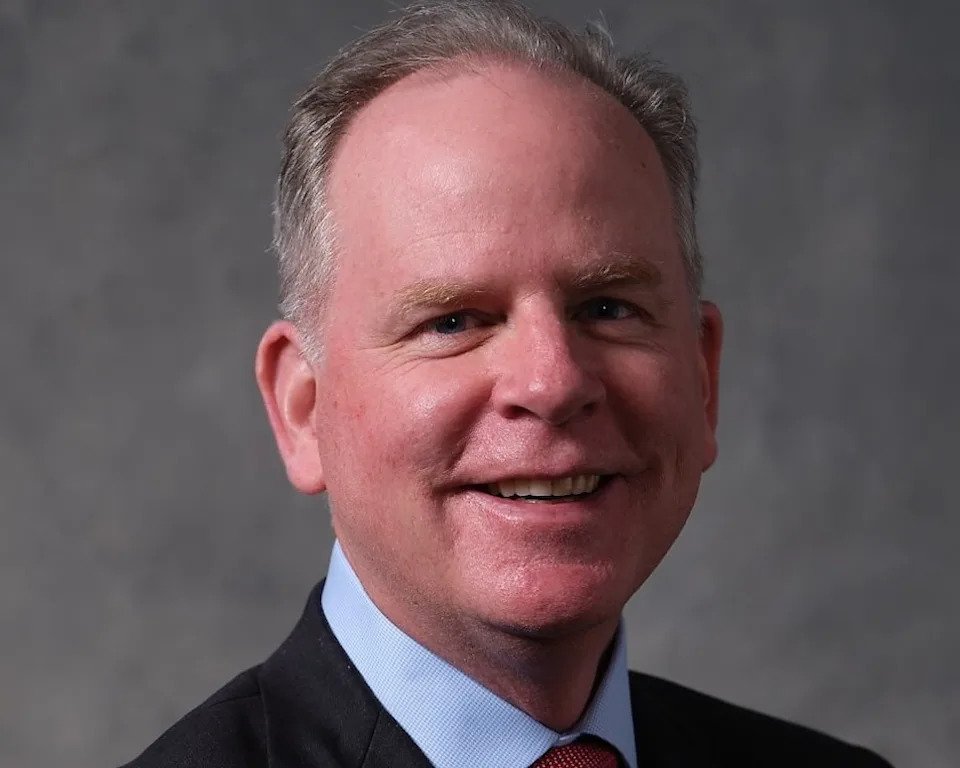
David Maher, CEO of Acushnet
Advertisement
GARY LAND
We’re also going to take this moment, this opportunity, to share research and data around what this is going to look like. The initial pitch was that the longest hitters would lose the most and the shortest hitters would lose the least. That’s a lovely, easy bar chart and wouldn’t that be great? We don’t see it that way. Not to speak for the tour, but the tour has done all their own testing with prototypes. What they found is what we found: You’re affected very differently than you, than you, than you. That’s very concerning to the tour. The tour as a member-owned organization is very committed to understanding the impacts to each and every player. And if it was smooth, and everybody is affected the same way, they might feel differently. What they’re finding is it’s not. We know, and, and we’ve shared this, and we’ll keep sharing this: High-speed players, high-launch players are affected one way, low-speed, low-launch, low-spin players are affected another way.
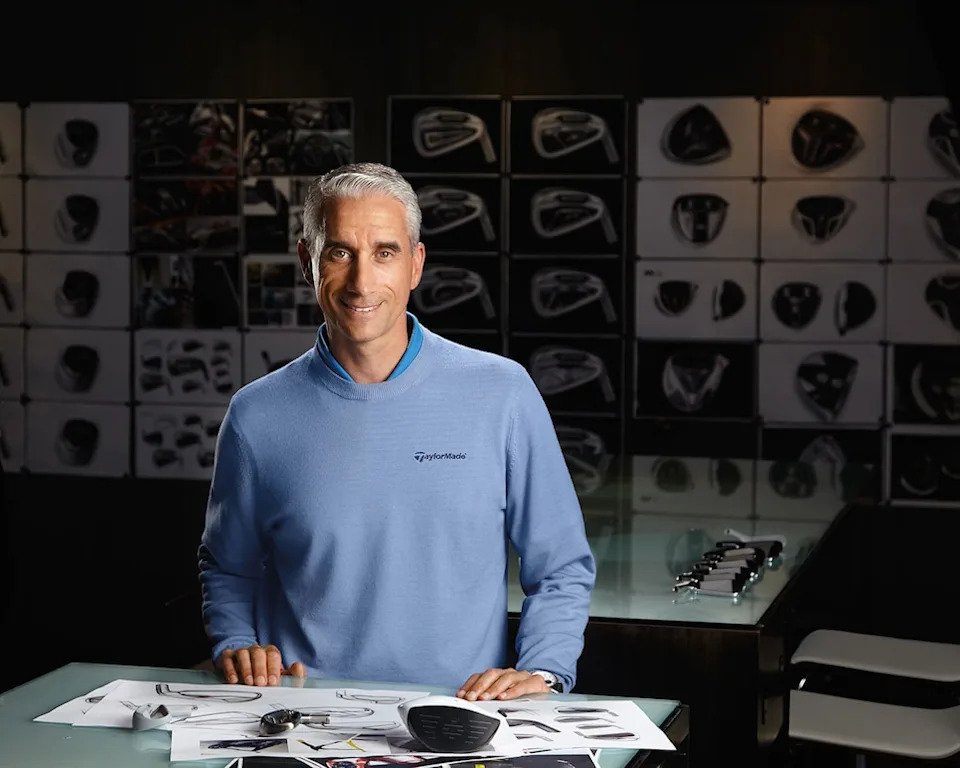
david-abeles-taylormade-supplied-photo.jpg
David Abeles, CEO of TaylorMade and Sun Day Red
Advertisement
Abeles: The attention this is getting, and understandably so when the USGA makes a suggestion or insinuates that they would like some feedback … it gets a lot of attention. It should. They govern our sport. But it’s really nothing more than they’re soliciting feedback. They’re trying to understand from a manufacturing standpoint, when the rules change, what’s the most seamless and effective way to integrate this worldwide. And I give the USGA some credit. They’re actually reaching out, trying to get a clear perspective on that.
But from a pure commercial and operational standpoint, a singular date is more effective than a dual date, so that we can move to production in one motion as opposed to two different timelines. If there was a dialogue to go further in the rules, we would have a very strong opinion about what that ‘go further’ actually means, and we’ll watch out. Like how far will this go, because if this takes golf to where it becomes inaccessible and harder, then all the work we’ve done to open up this new skill set to the game could be compromised, and we’ve got to watch out for that.
Brewer: I think it’s good for the USGA to be listening to feedback, they’re being participative. Clearly, there’s been feedback, and it makes sense to move it back to all to be in 2030. We would support that, and I applaud the ruling bodies for being open-minded and taking the feedback.
Is the current pricing structure sustainable? Is there a danger of a pain point for the typical golf consumer when drivers reach $700?
Brewer: If the product’s good, golfers aren’t price sensitive. While they have a driver that works, they always want a driver that’s better. I don’t know where that pushback might be. It’s related to the performance, and it’s related to the economy. But you can’t raise prices without perceived value and performance all falling in line with that. You’d be an idiot to raise prices just to raise prices. That’s not sustainable.
Advertisement
Maher: I don’t think golf is an outlier with the rest of the economy. In our case, while driver prices have gone up, embedded in that price is a really high-quality fitting. So, I think you’re paying for the driver, but you’re also paying for the fitting. I feel that way about a lot of our products, and, ultimately, we’re trying to make sure that whatever price we charge, the golfer says, “You know what? It’s great, it was worth it.”
Solheim: There’s been a decent amount of inflation that we’ve had, although the industry’s probably a little ahead of inflation. I would say the likely result is longer buying cycles. At Ping we’re not going to say, “Hey, we’re going to come out with cheap golf equipment and sacrifice the performance.” Product lifecycles can drive value when your customer knows, you’re buying this product and it’s going to be the current product for a while.
How has the rise of simulator golf affected the business of the game?
Solheim: It’s definitely become a feeder avenue to on-course traditional golf. I wouldn’t say it’s the same, but it keeps golf in mind and drives people to the traditional game.
Advertisement
Maher: When we grew up, you had fields with crappy range balls and that was it. Now, you’ve got a whole new way to experience the game that’s less intimidating and more fun. That area of the game hasn’t been our focus, but net-net, I think it’s a great positive.
Brewer: We go through booms and busts and cycles and wherever we are on this one, God knows. But what’s fundamentally different is off-course golf is larger than on-course golf, and it is bringing in new golfers and driving growth and interest in the game that was never there before. The impact of that is undeniable.
If you had a magic wand, what would you do to keep the game growing?
Maher: When you’re talking about growing the game, 90-plus percent of that discussion is grassroots and that happens at the golf professional level. Sure, golf on TV helps. What the USGA and R&A do helps. But I just think at the end of the day, this is a grassroots business, and if you want to grow the game, you got to do with the grassroots. To me, that says keep feeding the teachers, keep feeding golf professionals to enrich the experience.
Advertisement
Solheim: I think innovation has always been a part of golf, whether it’s equipment where we’re at, innovation in course design, innovation in swing training and lessons. I would make sure we keep that tradition of innovation in the sport going. I feel like when we try to say, “no, we want it to be just like it is today and never to change,” we risk the health of the sport. It’s good to keep moving it forward.
Brewer: You want to have the people who people look up to continue to play the game so that it’s desirable. We’re on a good run with that, but it’s got to stay there. If I had a magic wand, I guess maybe I’d want Taylor Swift taking up golf. And wearing a Callaway hat.
Read the full article here