





One of my favorite political terms is “stalking horse,” which is basically a subtle introduction of some big idea a person or institution wants to push, but without putting much skin in the game. Think of it as testing the waters from a safe distance. Imagine that I wanted to be president, so I convinced a friend of mine to go on TV and say, “hey, you know who might make a good president? Shane Ryan.” Then I’d scour social and actual media to see how everyone reacted, and if the idea was wildly popular, I’d run for president, and if it wasn’t, I could go “ha ha, what a ridiculous notion, I’m very happy being a humble golf writer!” without risking too much personal humiliation. That’s a stalking horse.
What the PGA Tour did with this video about the Players Championship is, at least in my mind, a classic example of a stalking horse. In it we see highlights from the Players set to one of those slow melodramatic covers (of Kylie Minogue). The good part, however, comes at the 28-second mark, lasts less than a second and features the text: “March is going to be major.”
Advertisement
Obviously, this was a wink at a very old debate about the Players Championship being the fifth major in men’s golf, and while we don’t yet know how serious it is, the reign of new tour CEO Scott Rolapp has thus far featured enough bold action that we have to take the concept seriously—maybe they’re really going for it. It had seemed like the PGA Tour had essentially conceded the fight at some point, but who knows? This might be an attempted resuscitation, even though the tour’s response when I reached out didn’t make it sound like action was imminent. “Ultimately,” said a tour spokesperson, “it is up to our sport and its fans to recognize what the professionals who play the game already know.”
The stalking horse worked, at least in the sense that people—including tour pros—are already talking about it, and you’re seeing the same arguments for and against the notion emerging from a debate that has been fairly quiet over the past few years. I’ve been thinking about it since the video was posted Thursday, and to my mind, there is one really good argument against the Players being a major, and one perfectly acceptable one.
The really good argument: LIV Golf members can’t play. Yes, it’s been tough for some LIV guys to get into the other majors, but I can’t think of an instance where a truly strong LIV contender has been left out of the Masters, PGA Championship, U.S. Open or Open Championship. The organizations running each have found a way to invite the best, and it was necessary for them to do so in order to maintain credibility as a major. That wouldn’t be true at the Players, which is actually very ironic, since before the schism the Players had the best field in professional golf according to the World Ranking. (They probably still do, but … you know.)
The perfectly acceptable argument: You just don’t like it. You think four majors is a better number, or the Masters should always go first, or you hate the course, or America already has too many majors (shout out Lee Westwood) or it just feels impure in some way. These are all “vibes” takes, and hey, this is America: You are entitled. I support your right to vibe.
Advertisement
But there is one argument floating around, it’s probably the most prominent of them all, and it just doesn’t work. That argument is history.
History is a very broad concept, so I’d break down the anti-Players-as-fifth-major historical argument into these three organizing principles:
-
It goes against the spirit of the game to just add majors.
-
It goes against the spirit of the game to award major wins retroactively.
-
It will screw up the record books and force us to compare players between unalike eras.
Let’s take them one by one.
More From Golf Digest
The Fifth Major Michael Kim is getting absolutely roasted for this controversial Players Championship take


Golf Digest Logo Our new ranking of every PGA Tour course—from best to worst


Instruction Pros trust this weird putting grip—why does it keep working?
Advertisement
It goes against the spirit of the game to just add majors
No, it doesn’t. I narrated a whole podcast on how the four modern men’s majors came into existence, and though it pains me to give you the short version of some fascinating history, I will: Arnold Palmer invented them. That’s a little glib, but also mostly true. In 1960, after winning the Masters and U.S. Open, he said, “I’ve got grand slam ideas of my own … I’d like to add the British Open and the PGA Championship to those,” and it’s truly no exaggeration to say that when you look at newspaper archives or any other historical sources, our conception of the “four majors” started there.
Before that, it was chaos. When writers or players talked about “majors” or “grand slams,” they could be talking about the U.S. or British Amateur, the Western Open, the North & South at Pinehurst, the Canadian Open, the British PGA Match Play or some smaller combination of the current majors. Palmer was the engineer of our modern consensus, and probably only he could have done it.
All of which means, “just adding majors” is what we’ve always done, along with subtracting them. Hell, look at the Masters, which is arguably the most prestigious of all the majors today, but which is the youngest, and which gained its status entirely through association with Bobby Jones and the best marketing campaign in sports history.
Advertisement
Bottom line, the majors are fake. There is no body that awards major status. Or to use the language of a millennial stoner, “the majors are a construct, man.” They are something that has always been defined by what we say and what we think, and like any other element of history, that has always been fluid.
1 / 8


TPC Sawgrass
Dom Furore / Golf Digest
2 / 8


TPC-Sawgrass-holes-7-6.jpg
Dom Furore / Golf Digest
3 / 8
tpc-sawgrass-players-course-17.jpg
4 / 8


/content/dam/images/golfdigest/fullset/2021/3/tpc-sawgrass-14th-hole-underrated-shots.jpg
5 / 8

2017-51-TPC-Sawgrass-Stadium-Course-Hole-4.jpg
Courtesy of TPC Sawgrass
6 / 8

2017-51-TPC-Sawgrass-Stadium-Course-hole-9.jpg
Courtesy of TPC Sawgrass
7 / 8
2017-51-TPC-Sawgrass-Stadium-Course-Hole-11.jpg
Courtesy of TPC Sawgrass
8 / 8
2017-51-TPC-Sawgrass-Stadium-Course-Hole-16.jpg
Previous Next Pause Playfalse Public TPC Sawgrass: Stadium Ponte Vedra Beach, FL 4.6 26Panelists
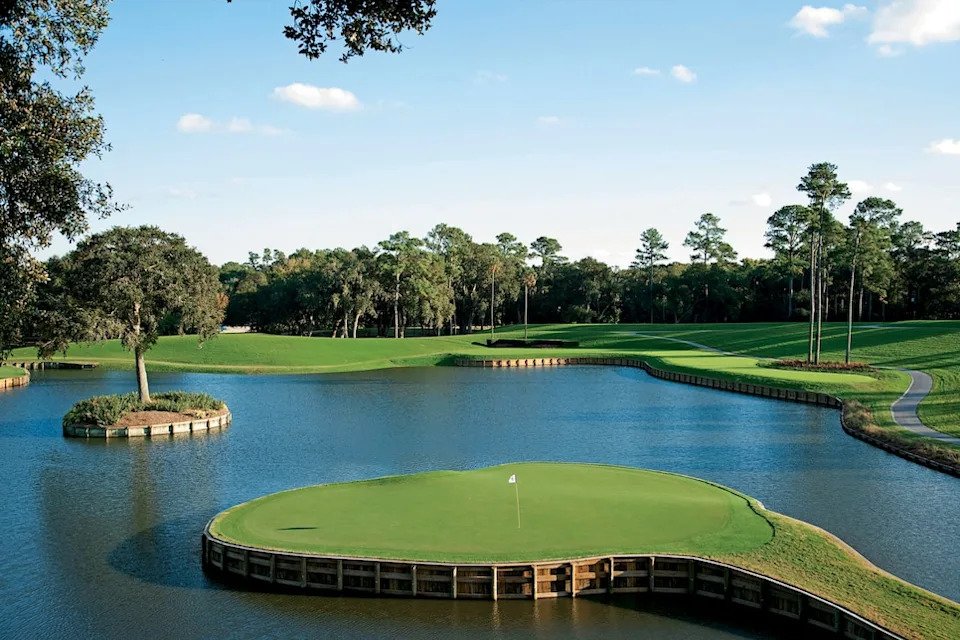
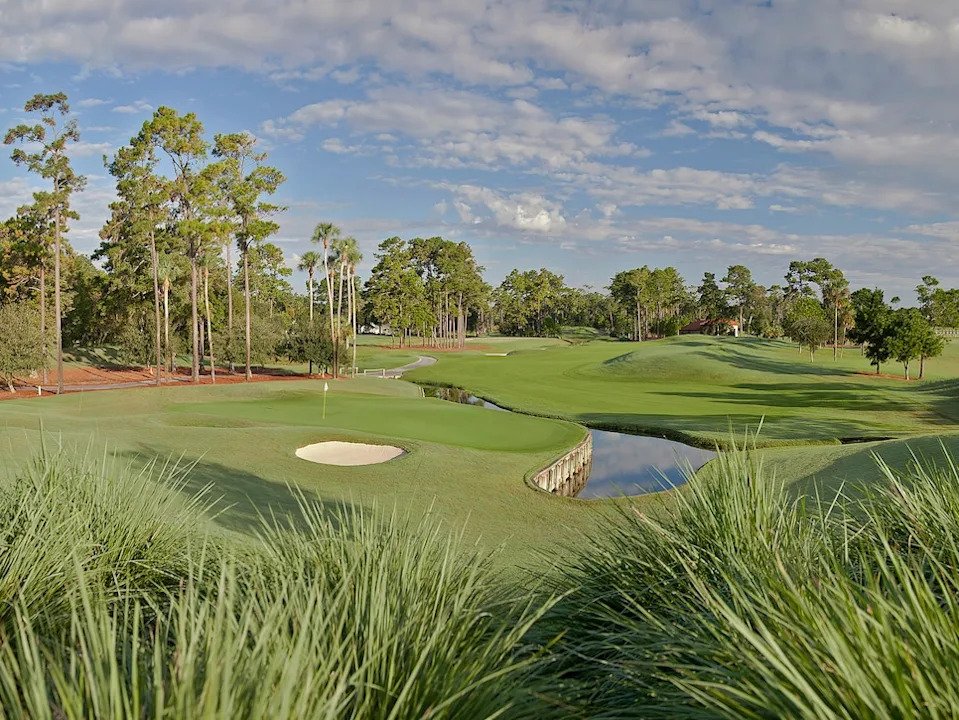
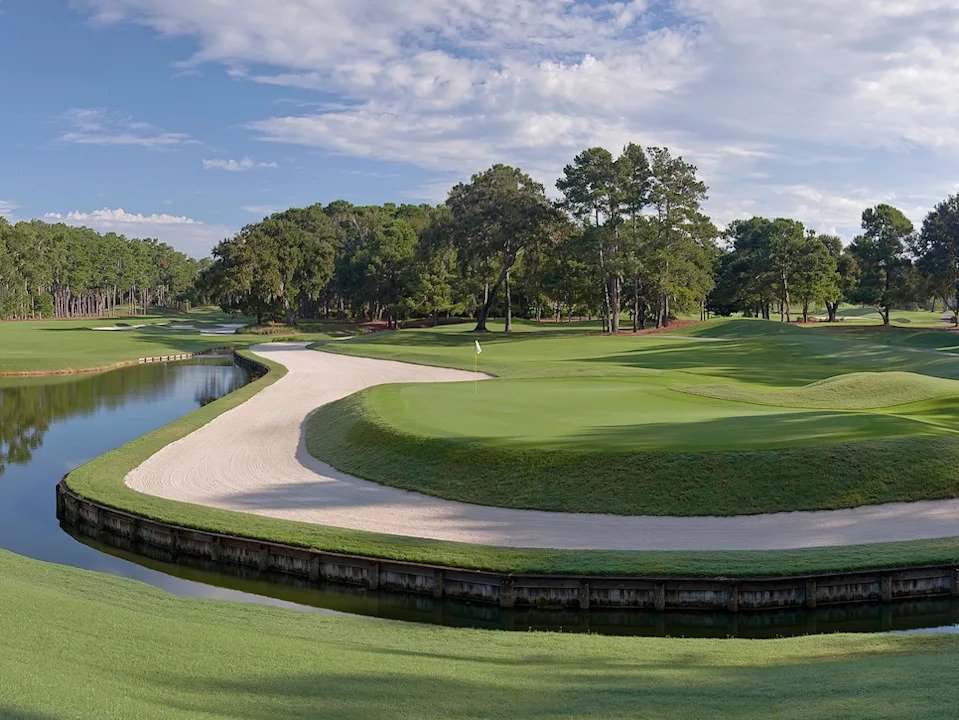
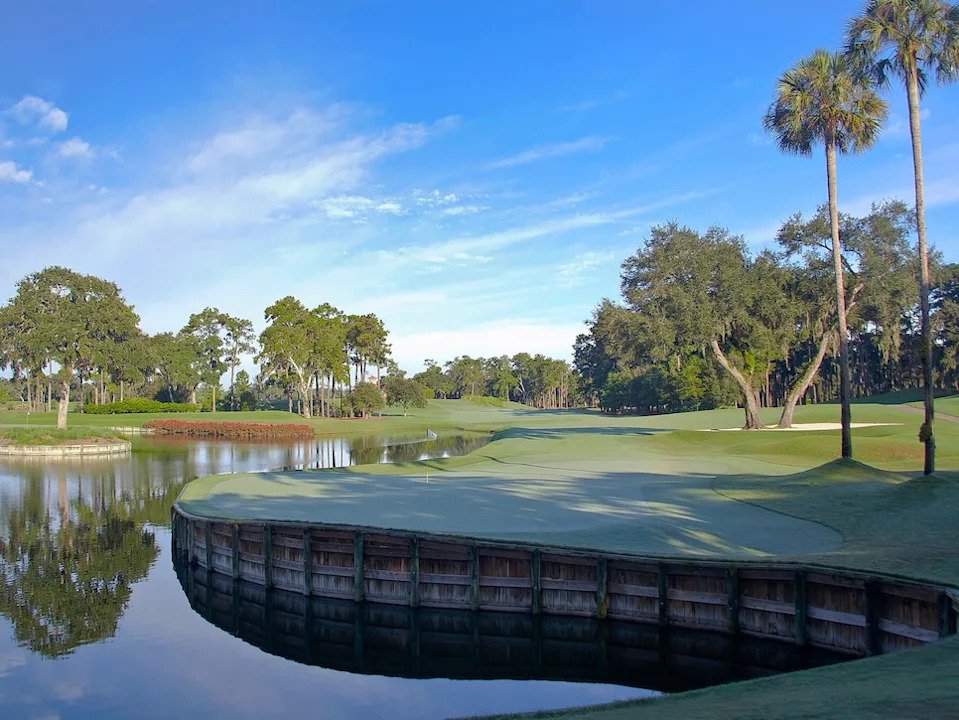
TPC’s stadium concept was the idea of then-PGA Tour commissioner Deane Beman. The 1980 design was pure Pete Dye, who set out to test the world’s best golfers by mixing the demands of distance with target golf. Most greens are ringed by random lumps, bumps and hollows, what Dye called his “grenade attack architecture.” His ultimate target hole is the heart-pounding sink-or-swim island green 17th, which offers no bailout, perhaps unfairly in windy Atlantic coast conditions. The 17th has spawned over a hundred imitation island greens in the past 40 years. To make the layout even more exciting during tournament play, Steve Wenzloff of PGA Tour Design Services later remodeled several holes, most significantly the 12th, which he turned into a drivable par-4, something Dye was never a fan of. View Course It goes against the spirit of the game to award major wins retroactively
Advertisement
No, it doesn’t. That’s what we’ve been doing since 1960! You know that list on Wikipedia you’re always looking at, with the ranking of players by majors won? Anything you see there that comes before 1960—and 1960 is being extremely generous with the origin, because Palmer’s words didn’t actually take hold the instant he said them—belongs to the category of “majors awarded retroactively.” Harry Vardon’s seven majors, in their current context, are retroactive. So are Ben Hogan’s nine. Ditto for Sarazen, Snead, some of Palmer’s, etc. etc.
If suddenly you declare the Players a fifth major, you don’t necessarily have to say that previous versions now count as part of a player’s major total. But you probably should (the tournament has been exactly as prestigious as it is today for a very long time), and if you grant retroactive majors to every player who has won going back to 1974, you’re only doing the exact same thing you did 65 years ago for Vardon and Snead and Sarazen and, hell, all the way back to Old Tom Morris. Is it more absurd to count Tiger’s 2013 win than to count Old Tom as a major winner for beating 17 other Scottish guys at Prestwick in 1861?
(It’s probably worth noting, too, that the only change to the order of the top-10 list of all-time major winners would be Phil Mickelson sneaking into the backdoor to become T-7 with seven total instead of T-12 with six.)
It will screw up the record books and force us to compare players between unalike eras
No, it won’t. Why? Because the record books are already screwed up! Harry Vardon is seventh all-time, but never got to play in a Masters or PGA Championship. Ben Hogan is T-4, and only played in the Open Championship (in 1953, when he won). Old Tom and Young Tom, along with so many of their peers, had exactly one major championship to play. There is no equal opportunity here, and there never has been, so there’s no argument to be made that adding a fifth major would be categorically different from the status quo.
Advertisement
The only concession you’d have to make is to distinguish which players won a career grand slam when it was available to them. (Which we still don’t really do, because nobody credits Old Tom for winning a career slam just for capturing the Open.) Other than that, there’s no need to change anything.
Again, who knows where any of this goes. Maybe the PGA Tour has a top-secret plan to make it work, or maybe the tour would love to be the fifth major but nobody is prepared to risk the political capital it would take, and we’ll be in the exact same spot a decade from now. We’re speaking in abstractions and hypotheticals, but if push ever came to shove, it shouldn’t be history that stands in the way of a big change.
Read the full article here