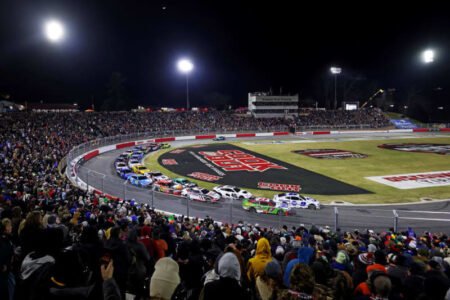



In NASCAR, the scariest moment for a driver is not the loss of a victory. It’s not even the loss of a full-time driving seat. It is the moment when they lose control of the car. These drivers drive at inhumane speeds. However, when they commit a slight mistake, the car punishes them, and they spiral towards a crash. Most of the times drivers crash into each other, but in rare cases, they end up smashing headfirst into the barrier, destroying the car in the process.
These barriers are the epitome of road safety. They are meant to absorb the impact of a crash at 200+ miles per hour. These barriers are the wall between a driver and his certain death. The current NASCAR tracks use SAFER barriers. It is a Steel and Foam Energy Reduction barrier, also known as a soft wall. When a rider crashes into the barrier, the job of the wall is to deform on impact and prevent the driver from taking the blunt force trauma of the crash. But NASCAR didn’t always use such type of barriers.
Advertisement
There was a time when the NASCAR barriers were deadly and not efficient at their job. They were nothing more than concrete structures that were meant to stop the car. In case a driver crashed their car into such barriers, there was a high chance that they would end up seriously injured, or worse, lose their life from the trauma.
Nevertheless, NASCAR was not ready to back down from its commitment to provide safer measures for the drivers in case of a crash. So when Smokey Yunick called them out for a blunder they committed in the latest design during the 1990s, NASCAR took immediate action to mend it.
Smokey Yunick took a blunt approach to improve NASCAR’s safety
At this point, NASCAR knew that concrete walls were not doing them any good. It would often break during the race and incur a loss to replace owing to the incidents. To counter this, they added a new soft wall made of foam. Reportedly, it took only $90 to replace and absorbed the 80% of the impact. At that time, NASCAR thought it was a genius invention, but there was a crucial flaw in their approach.
Advertisement
Even though the walls themselves were good enough to absorb the impact, the energy would cause the car to crumple or break into pieces. These pieces had the tendency to injure the spectators or the drivers themselves when hit by the oncoming traffic. So while the soft foam walls looked good on paper.
They were deadly for the drivers who were facing the aftermath of the impact, owing to the cars’ crumbling and leaving debris all over the track. More than that, the way they stopped the car–suddenly bringing down its speed–was more harmful than concrete, giving the drivers a blunt force trauma.
Smokey himself was an amazing engineer. He tried to help NASCAR by introducing a barrier designed using tires. However, NASCAR did not adapt his idea. That led him to believe that NASCAR was prioritizing the racing spectacle more than the drivers themselves. When NASCAR decided to introduce its cheap soft wall to the Indianapolis Motor Speedway for the 1994 Brickyard 400, Yunick had had enough.
Smokey challenged NASCAR, calling them out, “What about the drivers? All this is gonna do is kill ’em deader quicker.”
Advertisement
It was a direct callout to the management, an accusation that they were not ready to bring safer innovations to the sport. For a sport as popular as NASCAR, its reputation was going down because of the way Yunick described their latest addition. This meant that the soft walls would not work. NASCAR would need to create something better. Something that absorbed the impact of the crash and kept the drivers safe.
It led to another evolution in the design of NASCAR barriers. The Polyethylene Energy Distribution System was added to NASCAR tracks. The PEDS system was good, but it was still not enough. It had a tendency to bounce back the drivers on track. So in case of an accident, the oncoming traffic would be at risk of T-boning the crashed car when it bounced back. It also carries the risk of catching the car and pivoting it dangerously, leading to another unwanted and risky situation for the driver. They would be unable to escape.
It was at this moment that NASCAR realized that they needed a specialist to end their issues with the barriers. They introduced this problem to the University of Nebraska–Lincoln. The university worked day and night to finally create the SAFER barrier. The SAFER barrier has the ability to distribute the energy over a long portion of the wall. It also absorbs the energy of the impact in a better manner, allowing the cars to retain their structure.
The nature of SAFER barriers to stop the cars from rebounding or breaking into pieces has led to some insanely dangerous but entertaining moments in NASCAR. It is because of SAFER’s tendency to distribute the impact that Ross Chastain was able to carry out the ‘Hail Melon’ move. Zane Smith’s sudden accident, which turned to wall-riding maneuver, was also the courtesy of the SAFER barrier last year.
It’s chilling to think of the consequences of using the soft wall. If Smokey Yunick had not called out and insulted NASCAR for its anti-driver policies, then the sport would have lost many more lives to inadequate barriers.
Advertisement
Smokey Yunick, the genius mastermind who knew every loophole
Loopholes are a part of the motorsports scenario. With every year’s rulebook, teams start trying to alter the definition of the rule in the manners that benefits them. NASCAR is keen and ready to shut down these innovations for fairplay and safety. But that doesn’t really stop the teams from trying their best.
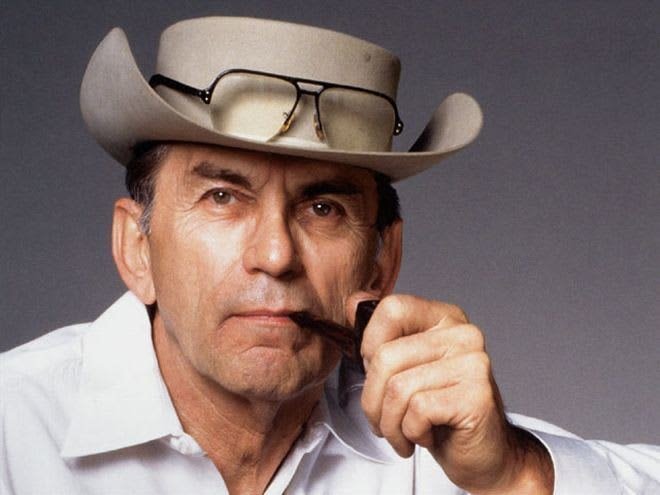
Although there was one person who literally made NASCAR think day and night before adding any rule to the sport. It was Smokey Yunick. He was always giving NASCAR a headache. It was as if Yunick and NASCAR were engaged in a four-dimensional chess battle. During his days in the Cup Series, Yunick won these battles most of the time.
Smokey Yunick (via @artpgarner)
He had hilarious ways to try to work things out in his car. He could engineer his car in ways that NASCAR wouldn’t dare imagine. Smokey Yunick would openly admit that he was cheating and call out NASCAR for being biased against him. He was very clever with the designs. Once, he lowered the roof of the car and slightly raised the floor to lower the car’s body. This gave the car an aerodynamic advantage, but it wasn’t caught until close inspection.
Advertisement
NASCAR’s rulebook and Smokey Yunick’s relationship were like ‘frenemies.’ Unless it is explicitly mentioned in the rulebook, Yunick will not hesitate to add a modification that challenges it. There was a point when he would add basketballs in his fuel tank to make it look smaller than it is. It was always in the letter of the rulebook, so not cheating ‘technically.’
In many ways, Smokey Yunick is a deserving NASCAR Hall of Famer, too. Because of the pain and constant challenge his designs brought to the NASCAR officials. However, there is no certainty that NASCAR is ever going to nominate him, especially for making them sweat in fear every race.
The post How Smokey Yunick’s 8-Word Insult Triggered NASCAR’s Safety Revolution appeared first on EssentiallySports.
Read the full article here