



- Singer partners with Red Bull to bring F1-level engineering to its Porsche 911 restomods.
- Carbon-fiber reinforcements boost stiffness by 175% in Cabriolet and Targa models.
- Open-top Singers now drive closer to coupes, with better handling and stability.
Formula 1 and classic cars aren’t two ideas that necessarily overlap. F1 is all about the latest and greatest in automotive engineering technology, while classics celebrate simplicity and old-school charm above all else. Both equally appealing in their own right.
And yet, one of the biggest names in the Porsche restomod business has tapped one of F1’s largest players. Singer is working with Red Bull Advanced Technologies to further “reimagine” its convertible restmods—and make them nicer to drive.
The big question is: How?
From Street To Software
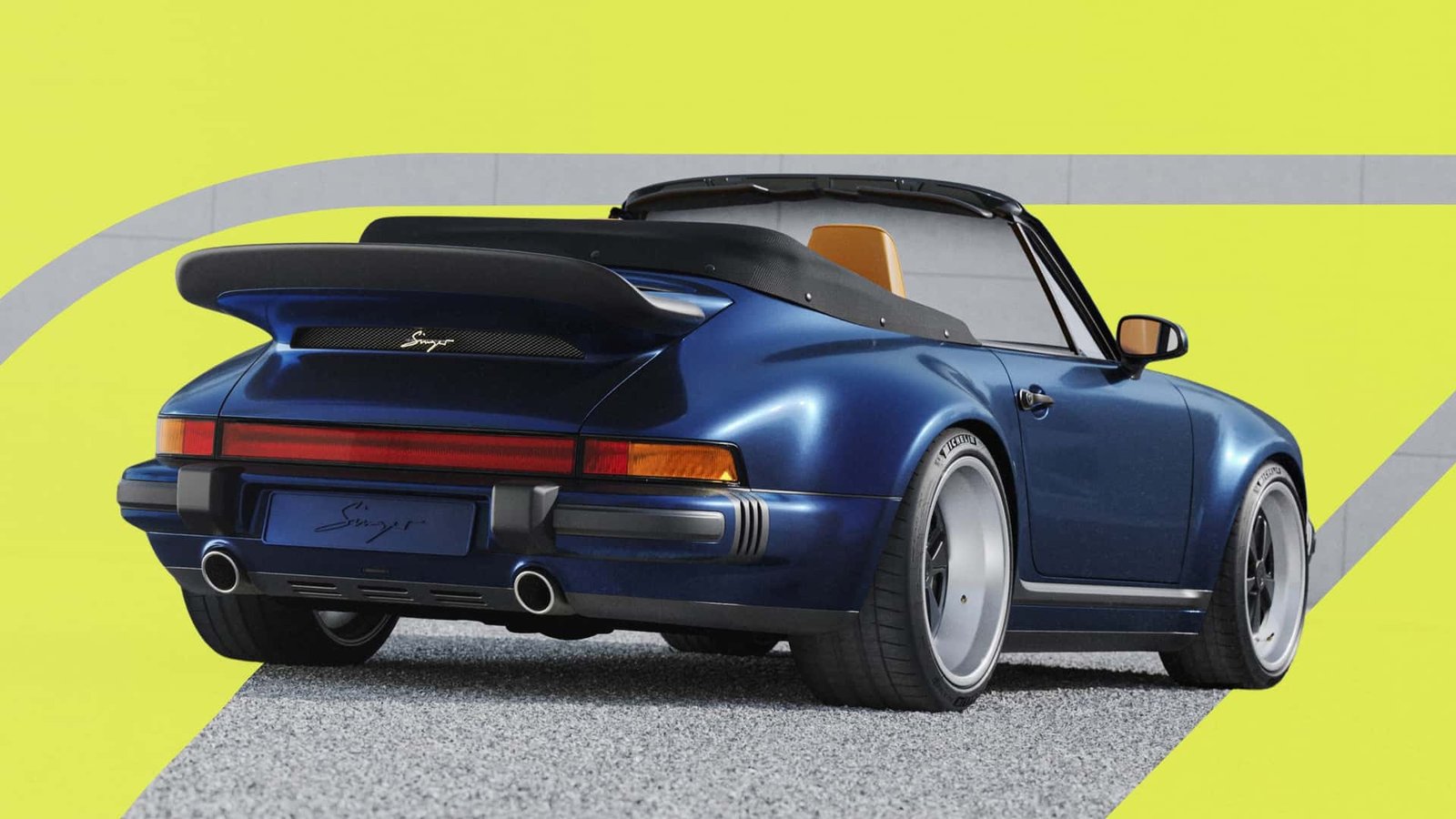
Porsche 911 Cabriolet Reimagined by Singer–Classic Turbo
Photo by: Singer
As with any reimagined Singer, the process starts by stripping the donor 964-generation 911 down to the chassis. Singer ditches the sheet metal and tosses the interior, leaving little more than the steel monocoque to work with.
In this case, though, rather than immediately kicking off the “reimagining” process for the car in question, Singer now runs the chassis through Red Bull’s advanced simulation and structural analysis system. With that, they’re able to create a digital model from the scanned data combined with real-world measurements.
The two companies then use a software called Finite Element Analysis (FEA) to calculate the car’s total torsional stiffness, for both Cabrio and Targa models, in order to figure out exactly where its biggest strain points are. With that new knowledge, Singer is able to stiffen up the structure as needed.
The company adds a total of 13 carbon-fiber reinforcement structures at key stress points to strengthen the chassis. These components are designed to neatly integrate with the original steel monocoque, improving rigidity while still respecting the underlying architecture of the 964.
Noticeable Improvements


Carbon Fiber Reinforcement
Photo by: Singer
According to Singer, the reinforced Cabriolet and Targa models see a 175-percent increase in torsional rigidity compared to the original donor cars. That improvement brings the stiffness of the open-top models closer to that of Singer’s coupes.
And the benefits extend beyond the raw numbers. Increased rigidity improves overall handling, enhances braking stability, and, in general, improves driver confidence—especially for buyers wanting looking for an experience that more closely resembles a modern car.
According to Singer, the reinforced Cabriolet and Targa models see a 175-percent increase in torsional rigidity compared to the original donor cars.
“Our clients are some of the most discerning drivers in the world,” notes Mazen Fawaz, Chief Strategy Officer at Singer. “To achieve the standards they have come to expect, we work only with the best, and our search for expertise in this area led us to Red Bull Advanced Technologies.”
“Red Bull’s mastery of advanced materials, simulation, and structural analysis perfectly exemplifies this approach. The results underline the extraordinary lengths we go to in our relentless pursuit of excellence.”
Singer says the new structural reinforcement technology will roll out across its droptop lineup, beginning with the Porsche 911 Cabriolet reimagined in the style of the mid-1970s 930 Turbo. That model features a twin-turbocharged 3.8-liter flat-six developed with Cosworth, and now, it has the agility to match.
6
Source: Singer
Motor1’s Take: Singer tapping Red Bull to help develop its cars is only great news for future Singer owners. Now, convertible and Targa models will be just as nice to drive as their coupe counterparts.
Read the full article here