
Relive the drama of Sunday at Augusta from the highly anticipated new biography.
Masters Sunday dawned with even more excitement than usual but also an undercurrent of dread: there would be no coming back from it if Rory McIlroy blew this one. “In the history of golf, no one has ever played with more pressure than Rory on Sunday at Augusta,” says Golf Channel analyst Brandel Chamblee. “If Rory didn’t win this Masters, he was going to get crucified. The whole world was ready to write his obituary.” McIlroy knew it. “I was unbelievably nervous,” he said. “Knot in your stomach, didn’t really have much of an appetite all day. Tried to force food down. Your legs feel a little jellylike.”
Advertisement
After McIlroy double bogied the first hole, his playing partner Bryson DeChambeau holed an eight-foot birdie putt on number two that was so pure it would have gone into a thimble. Bryson had made up three strokes in two holes, seizing the lead. The gravediggers began reaching for their shovels.
McIlroy smoked a tee shot on the short par-four third hole that looked like it would reach the putting surface, but his ball took a hard left turn just short of the green and settled in a deep swale, leaving one of the scariest pitches on the property. Somehow, some way, with his entire world caving in, McIlroy summoned a perfect shot, bouncing his ball into the hillside and trickling it to within eight feet for birdie. He called it the most important moment of the final round. Big, bad Bryson turned timid off the tee—”I could not believe he laid up,” McIlroy said—and then three-putted. When McIlroy made his uphill birdie putt, he had climbed back into the lead.
“Where that resilience comes from—it’s an interesting question,” says Bob Rotella, McIlroy’s sports psychologist. “Some people may be born with it. A lot of people aren’t. Either way, if you want to be great, you have to develop that resilience. It’s a skill just like any other.” Ben Hogan, the steely-eyed Hawk who will forever be revered for his toughness, once said, “I feel sorry for rich kids now, I really do. Because I knew tough things, and I had a tough day all my life, and I can handle tough things. They can’t.” Hogan’s father shot himself through the heart while his young son played in the next room. McIlroy was blessed with loving, supportive parents, but they had to scrape and claw to give their son every opportunity. McIlroy observed it all and has modeled their flintiness. “My dad took on three jobs; my mum worked night shifts,” he says. “They were doing what they had to do to support their son and never complained or moaned. They just got on with it.”
After a nervy par at 12, McIlroy led by four strokes with six holes to play, two of them par-5s he had been devouring all week. He had one arm in the green jacket.
Advertisement
On thirteen, McIlroy laid up to left edge of the fairway, giving himself the ideal angle to a front-right pin. The creek fronting the green was barely in play, as McIlroy could play his ball deep into the green and feed it down the slope toward the hole; his dad Gerry would later joke that he had all of Georgia left of the flag. Other than tap-in putts, it was probably the easiest shot Rory faced all day… notwithstanding that the Masters was, at long last, within his grasp.
McIlroy duffed it into the creek.
Given the magnitude of the moment, the absurdity of the outcome, and the potential ramifications, you can make a case that it was the worst shot in golf history. On Sky TV, Sir Nick Faldo spoke for all of us when he blurted out, “That’s horrendous! I can’t believe it.”
A Normanesque collapse now felt like a very real possibility. The emotional stakes had reached a fever pitch. “It was a drama-tragedy playing out before our eyes, and we didn’t know if the hero was going to get murdered in the final scene or save the whole world,” says Chamblee. “Who wrote this—Stephen King? Shakespeare? Aaron Sorkin?”
Advertisement
McIlroy played a sound pitch from the drop circle but missed the ensuing ten-footer, taking his second double bogey of the day and fourth of the week. At sixteen, Justin Rose made his 4.5-footer for birdie. Bang-bang, three shot swing. Twenty-nine minutes earlier, when McIlroy birdied the tenth hole, his win probability rose to 95.3 percent, as calculated by the sharpies at Data Golf. Rose’s languished at 2.8 percent. Now it was a tie ballgame. Then McIlroy bogeyed 14, the first time since lunch on Friday that he was not leading the Masters. His win probability dipped to 29.8 percent.
In their chat before the final round, Rotella had told McIlroy, “It’s supposed to be hard. It’s a game of mistakes. Can you live with those? Can you overcome them?” Rotella expands on the thought, saying, “The tendency for most players is to overreact. But even the player who wins the tournament makes a lot of mistakes across four rounds. Rory has accepted that. He won’t ever give in. He’s not afraid of making mistakes because he has developed zero doubt that he can survive them.”
On fifteen, McIlroy pulled his tee shot to the left edge of the fairway, leaving a shaggy pine branch obstructing his path to the green. But the slightly off-line drive turned out to be a blessing. His layup on thirteen had been rational, reasonable, logical, defensible. It was the well-considered play of a man trying to protect a big lead. The tentative deceleration on the ill-fated wedge shot was the same kind of defensive play that had hurt him on the opening two holes. Only when McIlroy lost his lead to DeChambeau did he play with more freedom. Now, in the fifteenth fairway, McIlroy faced a defining decision: lay up again and greatly reduce the possibility of disaster—which made all the sense in the world given that McIlroy had played the preceding four holes in +4—or go for broke with a slinging hook around the branch to one of the most fraught greens in golf. McIlroy has more than a passing interest in anatomy; he took up juggling when he discovered it is one of the few activities that engages both hemispheres of the brain simultaneously. His left brain had compelled him to lay up on thirteen. The right brain would unlock his genius. McIlroy and Rotella had discussed this topic plenty of times. Says McIlroy, “He said to me, ‘Rory, have you ever been to Disney?’ Yeah, I’ve been to Disney. ‘Did you ever get one of those caricature artists to draw your face?’ Yeah, I remember that. He said, ‘When they draw, are they looking at your face or are they looking at their hand?’ I said my face. He said, ‘Exactly, they’re not looking at their hand, telling it how to draw your face. They’re looking at their target and letting their hand do what it needs to do.’ That’s the exact same thing as golf. You need the technique. You need to drill the technique at home, on the range, whatever, but when you go and play, the less thought the better.”
McIlroy the artist had been presented the ultimate canvas. In the past, he had talked about “painting” shots around Augusta National, a lovely image for the creativity the course encourages. There would be no laying up. From 207 yards out, he made a freewheeling swing with his 7-iron. His ball rocketed past the pine limb, on line with the right edge of the greenside bunker, and then bent left toward the flag. McIlroy stalked after it.
Advertisement
The ball was in the air forever. Did any sports fan anywhere take a breath while it was still in orbit? It’s not easy to track a small white ball against a cloudless sky. When McIlroy’s ball landed on the green, twenty paces from the hole but bouncing and curling to within six feet, Augusta National exploded. In the span of two holes, McIlroy had hit one of the worst shots in Masters history and now one of the best. From inexplicable to unforgettable.
After a shot that transcendent, of course he would make the putt. Right?! McIlroy babied the putt and missed it low. Gentle Jim Nantz offered a harsh verdict on the CBS telecast: “Feeble.” In an interview, Nantz says, “I try to articulate what the moment feels like to the fan and the player. I had just called it the shot of a lifetime. I thought that shot would win him the green jacket, I really did. There was so much risk on that shot—it was so daring. The putt felt like a foregone conclusion, and that would be one of those moments we play back forever. I didn’t even realize that’s what I said, but in the moment I felt like, Darn, he just took away what could have been the perfect, defining moment of the whole tournament.”
Still, the two-putt birdie gave McIlroy a one stroke lead, which he carried to the eighteenth tee. He found the narrow fairway with a baby cut, leaving himself only 125 yards, a perfect little gap wedge. By the end of the 2025 FedEx Cup season, McIlroy’s upgraded wedge game would place him eighth on the PGA Tour in proximity to the hole from 125 to 150 yards, his average approach shot settling at 20 feet 5 inches. With the pin cut in its usual front location on a two-tiered green, McIlroy had a big backstop to provide even more margin for error. One more decent swing (plus a careful lag putt and a tap-in) and the green jacket would be his. It was the easiest shot he’d faced since, well, the pitch on the thirteenth hole.
Advertisement
Years ago, when Tom Watson blew an Open Championship on the Road Hole, Dan Jenkins described his wayward approach shot as “a semishank, half-flier, out-of-control fade-slice that wanted to go to Edinburgh.” Now McIlroy produced something similar, though his ball veered toward Aiken. When it splashed in the greenside bunker he bent over at the waist in anguish.
McIlroy played a delicate, downhill bunker shot to 4.5 feet, leaving himself what every boy dreams about until he grows up and has to face it: a putt to win the Masters. A month after blowing short putts on the seventieth and seventy-second holes to lose the 2024 U.S. Open, McIlroy was asked how much he still thought about those misses. His answer offered rare insight into all the scar tissue he’d built up through the years: “I still think about the short putt that I missed at Crans-sur-Sierre [Switzerland] in 2008 in a playoff. You think about all of them.”
McIlroy’s putting coach, Brad Faxon, admits to barely being able to watch his pupil on the final green. “I don’t know how the heck you prepare for a putt like that,” says Faxon. “He’s very aware of golf history and his place in it, which makes all of this a lot harder than it is for a guy who doesn’t really care and just goes out and plays. Now he’s got a downhill putt on a white-hot green, all those demons and ghosts are swirling around, the whole world is watching . . . it’s just tough. He told me later he was really nervous over the ball on the seventy-second hole. Man, I’m nervous now just talking about it!”
As McIlroy stepped into the putt, CBS offered a diabolical chyron: FOR CAREER GRAND SLAM.
McIlroy’s ball didn’t touch the hole.
Advertisement
All he had needed to win was to shoot even par, but he came home in 73, with only two pars on the final ten holes. Sudden death loomed with Rose. But before that, it was Harry Diamond’s time to shine. The caddie had become an easy punching bag during McIlroy’s long drought in the major championships. After costly misclubs coming down the stretch at Pinehurst, Diamond had been ripped publicly by Hank Haney, Tiger Woods’s old swing coach, and Smylie Kaufman, the former player turned broadcaster. McIlroy offered vociferous support for his caddie, which was noteworthy because, says Paul McGinley, “Rory rarely gives praise to anybody around him. He has a very high sense of his value. He feels like, I’m the guy who does the donkey work out there—nobody else is allowed to take any praise off my back. I’m the guy out there firing the shots and taking the arrows, nobody else. He’s very much like Tiger in that way. The flip side of that, which I much admire about Rory, is that when it goes wrong, he never throws anybody else under the bus. You ever heard him criticize anybody around him? He has ownership of everything that he does, and nobody else is allowed to claim any of that ownership.”
Now, in the moments before the playoff, Diamond offered his best friend one simple thought: “Well, pal, we would have taken this on Monday morning.” McIlroy told this story to the world during his Sunday evening press conference at Augusta while lavishing praise upon Diamond. After hearing his caddie’s succinct pep talk, McIlroy says, “It was an easy reset.” That’s because he knew Diamond was right. In the preceding four and a half hours, McIlroy had stepped on his dick, shit the bed, screwed the pooch . . . and yet somehow he had vanquished DeChambeau, Ludvig Åberg, Patrick Reed, Scottie Scheffler, Xander Schauffele, and sundry others. To live his childhood dream, all he had to do now was outlast the battle-scarred Rose, forty-five, whom he had been regularly beating for the last decade and a half.
In the playoff, McIlroy faced another approach shot from 125 yards, but this time he stiffed it. Rose’s birdie putt was never on line, and he cleared the stage. How many three-footers had Rory McIlroy made in his lifetime? A hundred thousand? More? And yet, after all the preceding melodrama, absolutely no one would have been surprised if he missed this one. But he didn’t.
McIlroy tossed his putter over his head and collapsed onto his knees, his forehead pressed against the parched putting surface. His body heaved and shook with catharsis. He sat up, tilted his head back and roared. “There wasn’t much joy in that reaction,” McIlroy said. “It was all relief.”
Advertisement
Finally, he arrived on the patch of grass behind the 18th green that has been the site of so much previous emotion. All eyes were on the McIlroys. In the eleven months since her husband filed for divorce and then very publicly changed his mind, Erica had retreated from the public eye. But she was waiting for her man behind Augusta National’s eighteenth hole. They melted into each other, faces obscured by the broad brim of her hat. There was a lot of feeling in that hug. As Rory picked up his daughter, a guttural sound escaped him; there was no holding back the rawness of the emotions. He buried his face in Poppy’s neck and sobbed. He tenderly planted a kiss on her forehead and stroked her hair. More hugs with his inner circle followed.
Now, finally, McIlroy would walk alone.
It’s about 150 yards from the back of the eighteenth green to the scoring area. Fans formed a corridor and carried McIlroy home, chanting his name and cheering. As Rory made his way through the delirium, his handsome face was like a movie screen playing out a lifetime of yearning, toil, heartache, triumph. It was riveting to watch him process the victory in real time. He took long, billowing breaths and covered his face with his hands in disbelief. He ran his fingers through his graying hair, seemingly as incredulous as the rest of us at what had just transpired. In a masterstroke of television directing and self-control by the talent, the CBS announcers stayed silent throughout all of this for five cinematic minutes. Looking back now, Nantz narrates the scene: “That walk was a thirty-year journey for him. That walk turned into a moment that will live forever, that will define him forever. He was walking on a cloud. You could see on his face this dream that fermented three decades ago, just a mom, a dad, a boy, and a crazy dream. Every ball Rory ever struck led to this moment, every lesson, every session putting until the sun set. It sounds like a gift to be a prodigy, to be superhuman. But he had to carry the weight of that his whole life. And then, suddenly, it lifted, and we all got to see that weight come off. He was walking, but he couldn’t feel his feet—he was flying. He had just completed something that took thousands of days, tens of thousands of hours. He took those last steps by himself but carried with him the hopes of millions.”
On social media, the tributes poured in from the prime minister of Britain to the president of the United States, Ben Stiller to Adam Sandler, Manchester United to the British royal family, from Jack Nicklaus to Tiger Woods (“Welcome to the club”). Why did McIlroy’s victory resonate so deeply? Sure, there was the historic nature of the achievement: McIlroy joined Nicklaus, Woods, Ben Hogan, Gene Sarazen, and Gary Player as the only players to win the career Grand Slam. There was the lingering thrill of bearing witness to what Nantz calls, “one of the greatest sports stories ever told. Something so elusive, so coveted, that had brought him so much pain—it all just made the story and the moment more iconic. It touched everybody, whether they were a golf fan or not. Everybody understood the magnitude of what they had witnessed.” It was a nonstop thrill ride that left the sports world exhausted and exhilarated.
Advertisement
All of that made McIlroy’s win unforgettable, but it’s not why the triumph touched so many hearts. We all have outlandish fantasies and ambitions when we’re young, but who is crazy enough to keep chasing them to the brink of middle age? For all of McIlroy’s otherworldly talent, in the end, his victory was about much more relatable things: overcoming your fears, believing in yourself, never quitting, refusing to grow up and give in. “My dreams have been made today,” McIlroy said during the green jacket ceremony. With his voice cracking, he saluted the small tribe of family and loyalists who were seated among the sport’s royalty. “They’ve been on this journey with me the whole way through, they know the burden that I’ve carried to come here every year to try and try and try again. And the one thing I’d say to my daughter, Poppy, who’s sitting over there: Never give up on your dreams. Never, ever give up on your dreams.
Keep coming back and keep working hard, and if you put your mind to it, you can do anything.”
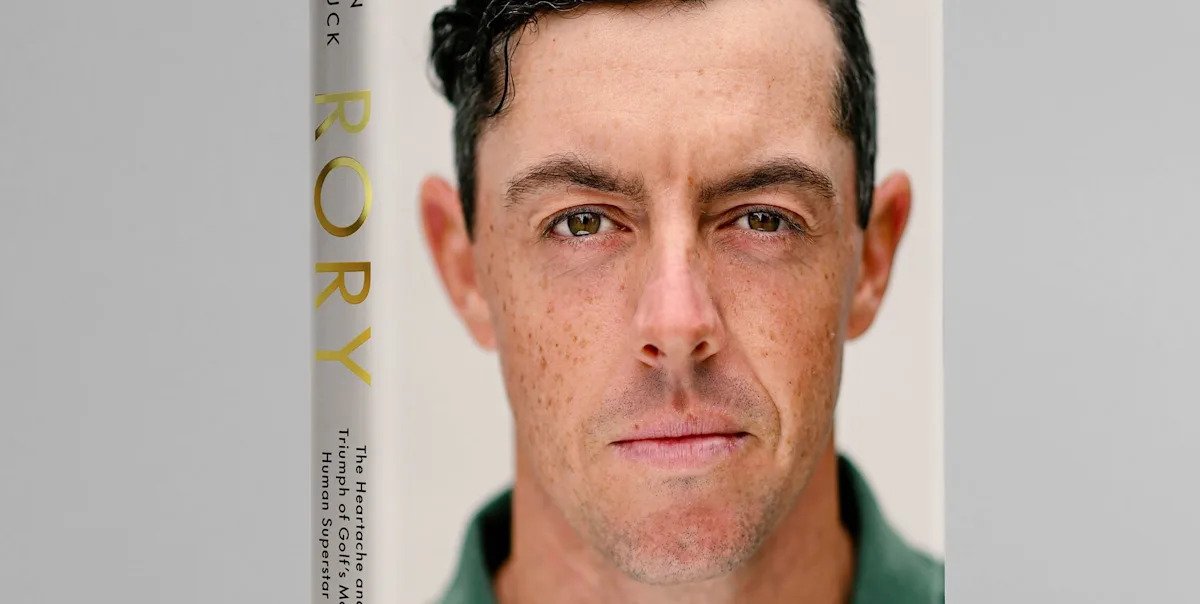
RORY: The Heartache and Triumph of Golf’s Most Human Superstar
From RORY: The Heartache and Triumph of Golf’s Most Human Superstar by Alan Shipnuck. Copyright © 2026. Reprinted by permission of Avid Reader Press, an Imprint of Simon & Schuster, Inc. Pre-order here.
Read the full article here